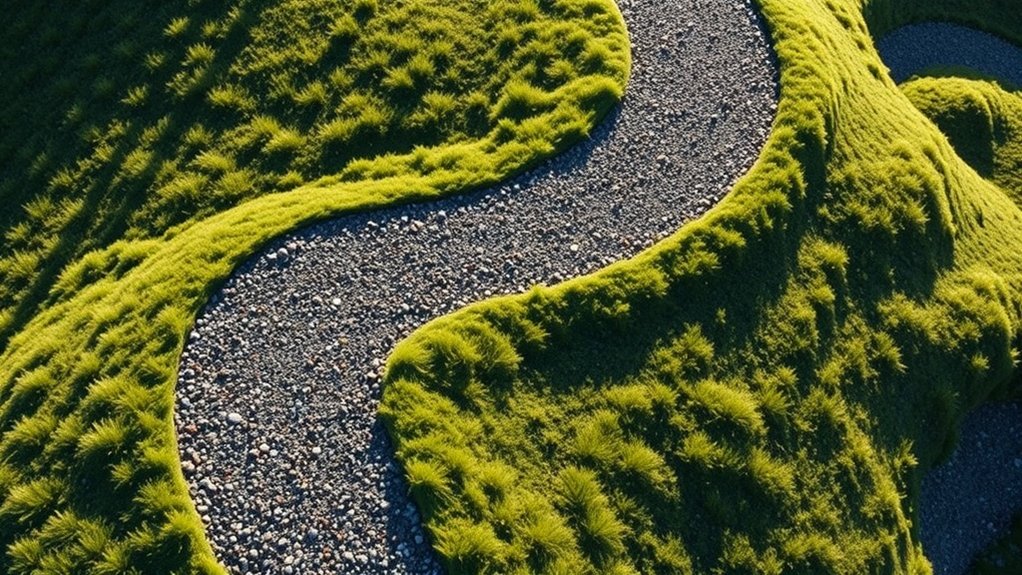
When laying resin-bound gravel on sloped and uneven surfaces, it’s essential to begin with a solid base using MOT Type 3 aggregate. Mix the resin and aggregate in a 60:40 ratio for optimal strength, and apply it in layers of at least 18mm depth. Ensure you incorporate effective drainage solutions to manage water flow and maintain stability. By focusing on these key factors, you can create a durable and attractive surface that can withstand the UK weather.
Key Takeaways
- Ensure proper base preparation on sloped surfaces to maintain stability and avoid installation problems. For instance, a well-prepared base can prevent shifting over time.
- Use a permeable base to aid drainage and minimise pooling on uneven ground. This is particularly important in areas prone to heavy rainfall.
- Apply resin carefully, especially on slopes, to achieve an even finish. A controlled application helps prevent uneven surfaces that can be difficult to rectify later.
- Include anti-slip aggregates for added safety on steeper gradients. This can make a significant difference in wet conditions.
- Carry out regular maintenance, such as cleaning and inspections, to extend the lifespan of your resin-bound gravel. A little upkeep goes a long way in preserving its appearance and functionality.
Understanding the Base Requirements for Resin-Bound Gravel
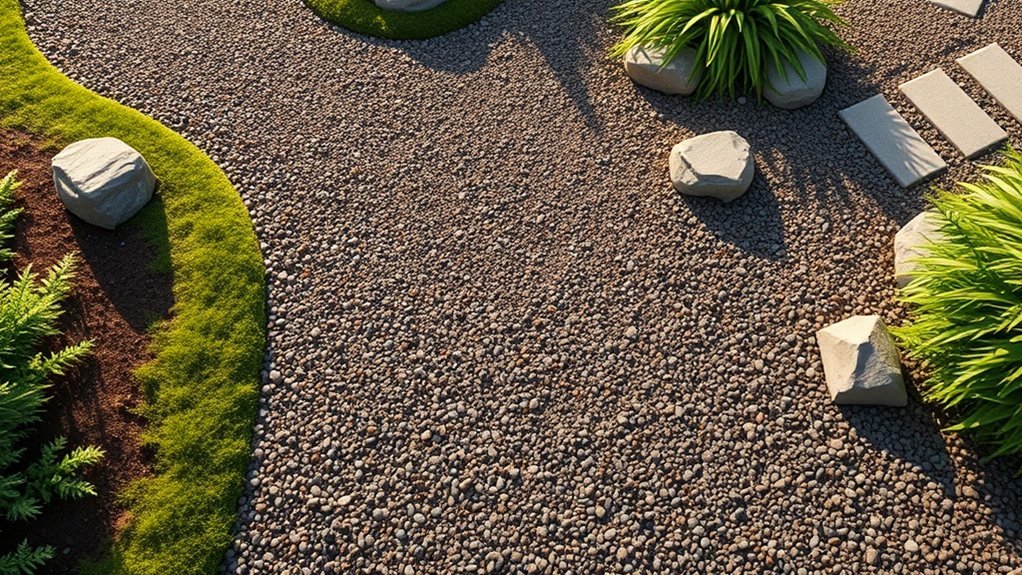
When planning to install resin-bound gravel, it’s crucial to understand the base requirements for a successful finish. The choice of base material significantly impacts the stability of the sub-base. For best results, opt for MOT Type 3 aggregate, which has a low fine content and complies with Sustainable Drainage Systems (SuDS). If you prefer alternative materials, such as AC14 open textured tarmac, ensure they meet permeability standards. For concrete bases, use either C20 or C25 grade, but keep in mind that they may require additional drainage solutions. It’s important to keep your base free from organic matter and debris—thorough power washing is recommended. Generally, the sub-base thickness should be between 100mm and 250mm, depending on the load and soil conditions, to ensure a durable resin-bound surface. Additionally, using AC14 open textured tarmac as a base is recommended for its strength and permeability, especially in SuDS compliant projects. Maintaining a proper sub-base preparation ensures the longevity of your installation by preventing dips and degradation over time.
The Importance of Proper Resin and Aggregate Mixing
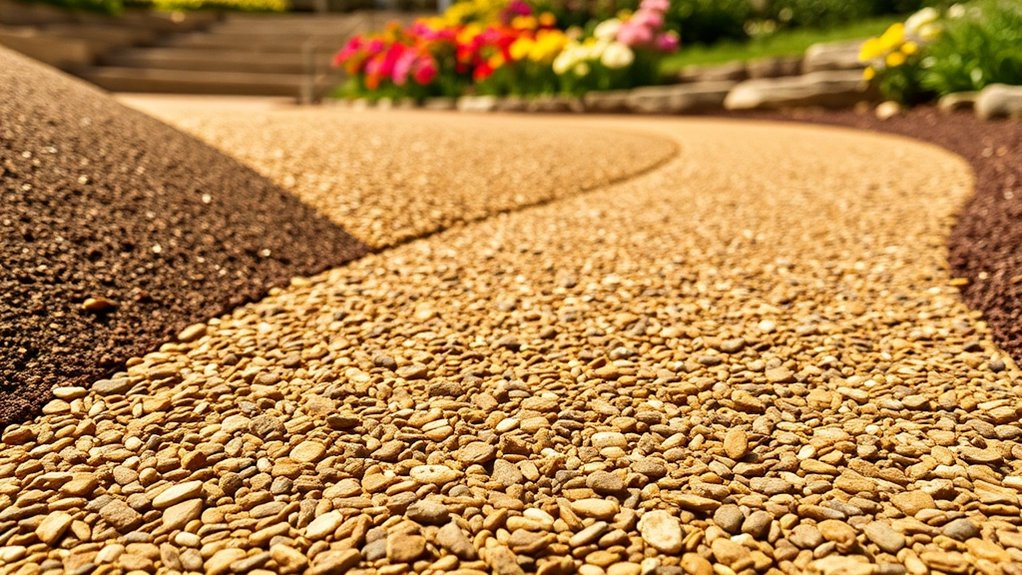
Proper mixing of resin and aggregate is essential for creating a durable and visually appealing resin-bound gravel surface. For optimal results, aim for a ratio of 60% resin to 40% aggregate. This balance helps minimise air voids and maximises strength. Additionally, using washed and kiln-dried aggregates enhances resin bonding and improves appearance.
A blend of 75% stones sized 2-5 mm and 25% stones sized 1-3 mm will yield the best finish. Using high-quality aggregates that have been double washed and dried ensures even distribution of resin. Consistency in your mixing process is crucial; uneven mixing can lead to weak spots and surface flaws.
Always use a paddle mixer for the resin and a forced-action mixer for the aggregates. Remember, how well you mix directly impacts the performance, longevity, and appearance of your resin-bound gravel installation. Additionally, using a reliable forced action mixer is important for achieving a consistent mix that enhances the overall quality.
Techniques for Installing on Sloped and Uneven Terrain
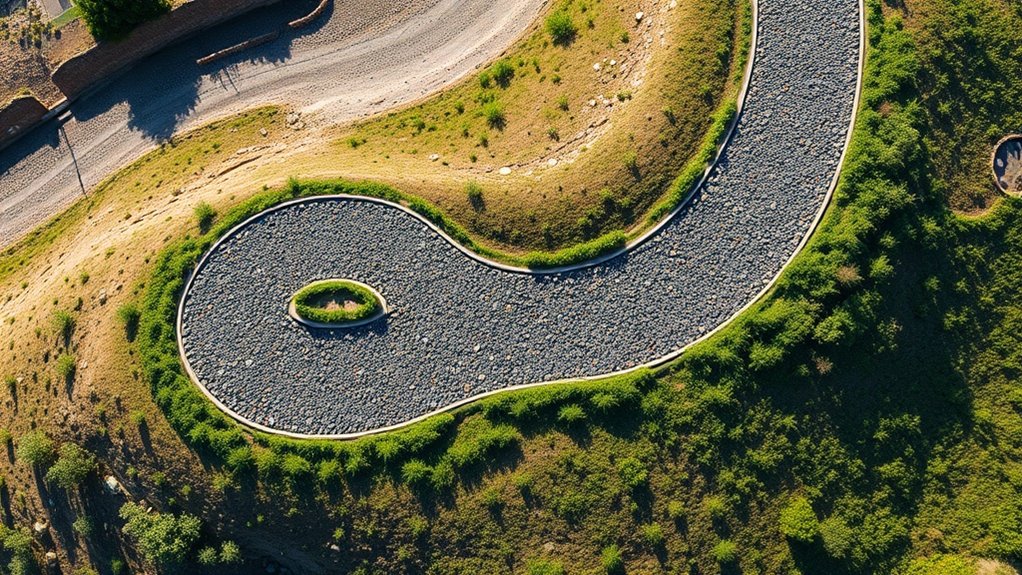
When installing resin-bound gravel on sloped and uneven terrain, it’s essential to prioritise base preparation for stability. Use precise application techniques to ensure an even spread and effectively manage any drainage issues that may occur. For instance, consider using a permeable base to allow water to flow through, which helps prevent pooling. Additionally, the control of resin flow during installation is crucial for achieving a smooth and durable finish on sloped surfaces. Proper ground and substrate preparation, including thorough surface preparation, can significantly enhance the installation’s longevity and performance.
Preparing the Base
Preparing the base for resin-bound gravel installations on sloped and uneven terrain can be tricky, but following the right steps ensures durability and effective drainage.
Begin with a thorough assessment of the slope and grading to ensure water drains away from buildings. Use laser levels to achieve a consistent gradient, aiming for a minimum fall of 1:80.
For the sub-base, choose MOT Type 3 and compact it in layers up to 50mm deep, increasing the depth for steeper slopes. Employ base stabilisation techniques, such as geotextile membranes, for added stability.
Secure edge restraints to prevent movement, and ensure all surfaces are clean and dry. Proper preparation is essential for a successful resin-bound gravel installation.
Application Techniques
With a solid base prepared, you’re ready to apply resin-bound gravel on sloped and uneven surfaces.
Start by choosing higher viscosity resin mixtures; these will minimise downward flow and prevent pooling. Incorporate fine aggregates and bonding agents to improve grip and speed up adhesion.
Use a sectional application method, working from the bottom to the top to maintain material distribution and avoid displacement. A forced-action mixer will ensure proper blending, and tools like squeegees and trowels will help you manage the gradients effectively.
Timing is crucial—resin cures quickly, especially in warm conditions, so work swiftly.
Managing Drainage Issues
To manage drainage effectively when installing resin-bound gravel on sloped or uneven terrain, focus on the gradient and sub-base preparation.
Aim for slope gradients between 1:12 and 1:40 for proper drainage and stability. Ensure the surface slopes away from buildings at a 1-2% gradient to avoid water pooling.
A solid, permeable sub-base made from compacted crushed stone is essential for drainage and stabilisation. Use geotextile membranes to separate layers and enhance stability.
Consider incorporating drainage solutions like French drains to channel excess water towards soakaways. By choosing the right-sized aggregates and ensuring consistent surface permeability, you can optimise water flow and create a durable resin-bound gravel surface.
Enhancing Drainage and Permeability With Resin-Bound Gravel
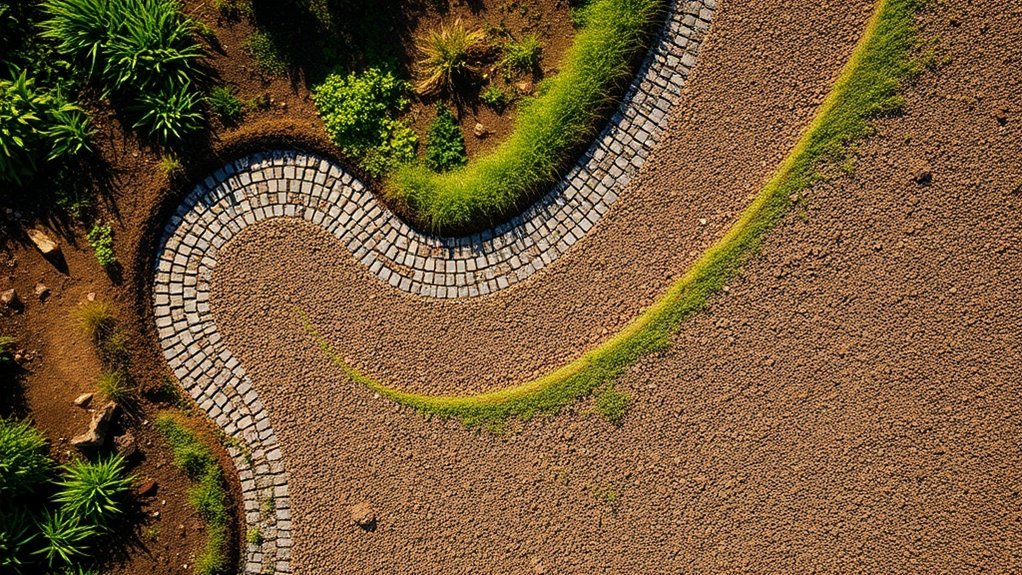
When looking for effective drainage solutions for outdoor areas, resin-bound gravel is an excellent choice due to its natural permeability. This material contains designed gaps between the stones, enabling water to flow through the surface and into the underlying sub-base.
With a capacity to manage up to 850 litres per square metre per minute, resin-bound systems significantly reduce puddles and standing water during heavy rain. In addition to improving drainage, these surfaces help replenish local groundwater and enhance water quality by filtering out pollutants.
Assessing Durability and Long-Term Maintenance
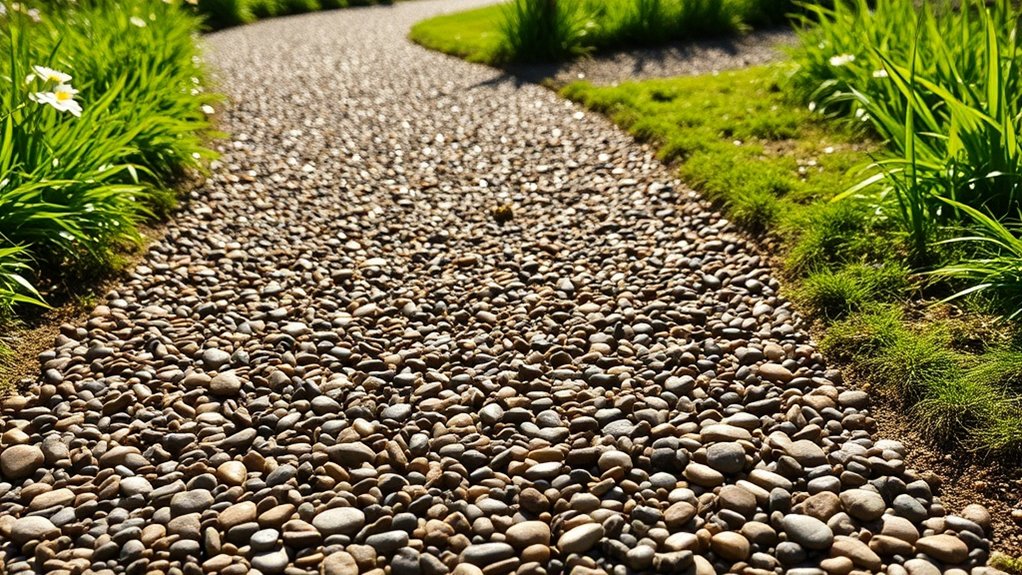
Choosing resin-bound gravel is a smart investment for a durable surface.
To maximise its lifespan, it’s essential to follow maintenance best practices. Regular inspections and proper care will help keep your resin surfaces looking neat and functioning well for years.
For instance, a quick sweep or occasional pressure wash can prevent debris build-up.
With a little effort, you can ensure your resin-bound gravel remains a reliable choice for your property.
Longevity of Resin Surfaces
Understanding the longevity of resin surfaces is crucial for anyone considering this paving option, as it affects durability and maintenance. Typically, resin lasts between 15 to 25 years, with high-quality materials extending the lifespan to 30 years under optimal conditions.
Key factors influencing longevity include the quality of the resin and aggregates, as well as the installation process. Proper preparation of the sub-base and the right resin-to-aggregate ratios can add an extra 5 to 10 years to the surface’s life.
Environmental conditions, such as extreme weather and heavy foot traffic, also impact durability; for example, areas that experience freeze-thaw cycles may see a decrease in lifespan.
Maintenance Best Practices
To keep your resin-bound gravel surfaces durable and looking great, it’s essential to adopt effective maintenance practices. Regular cleaning is key to protecting your investment. Here are some best practices:
- Wash your surface monthly with cold water and a mild, pH-neutral detergent.
- Perform a light pressure wash annually, ensuring the pressure is kept below 150 bar to prevent damage.
- Remove debris regularly, particularly leaves in autumn, to avoid staining.
Use the right tools, such as non-metallic blowers for debris and soft scrubbing brushes for algae, to keep your surfaces in top condition.
Address spills and organic material promptly to maintain both appearance and integrity. Following these steps will help extend the life of your resin-bound gravel.
Safety Advantages of Resin-Bound Surfaces on Slopes
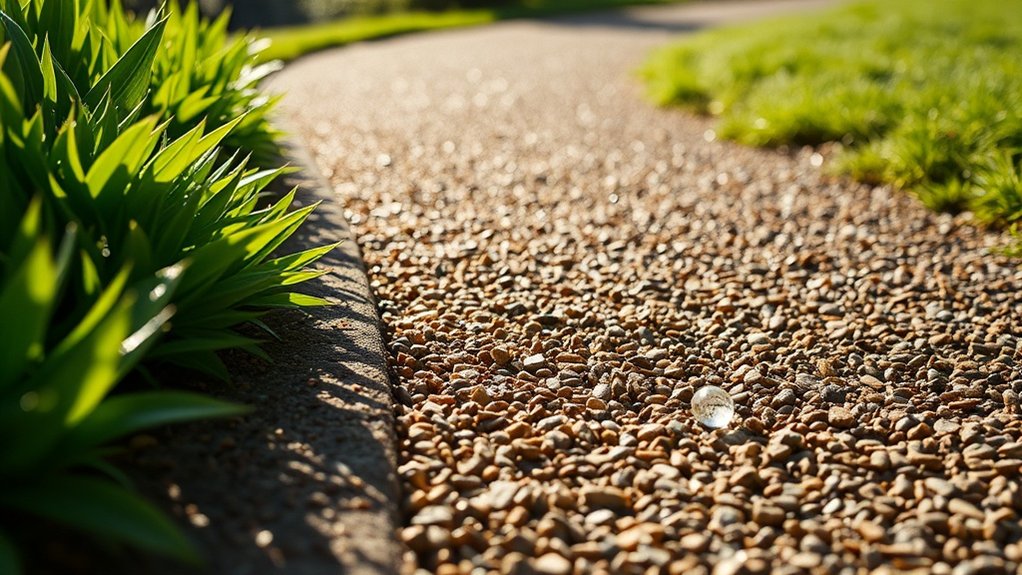
Navigating slopes can be risky, but resin-bound surfaces provide a practical solution. Their slip-resistant textures ensure good grip, even when wet or icy. The clear resin binder mixed with aggregate materials enhances traction, making them safer for pedestrians, wheelchair users, and vehicles alike.
Adding fine recycled glass particles can increase grip in busy areas.
The seamless design eliminates loose stones that can cause trips and skidding, while their permeability allows water to drain away, reducing slippery patches.
Common Challenges Faced With Steep Slopes
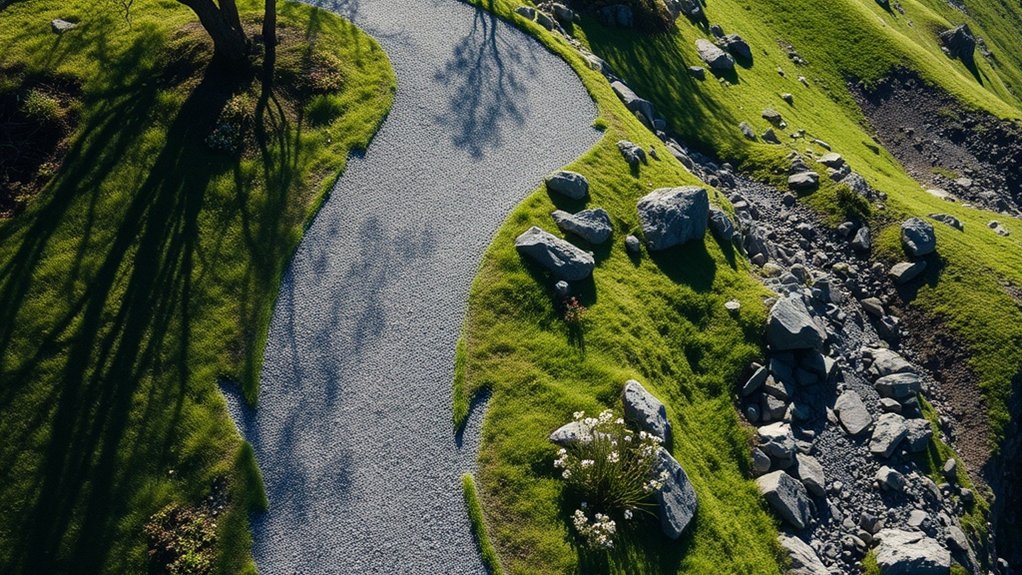
When working on steep slopes, you’ll encounter specific challenges that require careful management.
If flow isn’t controlled during installation, it can result in uneven coverage. An unstable sub-base can also jeopardise the overall stability of the surface.
Moreover, using specialised equipment is crucial to ensure a precise application and to uphold the integrity of your resin-bound gravel surface.
Flow During Installation
Managing resin flow during installation on steep slopes can be tricky, but with the right techniques, you can achieve excellent results. Here’s how to ensure effective flow control:
- Mix the resin to a thick, toffee-like consistency to stop it from flowing downhill.
- Work in small, manageable sections, applying the resin like you’d icing on a cake.
- Keep an eye on the weather to avoid issues with moisture.
These methods help maintain consistency and stability. If the viscosity isn’t right, you risk uneven surfaces and material loss.
Uneven Sub-Bases
Uneven sub-bases can create serious problems for resin-bound gravel installations on steep slopes, causing instability and surface wear.
It’s crucial to assess the sub-base thoroughly to spot any cracks or loose materials that need fixing before you start. Techniques like using geogrids or compacted Type 1 MOT can help stabilise soft ground and reduce the risk of sinking.
Proper drainage is also vital; uneven surfaces can lead to water pooling, which can damage the resin.
Ensure that gradients are consistent to direct water away and prevent erosion. Don’t forget edge restraints; without them, you risk lateral movement and cracking over time.
A stable, well-prepared sub-base is key to achieving durable and attractive results.
Specialized Equipment Needs
Preparing an uneven sub-base is just the start; dealing with steep slopes brings its own challenges that require specific equipment and techniques for successful resin-bound gravel applications.
To ensure safety and effective installation on slopes, consider these essential tools:
- High-viscosity resin to prevent the material from flowing downhill, ensuring an even coverage.
- Specialist trowels or spreaders designed for use on inclines to keep a consistent layer thickness.
- Lifting and transport tools adapted for safety on slopes, such as scaffold platforms, to reduce the risk of slips.
Using the right tools improves precision and stability when tackling steep gradients.
Solutions for Effective Application on Uneven Surfaces
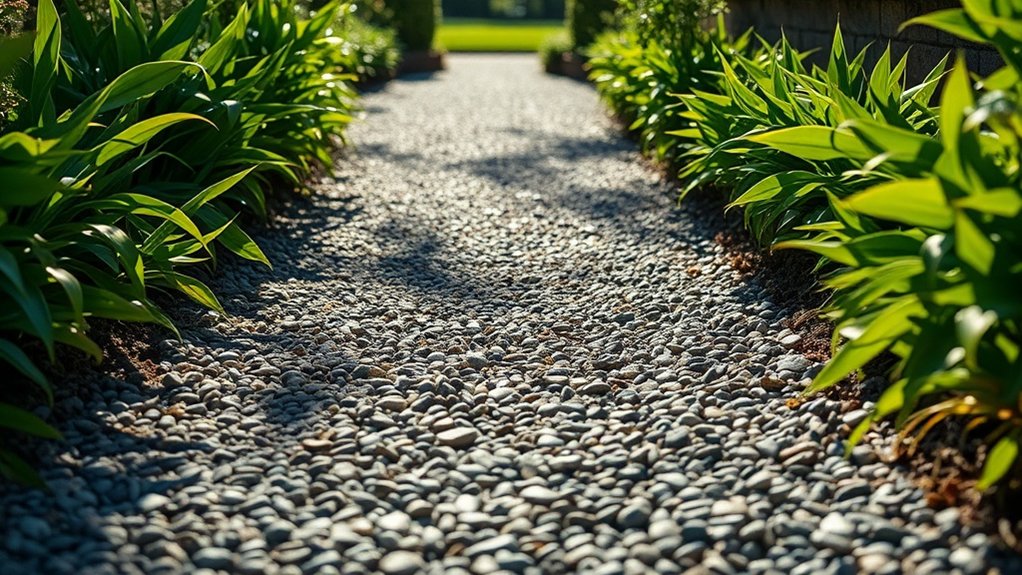
When applying resin-bound gravel on uneven surfaces, it’s essential to assess the site thoroughly before starting.
Begin with a careful slope assessment—measure angles and check drainage patterns to avoid water build-up. Ensure the soil is stable, as an unstable base can cause installation issues.
Use a layer-by-layer approach, applying a minimum depth of 18mm for durability, and add anti-slip aggregates for steeper slopes.
Work methodically from the bottom up, using a grid pattern for even coverage. Keep a close eye on environmental conditions, as temperature and weather can affect curing.
Selecting the Right Materials for Optimal Results
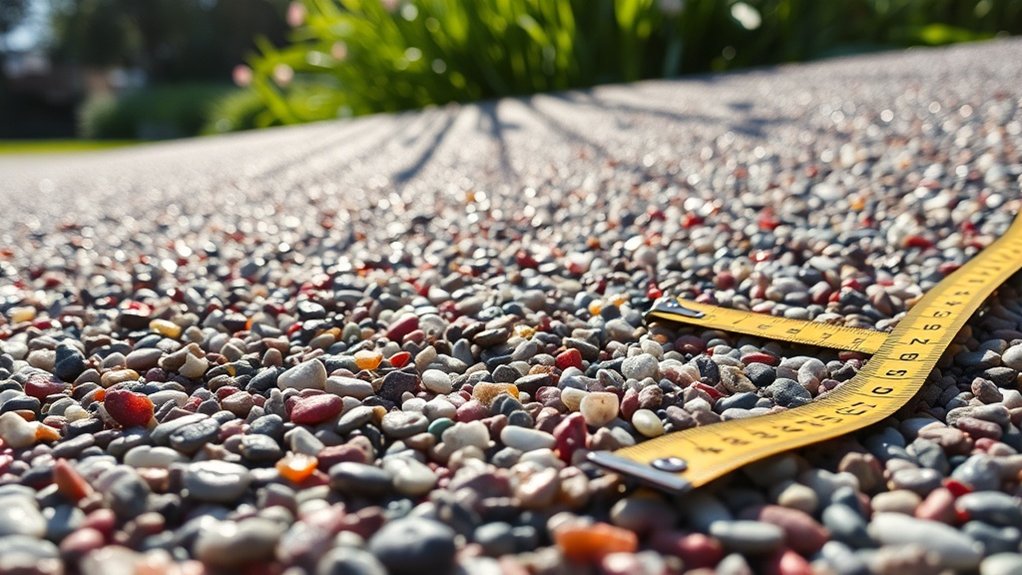
To achieve the best results with resin-bound gravel, it’s crucial to select the right materials. Pay attention to both aggregate choice and resin compatibility to ensure durability and performance.
Here are some key points to consider:
- Use washed, kiln-dried aggregates between 6mm and 10mm in size. This helps to reduce dust and moisture, which enhances surface stability.
- Opt for aggregates with high compressive strength (over 12 MPa after 7 days) to support load-bearing applications and maintain permeability.
- Choose a two-part, UV-stable resin that effectively coats each aggregate particle and complies with ASTM abrasion resistance standards.
Innovations in Resin-Bound Technology for Enhanced Performance
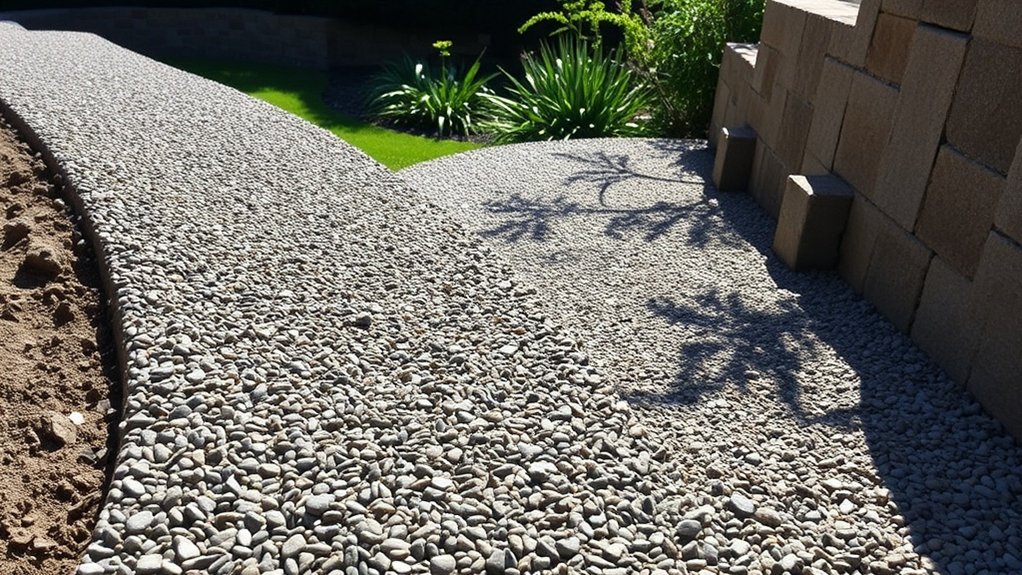
As you delve into resin-bound gravel, it’s vital to be aware of the latest advancements in resin-bound technology to boost your project’s performance.
Recent developments include UV-resistant polyurethane resins that outperform traditional epoxy options, helping to prevent discolouration and extending the lifespan of surfaces to around 30 years.
These innovations also enhance flexibility, which means less brittleness and cracking in various weather conditions.
Additionally, permeable systems are designed for sustainability, ensuring 100% water drainage—crucial for effective stormwater management without compromising on aesthetics or strength.
Thanks to patented polymer technologies, these materials offer improved durability and resistance to wear, making them suitable for high-traffic areas with minimal maintenance required.
The installation process is straightforward, and the use of eco-friendly materials supports both performance and environmental responsibility in your resin-bound gravel projects.
Frequently Asked Questions
How Long Does Resin-Bound Gravel Take to Cure Completely?
Resin-bound gravel usually takes between 24 to 48 hours to dry completely. However, under ideal conditions, it may set quicker. It’s advisable to wait at least 3 to 5 days before allowing heavy traffic to ensure it reaches full strength.
Can I Install Resin-Bound Gravel in Cold Weather?
Yes, you can install resin-bound gravel in cold weather. However, it’s essential to manage temperature and moisture effectively. Consider using ground heating or protective covers, and always check the weather forecast to ensure optimal conditions for installation and curing.
What Colors and Finishes Are Available for Resin-Bound Gravel?
Resin-bound gravel comes in a wide range of colours, from natural stone shades and greys to vibrant hues. You can choose from various finishes too, such as smooth surfaces or more textured options, which can enhance both the look and practicality of your project. For instance, a smooth finish might work well for driveways, while a textured surface could provide better grip in garden pathways.
Is Resin-Bound Gravel Suitable for Driveways and Walkways?
Resin-bound gravel is an excellent choice for driveways, providing durability and effective drainage. For walkways, its slip-resistant properties ensure safety and longevity. Picture a stylish driveway that can handle everyday use while enhancing your home’s curb appeal.
How Do I Repair Damaged Resin-Bound Gravel Surfaces?
To repair damaged resin-bound gravel surfaces, begin with proper surface preparation. Clean the area thoroughly, then fill any cracks with a high-quality resin and matching aggregate. This ensures a seamless blend that maintains both durability and appearance. For instance, if you’re fixing a driveway, make sure the repair is level with the surrounding surface for a tidy finish.
Conclusion
When transforming sloped and uneven surfaces with resin-bound gravel, think of yourself as a gardener shaping a landscape. With the right materials and techniques, you can create a durable surface that withstands the weather. Consider the way a river carves its path through rock; you too can adapt and navigate the challenges presented by your terrain. By applying innovative methods and paying attention to detail, you’ll create a strong and attractive foundation that enhances both the look and usability of the area.