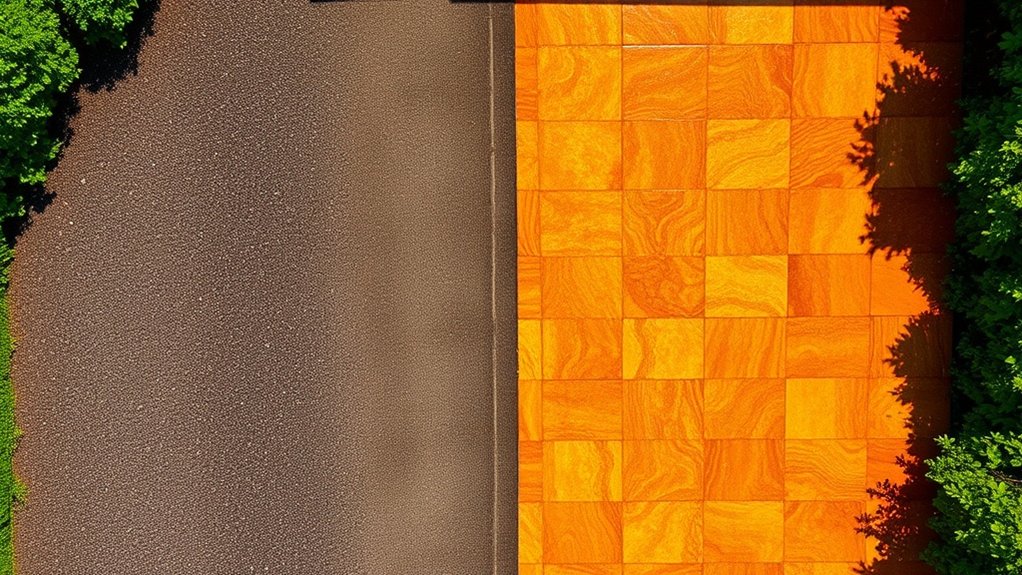
When deciding between resin and tarmac for your driveway in Witham, consider durability, maintenance, and appearance. Resin driveways typically last longer and need less upkeep, while tarmac is more affordable and easier to install initially, but requires more frequent repairs.
Resin comes in various colours and offers excellent slip resistance, making it a safer option. If you want to make an informed choice that fits your needs, keep reading for insights and comparisons.
Key Takeaways
- Resin driveways typically last longer than tarmac, with a lifespan of 20-25 years compared to tarmac’s 15-20 years, making them more suitable for Witham’s unpredictable weather.
- Although resin has a higher initial cost of around £120 per m², its durability and low maintenance requirements can lead to savings over time.
- With a variety of design options and excellent slip resistance, resin driveways not only enhance safety but also boost the visual appeal of homes in Witham.
- Tarmac requires more regular upkeep and resurfacing, making resin a more convenient option for homeowners looking to minimise hassle.
- The permeability of resin driveways helps reduce flooding risks and supports groundwater recharge, offering a more eco-friendly solution for Witham’s drainage challenges.
Durability Comparison: Tarmac Vs Resin

When comparing durability, it’s important to look at the pros and cons of tarmac and resin driveways.
Tarmac is known for its strength under heavy loads, making it suitable for busy areas or commercial use. It typically lasts between 15 and 20 years but will need some patching over time.
On the other hand, resin driveways offer great flexibility and can last 20 to 25 years with proper installation and little maintenance. While resin handles medium traffic well, it might crack if subjected to very heavy vehicles. Additionally, the average lifespan of tarmac driveways is around 15–20 years, which highlights the longevity advantage of resin. Notably, resin surfaces can support weights up to 400 tonnes per cm², making them incredibly durable under typical residential use.
Additionally, resin is resistant to UV damage and weeds, helping it maintain its appearance longer than tarmac, which can fade.
If you’re after longevity and easy upkeep, resin may be the way to go. However, for heavy load-bearing needs, tarmac’s robustness might be the better choice.
Cost Analysis: Initial and Long-Term Expenses

When considering driveway options, it’s important to look at both the initial and long-term costs of resin and tarmac.
Resin driveways generally have a higher upfront cost, averaging £120 per m², compared to tarmac at around £90 per m². For a typical 30m² driveway, you might pay about £2,500 for tarmac, while resin could range from £1,800 to £3,000, depending on the installation method. Additionally, resin driveways offer a clean and seamless appearance that enhances the aesthetic value of your property. Moreover, the durability of resin-bound surfaces can provide a longer lifespan, which may offset initial costs over time.
However, tarmac is usually easier to install, which can lead to lower long-term costs due to less maintenance.
Resin driveways might need more upkeep, which could increase future expenses.
Ultimately, it’s about finding the right balance between initial costs and potential long-term maintenance, ensuring your driveway choice fits your budget and needs.
Maintenance Requirements for Both Options

In terms of maintenance, tarmac requires more regular attention, particularly for filling cracks and repairing potholes. On the other hand, resin surfaces are much easier to maintain; a quick sweep and occasional deep clean are usually all that’s needed. This ease of maintenance contributes to the overall longevity of resin driveways, allowing you to enjoy your outdoor space without constant worry. Regular cleaning routines for high-traffic areas help further enhance the durability of resin surfaces, allowing you to enjoy your outdoor space without constant worry.
Tarmac Maintenance Demands
Tarmac driveways are durable and look great, but they do need regular maintenance to stay in good shape. It’s a good idea to sweep your driveway weekly to clear away leaves and debris. A pressure wash once or twice a year can help tackle stubborn stains. This routine cleaning keeps your driveway looking good and helps maintain its strength.
Make sure to inspect your driveway regularly, especially after heavy rain or frost. If you spot any cracks, repair them straight away. Using a suitable sealant to fill cracks prevents water damage and stops weeds from growing.
Ignoring these steps can create safety hazards and lead to expensive repairs later on. By sticking to these maintenance tips, you’ll help your driveway last longer and enjoy its benefits for many years.
Resin Upkeep Benefits
Maintaining a tarmac driveway is crucial for its lifespan, but resin driveways offer some attractive upkeep benefits.
For starters, keeping your resin surface looking great is simple. A weekly sweep and an occasional gentle wash will do the trick. For a deeper clean, just use a pH-neutral cleaner every six months.
To enhance the longevity of your driveway, it’s advisable to reseal it every 2 to 5 years to protect it from sun damage. Avoid using harsh chemicals or high-pressure washers, as these can harm the surface.
Regular inspections will help you spot any repairs needed early on. With minimal effort, you can enjoy a beautiful and durable driveway, making resin a wise choice for residents in Witham.
Aesthetic Appeal: Colors and Designs

When it comes to driveways, resin and tarmac serve different aesthetic purposes.
Resin is particularly appealing due to its wide array of colours and design options, making it a popular choice for homeowners in Witham.
- You can select shades such as autumn gold, Brittany bronze, and Daltex golden quartz.
- The combination of aggregates allows for creative patterns and smooth finishes.
- Resin can significantly enhance your home’s curb appeal, potentially increasing its value.
Tarmac, on the other hand, typically comes in a standard black finish with few design choices.
Safety Features: Slip Risks and Surface Quality

When it comes to safety features, the slip resistance of resin surfaces is superior to tarmac.
Resin provides a smooth, anti-slip finish that significantly reduces the risk of falls. In contrast, tarmac can develop loose stones over time, posing a hazard.
Moreover, resin effectively manages water, ensuring your surfaces remain safer and more stable, even in challenging weather conditions.
Slip Resistance Comparison
Safety is crucial when selecting surface materials for driveways and walkways, and a comparison of slip resistance shows clear advantages for resin over tarmac.
Here’s why resin is the better choice:
- Resin offers a smooth, anti-slip surface without loose chippings.
- Its textured finish improves grip, even in wet or icy weather.
- Being SUDS compliant, resin allows water to drain away, reducing slip hazards.
- Resin is oil-resistant, which helps maintain a safe surface.
On the other hand, tarmac can be slippery, especially when wet, due to loose stones and the potential for algae growth.
Its semi-porous nature can also lead to cracks and potholes, posing safety risks.
For reliable slip resistance and lasting durability, resin is the superior option.
Surface Quality Assessment
Choosing the right surface for your driveway or walkway is crucial for both safety and appearance.
Resin-bound surfaces provide excellent grip and reduce slip risks, making them a safer option for homes. Their seamless finish resists cracking and maintains colour stability, preventing fading over time.
On the other hand, while tarmac is durable and can support heavy loads, it’s prone to cracking with temperature fluctuations, which means it may need patching and maintenance.
Additionally, tarmac isn’t as slip-resistant as resin, particularly in wet conditions.
Drainage Capabilities: Managing Water Runoff

When it comes to driveways, resin and tarmac have distinct drainage capabilities that affect how water runoff is managed. Choosing the right surface can significantly improve your property’s drainage and prevent water-related issues.
- Resin driveways are permeable, allowing water to flow through and reducing surface runoff.
- Tarmac, on the other hand, is generally impermeable, which means it often requires additional drainage solutions to handle water effectively.
- With resin, the risk of flooding is minimised, promoting groundwater recharge and reducing puddles.
- Tarmac can lead to erosion and cracking over time due to inadequate water management.
For residents of Witham, a resin driveway is an excellent choice for effective drainage, significantly lowering the risk of slips and flooding while providing a durable solution.
Installation Processes and Timeframes

When comparing resin and tarmac installations, it’s important to consider the speed and groundwork involved.
Resin driveways usually take between 1-3 days to complete, making them a quicker option. In contrast, tarmac installations don’t have a defined timeline, which can leave you uncertain about how long the process will take.
For resin, understanding the groundwork—such as site preparation and curing times—is crucial.
This knowledge can help you make a more informed decision for your property. For instance, if you’re looking for a fast turnaround, resin may be the better choice.
Installation Speed Comparison
When considering a new driveway or pathway, Witham residents should pay attention to the installation speed of resin versus tarmac. Here’s a quick breakdown of what to expect:
- Small projects (10-50 m²): Completed in just 1 day.
- Medium driveways (50-100 m²): Typically take 2-3 days due to complexity.
- Large areas (>100 m²): May take 3-5 days or longer.
- Complex designs with inlays or multiple sections can add an extra 1-2 days.
Resin installations are generally quicker than tarmac, particularly in good weather.
However, actual timeframes depend on site conditions, labour, and design details.
It’s important to plan ahead, as choosing the right material can save you time and hassle.
Groundwork Requirements Explained
Groundwork is a crucial step for any resin or tarmac installation, and residents of Witham should be aware of the specific requirements involved. The groundwork includes several key steps that ensure a strong foundation.
Here’s a quick breakdown:
| Step | Requirement | Importance |
|---|---|---|
| Excavation Depth | 150-200mm | Provides stability |
| Surface Priming | Apply Primer C | Improves bonding |
| Aggregate Selection | Use 3-6mm aggregates | Ensures even coating |
| Edging Installation | Secure and level edges | Prevents shifting |
| Mixing Process | 3 parts aggregate to 1 part resin | Achieves ideal consistency |
Environmental Considerations and Sustainability

While both resin and tarmac have their advantages, resin bound driveways are particularly noteworthy for their environmental considerations and sustainability.
Choosing resin means you’re making an eco-friendly choice. Here are some key benefits:
- Permeable surfaces allow rainwater to drain naturally, helping to reduce the risk of flooding.
- Recycled materials, such as stones and glass, promote sustainable resource use.
- Urban heat mitigation helps cool local areas, which supports healthy plant life.
- Durability means less frequent replacements are needed, conserving resources over time.
Longevity and Warranty Insights

When comparing driveway options like resin bound surfaces and tarmac, resin clearly excels in terms of longevity and warranty.
With a lifespan of 20-25 years when installed correctly, resin is significantly more durable than tarmac, which usually requires resurfacing in just 10-15 years.
Many resin suppliers offer warranties of up to 10 years, with potential extensions if the driveway is well maintained.
In contrast, tarmac often comes with shorter warranty periods due to its tendency to crack.
Additionally, resin’s flexibility allows it to better endure freeze-thaw cycles compared to tarmac.
For residents in Witham, investing in a resin driveway means opting for a long-lasting, low-maintenance solution with strong warranties—making it a smarter choice overall.
Choosing the Right Material for Your Needs

When deciding between resin and tarmac for your driveway, it’s important to think about your specific requirements.
Your choice will affect your long-term satisfaction, so consider these key factors:
- Durability: Resin can better withstand harsh weather conditions compared to tarmac.
- Cost: Tarmac may seem cheaper initially, but it can lead to higher costs over time due to repairs.
- Maintenance: Resin needs very little upkeep, whereas tarmac often requires regular maintenance.
- Aesthetics: Resin comes in a variety of colours and finishes, making it a more attractive option for enhancing your home’s appeal.
Ultimately, select the material that best fits your lifestyle and preferences.
Frequently Asked Questions
How Does Temperature Affect the Performance of Tarmac and Resin?
Temperature changes significantly affect the performance of tarmac, which can deform in hot weather. On the other hand, resin systems perform well in a variety of conditions, maintaining their strength and durability. When selecting a driveway material, it’s essential to consider these differences to ensure you make the best choice for your needs.
Can Resin Be Installed Over an Existing Tarmac Surface?
Yes, you can install resin over existing tarmac, giving your driveway a fresh and attractive look. Just ensure the tarmac is stable and clean to achieve a successful installation that will impress your neighbours.
What Are the Environmental Impacts of Tarmac and Resin?
Tarmac raises sustainability issues due to its reliance on fossil fuels and the potential for habitat disruption. In contrast, resin provides recycling options, which help minimise waste. By assessing the environmental impacts of both materials, you can make informed and responsible choices for your projects. For example, if you’re considering a driveway, opting for resin might be a more eco-friendly choice compared to traditional tarmac.
Are There Specific Design Options for Commercial Properties?
Consider design options such as modern office spaces with open layouts at Eastways Industrial Estate. This approach improves the visual appeal of commercial properties and creates functional environments that attract clients and enhance productivity.
How Does Resin Handle Extreme Weather Conditions Compared to Tarmac?
Resin outshines tarmac in extreme weather conditions, demonstrating greater durability against frost and heavy rainfall. Its flexibility allows it to absorb pressure, which helps to prevent cracking. In contrast, tarmac’s rigid structure can break under stress, resulting in expensive repairs and ongoing maintenance issues. For instance, resin surfaces remain stable and intact even after harsh winters, while tarmac often requires patching after heavy rains and freezes.
Conclusion
When deciding between resin and tarmac for your property in Witham, think about what matters most to you—durability, appearance, or cost. Resin-bound surfaces can last up to 25 years with proper care, significantly outlasting tarmac, which typically lasts around 10-15 years. By considering these factors and the long-term advantages, you can make a choice that suits your needs and boosts your home’s value. Choose wisely for lasting satisfaction!