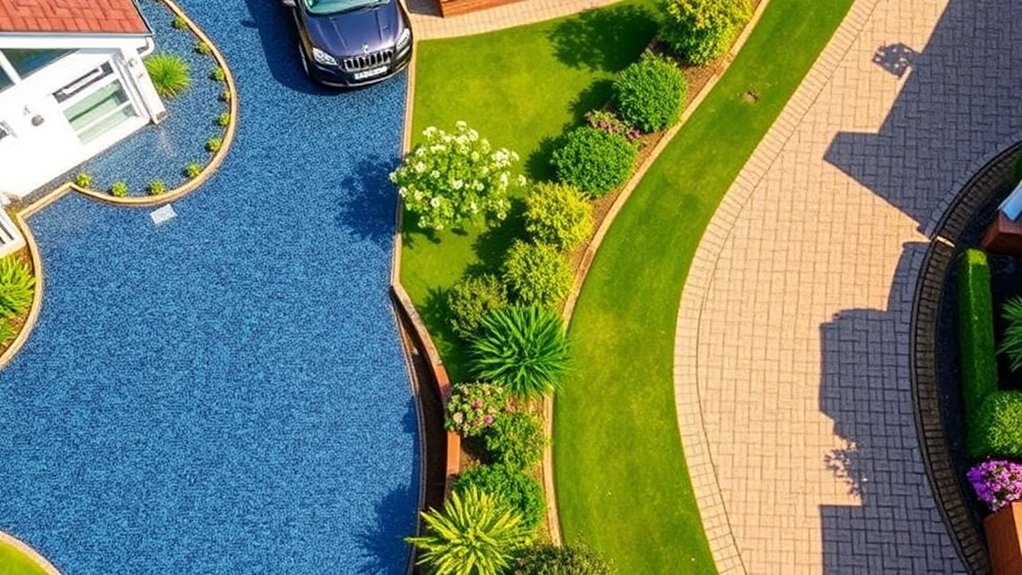
When deciding between resin driveways and block paving for your home in Canvey Island, it’s important to think about cost and maintenance. Resin driveways tend to have a higher initial cost but require less upkeep over time, lasting around 20 to 30 years. They are also more durable against weather extremes. On the other hand, block paving may be cheaper to install but needs regular weeding and re-sanding to keep it in good condition. Both options have their advantages, so take the time to weigh them up and find the best choice for your requirements.
Key Takeaways
- Resin driveways provide a sleek, contemporary finish and can be customised to suit the style of your Canvey Island home, boosting its curb appeal.
- With a lifespan of 20-30 years and excellent drainage, resin is well-suited for the local climate and helps manage flooding risks effectively.
- Maintenance for resin driveways is minimal, making them a cost-effective choice compared to block paving, which requires regular weeding and re-sanding.
- Being permeable, resin driveways help reduce surface water runoff and support the local water table, which is beneficial for the environment.
- Although block paving has a traditional aesthetic, it is more susceptible to shifting and weed growth, which can diminish its appearance over time.
Cost Analysis of Resin Driveways and Block Paving

When choosing a driveway, you may need to compare the costs of resin driveways and block paving. Resin typically costs between £30 and £55 per m² for materials, while block paving starts around £20 per m², making it a cheaper option at first glance.
However, installation costs can vary; resin installation averages £80 to £140 per m², whereas block paving ranges from £70 to £110. In the long run, resin driveways could be more cost-effective due to lower maintenance requirements due to lower ongoing expenses. With resin, you’ll save on upkeep since block paving needs regular weeding and re-sanding. Unlike block paving, resin-bound driveways offer better durability and a longer lifespan, reducing the need for frequent repairs.
Ultimately, your decision will depend on weighing initial expenses against potential long-term savings, ensuring you make a smart investment in your property’s appearance and longevity.
Durability and Lifespan Comparison

When comparing the costs of resin driveways and block paving, it’s crucial to consider durability and lifespan.
Resin driveways typically last between 20 to 25 years, with high-quality installations lasting up to 30 years. Their seamless surface is resistant to cracking and erosion, making them a solid choice. Additionally, the quality of installation significantly impacts the lifespan and performance of resin driveways. The expected lifespan of resin-bound gravel can be maximized with proper installation and maintenance, ensuring a long-lasting surface.
In contrast, while block paving can match resin’s lifespan in ideal conditions, it’s more susceptible to issues like shifting blocks and weed growth, which can significantly reduce its durability. Additionally, poor drainage can further compromise block paving.
Although both options can last over 20 years, resin requires less maintenance and offers better resistance to environmental factors, making it a more appealing choice for your property.
Maintenance Requirements for Both Options

When it comes to the maintenance of resin driveways and block paving, there are notable differences in upkeep and cleaning ease. Each option has its own set of challenges and advantages that can significantly impact your long-term expenses.
Resin driveways are generally low maintenance; a simple sweep and occasional wash with soapy water is usually enough to keep them looking good. They’re resistant to weeds and stains, which makes cleaning straightforward. Additionally, the 15 to 25 years lifespan of resin driveways means you can enjoy their durability without frequent replacements. Regular sweeping with a stiff broom is essential during autumn to clear leaves and debris.
On the other hand, block paving requires more attention. Over time, weeds can grow between the blocks, necessitating regular weeding or the use of a weed killer.
Additionally, you may need to re-sand the joints periodically to maintain their appearance and stability. Considering these factors can help you choose the best option for your lifestyle and budget.
Ongoing Upkeep Comparison
When comparing resin driveways and block paving, their maintenance needs vary significantly. Here’s a straightforward breakdown:
- Weed Control: Resin driveways have a smooth surface that deters weeds, while block paving requires regular re-sanding of joints and herbicide treatments to keep weeds at bay.
- Drainage Needs: Resin is permeable, so it needs periodic cleaning to prevent debris build-up. In contrast, block paving may require attention to joints to prevent water pooling.
- Repair: For minor damages, resin can be locally repaired by reapplying the surface material. However, with block paving, damaged pavers can be easily replaced.
- Seasonal Maintenance: Both surfaces need vegetation control, but block paving often requires more frequent upkeep due to settling and joint wear.
Ultimately, your choice will hinge on how much maintenance you’re prepared to handle.
Cleaning and Maintenance Ease
When deciding between resin driveways and block paving, ease of cleaning and maintenance is crucial.
Resin driveways typically only need weekly or biweekly sweeping and a rinse with a garden hose to keep them looking good. Every six months, you should use a pH-neutral cleaner, and occasional pressure washing can help remove stubborn stains.
On the other hand, block paving also requires weekly sweeping but adds the need for annual pressure washing and replenishing joint sand to prevent weeds from growing.
While both options have their cleaning routines, resin driveways are generally more resistant to stains.
Ultimately, your decision may hinge on how much time you’re prepared to spend on maintenance, while ensuring your driveway remains both appealing and functional.
Long-Term Cost Implications
When deciding between resin driveways and block paving, it’s important to consider not just the upfront costs but also the long-term financial implications. Here’s a straightforward comparison to help with your decision:
- Lifespan: Resin driveways generally last between 15 and 25 years, while block paving can last a bit longer, around 20 to 25 years.
- Repair Costs: For resin, minor repairs can start at under £100, but larger issues can escalate to thousands. Block paving, on the other hand, allows for smaller, incremental repairs, which can help keep costs down in the short term.
- Routine Maintenance: Resin driveways require very little maintenance, while block paving needs regular re-sanding and weed control.
- Long-Term Savings: Choosing block paving may lead to lower ongoing maintenance costs, potentially saving you money over time.
Installation Process Overview

When considering a resin driveway or block paving, understanding the installation process is key.
It starts with preparing the base, which involves excavating to a depth of about 150mm. A stable sub-base is crucial, often using MOT type 1 stone. After a thorough site assessment, edging is installed to contain the resin mixture, followed by a thorough cleaning of the area.
Next, the resin application begins. This involves mixing UV-stable resin with selected aggregates, ensuring a good match for the desired finish.
The mixture is then spread evenly, smoothed out, and left to cure for 24 hours. This careful process results in a durable and attractive surface for your home in Canvey Island.
Permeability and Drainage Benefits

When it comes to permeability and drainage, resin driveways and block paving offer distinct advantages and disadvantages. Here are some key points to consider:
- Resin Driveways: These surfaces boast a permeability rate of up to 95%, allowing water to drain efficiently. This helps to prevent flooding and eases the burden on urban drainage systems.
- Groundwater Recharge: Resin driveways facilitate natural groundwater recharge, which is beneficial for local wildlife and ecosystems.
- Flood Risk Reduction: They effectively handle heavy rainfall without forming puddles, reducing pressure on local sewer systems.
- Block Paving Drawbacks: In contrast, traditional block paving is largely impermeable, leading to water accumulation and heightened flood risk.
For residents of Canvey Island, opting for permeable surfaces like resin driveways can significantly alleviate flooding issues and bolster property resilience.
Aesthetic Appeal of Resin Vs Block Paving
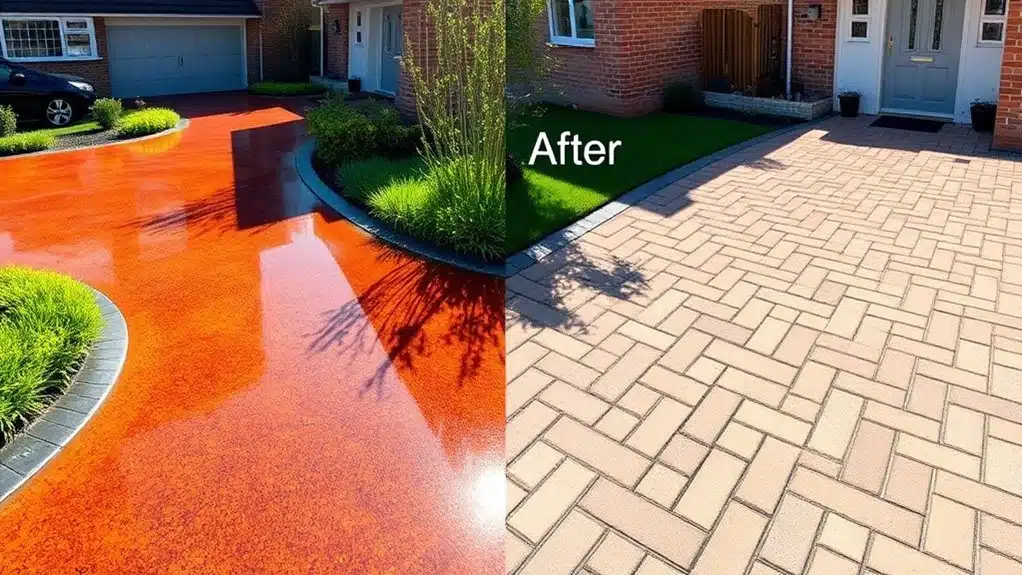
How do resin driveways and block paving compare in terms of aesthetic appeal?
Resin driveways have a sleek, modern look that creates a seamless finish, boosting your home’s curb appeal. They come in various colours and textures, allowing you to customise them to suit your property’s style.
On the other hand, block paving offers a classic charm, using natural stones that can be arranged in different patterns and shades. While it can enhance the appearance of your home, issues like stone displacement and weed growth may affect its overall tidiness.
Performance in Canvey Island’s Climate
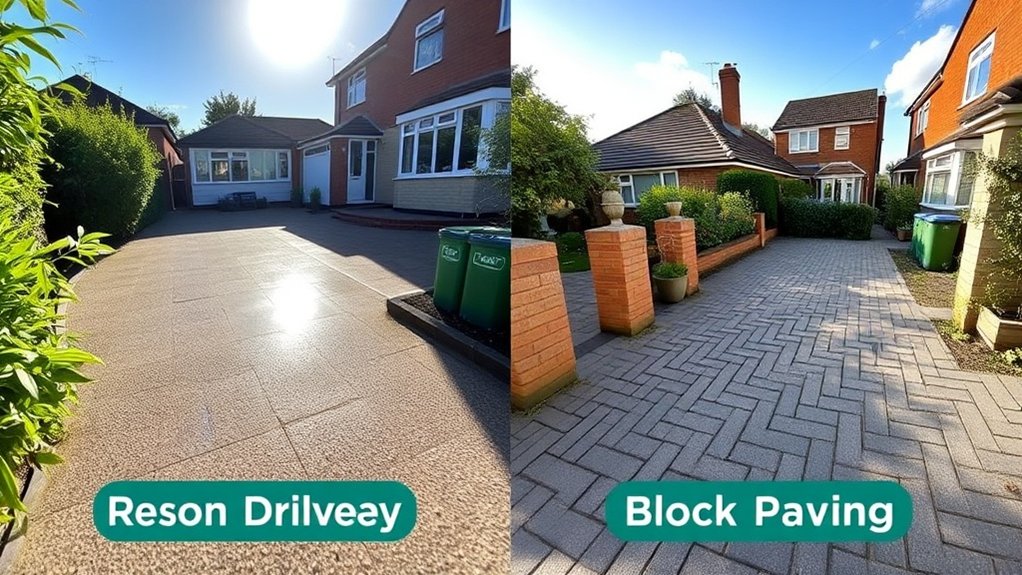
Canvey Island has a temperate maritime climate, which affects how resin driveways and block paving perform. Here’s a straightforward comparison:
- Temperature Extremes: Resin can handle high temperatures without softening, while block paving might crack in frosty conditions.
- Precipitation Patterns: Resin allows water to drain away, preventing pooling during heavy rain. In contrast, block paving can get waterlogged if the joints become blocked.
- Wind Resilience: Resin stays intact in strong winds, but block paving depends on its interlocking design to maintain stability.
- Flood Risks: Resin’s seamless surface helps reduce flooding, whereas block paving may need to be raised to manage water runoff effectively.
In the end, your choice should consider how each option adapts to the climate and seasonal changes in Canvey Island.
Long-Term Financial Considerations
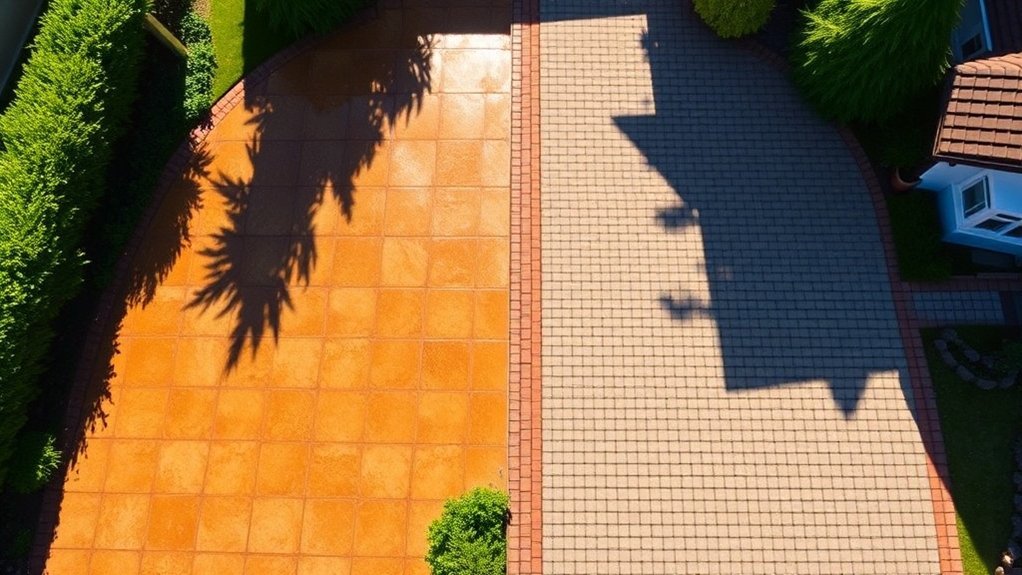
When thinking about long-term financial impacts, it’s essential to compare the initial installation costs with ongoing maintenance and durability.
Resin driveways may have a higher upfront cost, but they often save you money over time due to their low maintenance needs.
On the other hand, block paving might appear cheaper to install, but the regular upkeep can quickly add up, affecting your budget down the line.
For example, if you have to replace worn blocks or spend time cleaning weeds, those costs can make block paving more expensive in the long run.
Initial Installation Costs
Installing a new driveway can be a significant expense, so it’s important to understand the initial costs of resin driveways and block paving for effective financial planning. Here’s a quick overview of the main factors affecting these costs:
- Installation Materials: Resin costs between £70 and £120 per square metre, while block paving ranges from £50 to £100 per square metre.
- Labour Costs: The installation cost for resin is usually between £30 and £50 per square metre. In contrast, block paving can be more expensive, ranging from £50 to £100 per square metre due to its complexity.
- Site Conditions: If your site has poor drainage or difficult access, additional groundwork may be needed, which will increase the total cost.
- Design Choices: Opting for custom colours or patterns can significantly raise your initial expenses, depending on your design preferences.
Taking these factors into account will help you make a well-informed decision that fits your budget.
Ongoing Maintenance Expenses
When considering the costs of resin driveways versus block paving, ongoing maintenance is an important factor.
Resin driveways generally require less upkeep, with cleaning typically costing between £40 and £130 depending on size. A power wash now and then is usually sufficient to keep them looking good.
On the other hand, block paving requires more regular attention. You’ll find yourself weeding, re-sanding joints, and potentially replacing sunken blocks every few years, which can add up over time.
While resin driveways may have lower maintenance needs, the labour-intensive upkeep of block paving can lead to higher overall costs.
Therefore, opting for resin could result in significant savings over 15 to 25 years, making it a more cost-effective choice for your home in Canvey Island.
Long-Term Durability Benefits
When considering resin driveways versus block paving, it’s important to look at their long-term durability. Here are some key points to help you decide:
- Lifespan: Resin driveways generally last between 15 and 25 years, while block paving can last 20 to 30 years if well-maintained.
- Flexibility: The flexibility of resin helps prevent cracking due to ground movement. In contrast, block paving can shift, leading to potential hazards.
- Drainage: Permeable resin systems effectively manage drainage, reducing risks of freeze-thaw damage and washout.
- Colour Retention: UV-stable resin keeps its colour longer than block paving, which means less frequent resurfacing.
These factors can significantly influence your choice for a driveway that stands the test of time.
Environmental Impact and Sustainability

When assessing the environmental impact and sustainability of driveways, resin bound surfaces stand out as a more eco-friendly option compared to traditional block paving.
Resin is permeable, allowing water to drain effectively and reducing surface runoff, which helps to mitigate flooding risks. This design also filters out pollutants and aids in naturally replenishing the water table.
Moreover, resin driveways can last over 20 years, which cuts down on the need for replacements and reduces carbon footprints. They often use recycled aggregates and renewable materials, promoting resource conservation.
Additionally, light-coloured aggregates reflect heat, helping to counteract the urban heat island effect.
Customisation Options and Designs

When choosing a resin driveway, you’ll discover a wide range of colours and textures to suit your taste.
You can add patterns and personalised designs, ensuring your driveway matches your home’s character.
With options for custom motifs and practical markings, your driveway can be both attractive and functional, enhancing your outdoor space.
Colour Variety and Choices
Choosing the right colour for your driveway can significantly improve your property’s appearance, especially with the wide range available in resin and block paving.
Here are some key colour trends to consider:
- Resin Driveway: Over 40 colours to choose from, such as Amalfi’s beachy tones and Purity’s warm shades.
- Block Paving: Popular choices include red, buff, and grey, all featuring fade-resistant pigments.
- Custom Blends: You can create subtle gradients in block paving to match your home’s style.
- Local Appeal: Resin colours can complement Canvey Island’s coastal charm.
With these options, you can enhance your home’s curb appeal while ensuring long-lasting durability.
Choosing the right colour will ensure your driveway beautifully complements your property.
Pattern and Texture Options
When choosing a driveway material, the pattern and texture options can significantly enhance your home’s appearance.
Resin driveways offer a wide variety of patterns, allowing you to create custom designs that fit your property’s shape and size. With various stone finishes available, you can achieve unique textures that complement both traditional and modern styles.
In contrast, block paving features established patterns such as herringbone and basketweave, providing durable textures that can withstand the weather in Essex.
While block paving focuses on interlocking designs, resin allows for greater flexibility with more fluid patterns. Both materials offer diverse textures, but resin provides more opportunities to showcase your personal style.
Personalised Design Features
When considering personalised design features for your driveway, you’ll find a range of customisation options that help showcase your individual style.
Here are some key features to consider:
- Bespoke Identity Features: Add your house number or family crest directly into the resin for a personal touch.
- Custom Pictorial Inlays: Incorporate nature motifs or symbols filled with contrasting resin for a distinctive look.
- Contrasting Borders: Frame central panels with contrasting edges to enhance visual appeal while ensuring permeability.
- Zoned Treatments: Use different textures for various areas to improve safety and aesthetics.
These elements can significantly enhance your driveway’s appearance and reflect your personality, making your home stand out.
Case Studies of Local Installations

When considering driveway options in Canvey Island, looking at local case studies can offer valuable insights into the effectiveness and appearance of various surfacing materials.
For example, resin bound gravel is popular in the area, providing a smooth finish that complements both modern and traditional homes. Its durability and low maintenance requirements make it a preferred choice for many homeowners.
Block paving is another strong contender, known for its attractive designs that blend functionality with visual appeal. It’s often paired with tarmac for a cost-effective solution.
Imprinted concrete also stands out, offering unique decorative patterns that can enhance your driveway’s look.
Final Considerations for Homeowners

Examining local case studies can provide valuable insights into the practical aspects of resin driveways and block paving.
Here are some key factors for homeowners to consider before making a decision:
- Cost vs. Longevity: Resin driveways may have lower long-term maintenance costs compared to block paving, making them a more economical choice over time.
- Maintenance Needs: With resin, you’ll find fewer issues with weeds and moss, which can save you time and effort in upkeep.
- Local Regulations: It’s essential to check any local regulations that could affect your choice, particularly concerning drainage solutions.
- Personal Preferences: Reflect on the aesthetic and functional features that resonate with your vision for your home.
Frequently Asked Questions
Can I Install Resin Over an Existing Driveway Surface?
Yes, you can install resin over existing driveway surfaces, provided they are structurally sound and properly prepared. It’s crucial to clean the surface, apply a suitable primer, and fix any defects beforehand. This preparation ensures a durable and visually appealing resin finish. For instance, if your driveway has cracks or uneven areas, addressing these issues will help the resin adhere better and last longer.
How Do Resin and Block Paving Perform in Extreme Weather?
Both resin and block paving are resilient in extreme weather. Resin bound surfaces effectively manage freeze-thaw cycles, preventing cracks. In contrast, block paving can flex with movement but may suffer freeze-thaw damage if not properly sealed. Consider your local climate when making a choice.
What Are the Color Options Available for Resin Driveways?
Resin driveways come in a wide variety of colours, from neutral shades like Golden Quartz to striking choices like Red Granite. These colours are not only eye-catching but also highly durable, ensuring your driveway stays vibrant for years to come.
Is There a Risk of Slipping on Resin Surfaces?
Resin surfaces reduce slip incidents by 60%. Their textured finish improves grip, even when wet, making them a safe choice for walking. You can trust that safety is a key aspect of their design.
Can Block Paving Be Repaired if Damaged?
Yes, block paving can be repaired using effective techniques. These methods are often more cost-effective than full replacements, allowing you to tackle minor issues without breaking the bank. For instance, if a few blocks are cracked or uneven, you can simply replace those specific blocks rather than the entire driveway. This not only maintains the appearance of your driveway but also keeps it functional.
Conclusion
When deciding between resin driveways and block paving for your home in Canvey Island, it’s important to note that resin driveways can last up to 25 years with the right care. This durability, along with their minimal upkeep, makes them a great choice for busy households. On the other hand, block paving provides a timeless look and is easier to repair if needed. Consider the costs, longevity, and design options to determine which option suits your lifestyle and property best.