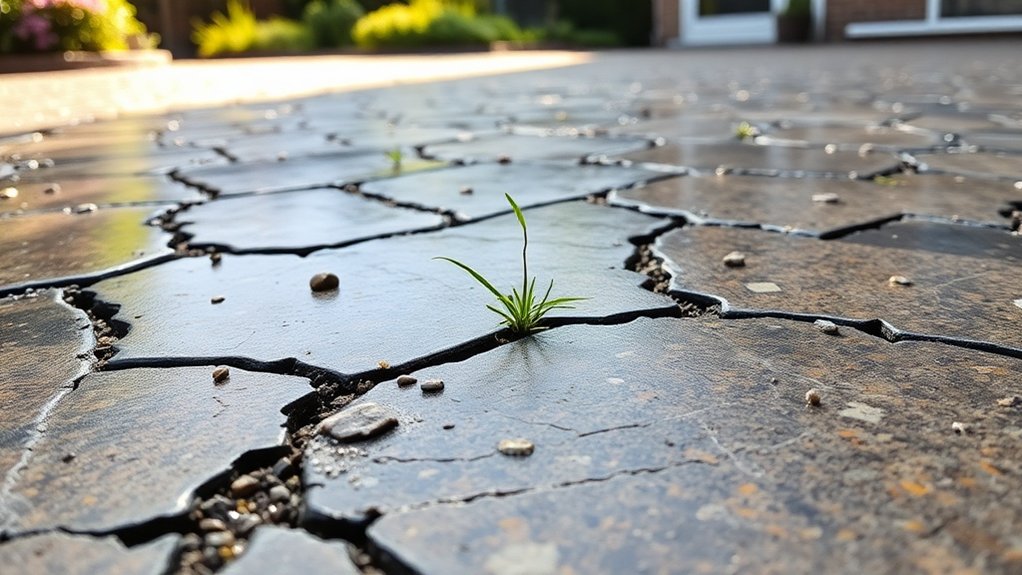
To keep your resin driveway in Laindon in great condition, steer clear of harsh cleaning methods like high-pressure washing, as these can damage the surface. Regularly clear away debris to avoid stains and deter weed growth, and be mindful of chemicals during maintenance. Don’t underestimate the effects of heavy vehicles or winter weather on your driveway. Conducting regular inspections can help you spot problems early. Stay tuned for more tips on maintaining your driveway’s look and performance.
Key Takeaways
- Regularly remove debris to stop stains and weed growth that can harm your resin driveway over time.
- Steer clear of high-pressure washers exceeding 200 bar to avoid damaging the resin binder.
- Clean up animal waste and leaves promptly to prevent tannin stains on the surface.
- Use mild detergents for cleaning; harsh chemicals can lead to discolouration and damage.
- Check for debris weekly to maintain permeability and prevent water pooling.
Harsh Cleaning Methods to Avoid

To keep your resin driveway looking its best and lasting longer, it’s crucial to steer clear of harsh cleaning methods. Overusing a pressure washer can dislodge the aggregate and strip away the resin binder, resulting in expensive repairs. Always keep the pressure below 200 bar and maintain a safe distance to avoid damaging the surface. Regular upkeep, including preventative maintenance, helps in preventing moss establishment and reduces the need for harsh cleaning. Additionally, conducting seasonal maintenance minimizes the chances of dirt build-up and staining.
Stay away from strong chemical cleaners like powerful acids or concentrated bleach, as these can lead to harmful reactions, discoloration, and weakened bonds. Always follow the manufacturer’s dilution instructions to reduce risks.
Instead of using abrasive brushes or scrapers, opt for softer cleaning tools to prevent scratches on the resin. Regular, gentle cleaning is key to maintaining your driveway’s appearance and functionality, ensuring it serves you well without compromising its integrity.
Poor Debris Management Practices

If you neglect debris management on your resin driveway, you could end up with staining and weed growth. Unattended leaves and dirt can release tannins, causing discolouration, while organic matter may lead to unwanted plants sprouting. Regular cleaning and proper maintenance are essential for keeping your driveway looking good and in good condition. Additionally, maintaining permeability ensures effective drainage and reduces the risk of puddles forming on the surface. Regular sweeping with a stiff broom is crucial to clear leaves, preventing moss and algae growth that can compromise your driveway’s integrity.
Accumulated Debris Consequences
Accumulated debris on your resin driveway can cause various issues that affect both its look and function.
If you neglect to remove debris, it can clog the porous surface, leading to water pooling and poor drainage. Over time, dust and organic matter encourage moss and algae growth, which darkens the surface and increases the risk of slipping. Additionally, improper installation can exacerbate these problems by compromising the surface’s durability. Abrasive materials trapped in the debris can scratch the resin and lead to further wear. Regular maintenance, such as sweeping and rinsing, helps prevent these problems and keeps your driveway permeable. Furthermore, effective weed and vegetation control is essential to minimize additional surface damage caused by unchecked growth.
Ignoring these issues can result in costly repairs and an unsightly driveway. Stay proactive to ensure your driveway remains safe and visually appealing.
Tannins and Staining Effects
Tannins from leaves and organic debris can stain your resin driveway, leading to unsightly discolouration. To prevent this, effective debris management is crucial.
Here are some practical tips:
- Remove leaves promptly to stop tannins from being released.
- Check weekly for debris and clear it away before it causes stains.
- Avoid parking heavy vehicles on debris to reduce tannin build-up.
- Wash your driveway regularly to remove any tannin residues.
If left unattended, dark patches can set in, shortening your driveway’s lifespan.
Keep on top of debris management to ensure a cleaner, brighter resin surface, free from tannin effects.
Weed Growth Prevention Tips
To keep your resin driveway in top condition and prevent weed growth, regular maintenance is key.
Sweep the surface every few weeks to clear away loose debris, fallen leaves, and seeds that can lead to weeds sprouting. A stiff broom works well for this, and using a leaf blower can help with a more thorough clean.
Every few months, a gentle jet wash can remove stubborn dirt and algae without damaging the resin.
Consider applying a weed killer annually to stop seeds from germinating, making it easier to keep weeds at bay.
Chemical Exposure Risks

How can homeowners protect themselves from the chemical exposure risks linked to resin driveways?
It’s essential to take safety precautions to minimise health risks. Here are some straightforward steps to follow:
- Wear personal protective equipment (PPE) such as gloves and masks.
- Ensure you work in well-ventilated areas when mixing and curing the resin.
- Allow the resin to cure completely before using the driveway to minimise fumes.
- Look for certifications like ASTM D-4236 for safer handling.
Be aware of volatile organic compounds (VOCs) such as formaldehyde and toluene, which can cause respiratory issues and skin irritation.
Long-term exposure can lead to serious health concerns. Stay informed and take proactive measures to protect yourself and your family from chemical exposure risks.
Heavy Load Mistreatment

Chemical exposure isn’t the only issue for homeowners with resin driveways; heavy load mistreatment can cause serious problems too.
Regularly parking heavy vehicles can create surface indentations and cracks, jeopardising the strength of your driveway. To prevent this, always choose the right resin blends and thicknesses based on your traffic needs.
Poor base compaction and drainage can exacerbate these issues, leading to deformation under heavy loads. Be mindful of temporary loads; placing heavy machinery directly on the surface can cause permanent damage.
Routine maintenance is crucial; neglecting small cracks can allow water to seep in, further damaging your driveway.
Winter Weather Neglect

Winter weather can be harsh on your resin driveway, but there are steps you can take to protect it.
Effective ice management and proper snow removal are essential to prevent damage.
Here’s how to keep your driveway in great condition throughout the colder months.
Ice Management Techniques
When temperatures drop and ice starts to form, managing your resin driveway is crucial for preserving its appearance and durability.
Here are some effective ice prevention strategies and de-icing alternatives to consider:
- Spread a thin layer of grit or sand before it freezes to improve traction.
- Use white rock salt sparingly to create brine, but ensure you wash it away after thawing to avoid corrosion.
- Explore eco-friendly options like wood ash or cat litter for natural grip.
- Steer clear of harsh de-icers; instead, try a simple mixture of rubbing alcohol, water, and dish soap for a DIY solution.
Snow Removal Best Practices
As snow starts to build up, it’s crucial to remove it promptly to prevent compaction and protect your resin driveway.
Use plastic shovels to clear the snow; they won’t damage the surface. For larger areas, a snow blower with rubber blades can help clear snow effectively.
Make sure to remove snow soon after each fall and shovel in layers to avoid excessive digging. For light snow, a soft-bristled broom works well, and a leaf blower can clear away light debris.
Regularly clearing your driveway reduces the risk of slips and falls.
After winter, wash off any salt residues with mild detergent and a soft brush to keep your driveway in excellent condition for years to come.
Inadequate Drainage Care

Inadequate drainage care can cause serious problems for homeowners, particularly if the sub-base isn’t properly prepared.
Poor drainage can lead to surface pooling, which may damage your resin driveway over time. To prevent these issues, consider the following:
- Ensure your sub-base is permeable, using materials like tarmac or concrete to allow water to seep through.
- Install drainage channels beneath the surface to promote effective water runoff.
- Regularly clear the surface of debris to keep drainage paths unobstructed.
- Check that your installation meets SUDS regulations to minimise the risk of flooding.
Risks of High-Pressure Washing

While high-pressure washing may seem like an easy way to clean your resin driveway, it can cause serious damage if not approached with care. High pressure can affect the resin bond, leading to instability and cracks, and it might even displace jointing sand, which compromises the driveway’s stability.
| Risk | Impact |
|---|---|
| Surface Cracking | Weakens the driveway over time |
| Discolouration | Dulls vibrant colours |
| Material Loss | Compromises structural integrity |
| Uneven Pressure | Leaves unsightly streaks |
To avoid these problems, stick to recommended pressure limits and use suitable tools. A bit of caution can go a long way in maintaining your driveway’s appearance and functionality.
Impact of Debris Accumulation

Debris accumulation on your resin driveway can cause unsightly stains from organic materials like leaves and berries.
When these items gather, they block the pores in the resin, preventing proper drainage and leading to water pooling on the surface.
Regular maintenance is essential to avoid these problems and keep your driveway looking its best.
Staining From Organic Matter
As organic matter decomposes on your resin driveway, it releases tannins and natural chemicals that can cause unsightly stains if not dealt with promptly.
To prevent staining from organic debris, follow these simple tips:
- Regularly sweep away leaves, dirt, and organic matter.
- Rinse the area with low-pressure water after clearing debris to remove any residues.
- Immediately wash off animal waste and fresh stains using warm soapy water.
- For stubborn stains, use mild detergents, steering clear of harsh chemicals.
Clogged Pores and Drainage
Have you noticed water pooling on your driveway after a rainstorm? This could be due to clogged pores caused by debris such as leaves, dirt, and moss. When these materials settle, they block the porous surface, preventing proper drainage.
Ignoring this issue can lead to long-term damage and create slippery hazards.
To tackle this, regularly sweep your driveway with a stiff-bristled broom, using circular motions to dislodge trapped particles. For larger areas, a non-metal leaf blower is effective.
If clogs remain, rinse with a garden hose or use a low-pressure wash, ensuring you keep a safe distance from the surface. Keeping your driveway clear will extend its lifespan and ensure effective drainage.
Consequences of Improper Vehicle Maintenance

While it may seem trivial, neglecting vehicle maintenance can lead to significant consequences that impact both your finances and safety.
Poor upkeep not only reduces the lifespan of your vehicle but also increases repair costs. Here are some key issues to consider:
- Average repair costs can rise to £450 annually due to poor road conditions.
- Suspension repairs typically cost around £400 per incident, especially after hitting potholes.
- Damaged roads can cause tyres to wear out 22% faster, leading to replacement costs of about £170 each.
- Neglecting maintenance is linked to approximately 2,600 fatalities and 100,000 injuries each year.
Keeping your vehicle in good condition is essential for your safety and your wallet.
Importance of Regular Surface Inspections

Regular surface inspections are crucial for the longevity and appearance of your resin driveway. Aim to schedule these checks monthly or every six months, particularly in areas with heavy foot or vehicle traffic. This allows you to spot minor issues like cracks, stains, or loose aggregate before they worsen.
After sweeping and rinsing, visually inspect the surface during these checks. Seasonal inspections are particularly important, as they can reveal winter damage and moss growth, helping to keep your driveway in excellent condition.
Catching problems early not only prevents expensive repairs but also extends the life of your driveway beyond 15-25 years. Make these inspections a part of your maintenance routine, alongside regular cleaning, to maintain both functionality and property value.
A well-kept driveway boosts curb appeal and ensures stability.
Frequently Asked Questions
How Often Should I Inspect My Resin Driveway?
You should inspect your resin driveway every month in high-traffic areas and twice a year for standard surfaces. By following these maintenance tips, you can ensure your driveway remains in excellent condition and set up an effective inspection routine.
What Is the Best Way to Remove Tough Stains?
For tough stains, you’ll need some effective cleaning solutions. Begin with a biodegradable degreaser, scrub firmly, and rinse well. This approach ensures that stains are removed while keeping your surfaces safe and looking good.
Can I Use Sand to Fill Gaps in My Driveway?
Using sand to fill gaps in your driveway isn’t a good idea. Loose sand can wash away and requires frequent maintenance. Instead, opt for resin jointing materials for a sturdy, long-lasting solution that keeps your driveway stable.
How Do I Repair Minor Scratches on the Surface?
To repair minor scratches, first clean the area thoroughly. Then, mix a resin binder with aggregate stones and apply it to the scratch. Level it off and allow it to cure. Regular maintenance can extend the life of your driveway by up to 30%.
What Are the Signs of Resin Driveway Deterioration?
Signs of resin driveway deterioration include surface cracking, loose stones, and discolouration. To prevent cracks, ensure proper installation and mixing during the initial setup. Regular maintenance is essential to avoid discolouration from UV exposure, helping your driveway maintain its appearance for longer.
Conclusion
By steering clear of harsh cleaning methods and managing debris effectively, you can safeguard your resin driveway from expensive damage. However, neglecting risks from chemicals or winter weather can lead to serious consequences, affecting both the appearance and lifespan of the driveway. A little care goes a long way. Will you take the right steps to ensure your driveway remains an attractive feature, or will you risk facing unexpected issues?