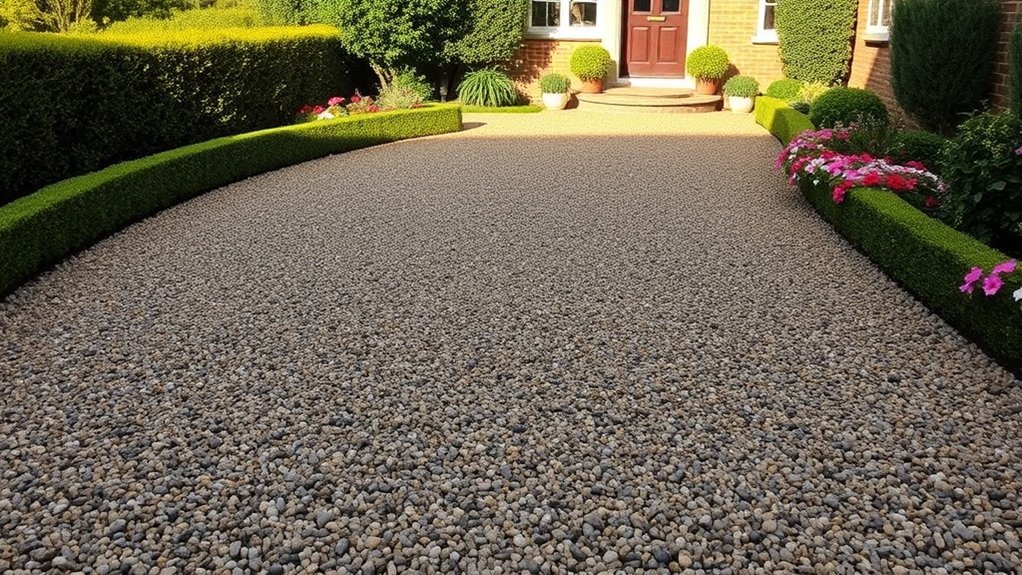
When installing resin-bound gravel for driveways and walkways, it’s important to know the regulations. You don’t need planning permission for permeable surfaces, but if your resin-bonded area is over 5m², you will need to apply for it. Ensure your installation complies with Sustainable Urban Drainage Systems (SuDS) to effectively manage water runoff. Follow installation standards, including maintaining a minimum thickness and preparing a proper base for durability. Regular maintenance is key to keeping your driveway or walkway looking good and functioning well. Familiarise yourself with these regulations to ensure your installation meets all necessary requirements.
Key Takeaways
- Resin-bound surfaces are typically permeable and do not need planning permission, whereas resin-bonded surfaces require it if they exceed 5m².
- It’s vital to comply with Sustainable Urban Drainage Systems (SuDS) to effectively manage surface water runoff.
- For installation, ensure a minimum thickness of 18mm for driveways and 15mm for pedestrian areas.
- Regular maintenance, like sweeping and pressure washing, is important to keep resin-bound surfaces looking good and functioning well.
- Always check with local planning authorities, particularly if your property is in a conservation area or has specific restrictions, to ensure you meet all regulations.
Planning Permission Requirements
When planning to install a resin-bound driveway, it’s important to know the planning permission requirements.
Resin-bound surfaces are classed as permeable materials, which means they allow water to drain through. Generally, this means you won’t need planning permission for installations in front gardens of residential properties. However, if you choose resin-bonded surfaces, which are impermeable, you’ll need to seek planning permission, especially if the area is more than 5 square metres. This is because resin bonded driveways require permission if larger than 5m².
Local planning authorities will evaluate your application based on how well the surface manages drainage and water permeability. For properties located in conservation areas, additional regulations may apply, making it vital to consult with local councils. Always check with your local council to ensure you comply with specific regulations, especially if your property is listed or has unique restrictions.
Understanding these requirements will help make your driveway installation smoother.
Sustainable Urban Drainage Systems (SuDS) Compliance

Sustainable Urban Drainage Systems (SuDS) compliance is crucial for managing surface water runoff in new developments, especially as urban areas face growing flooding risks. By implementing SuDS, you not only meet legal obligations but also improve runoff management, which allows for rainwater reuse and natural infiltration. The regulations require that the first 5mm of rainfall is retained on-site, encouraging sustainable solutions instead of traditional piped drainage. It’s important to include pollution control measures to minimise contaminants in runoff. Additionally, having a clear maintenance plan is essential for ensuring the long-term effectiveness of SuDS. Regular audits ensure continued compliance and system performance, helping to maintain the integrity of your drainage solutions. Working closely with Lead Local Flood Authorities during the planning phase ensures your development meets regulations and contributes to a more resilient urban landscape, as these systems must be designed for system resilience and maintenance throughout their lifespan.
Installation and Technical Standards Regulations
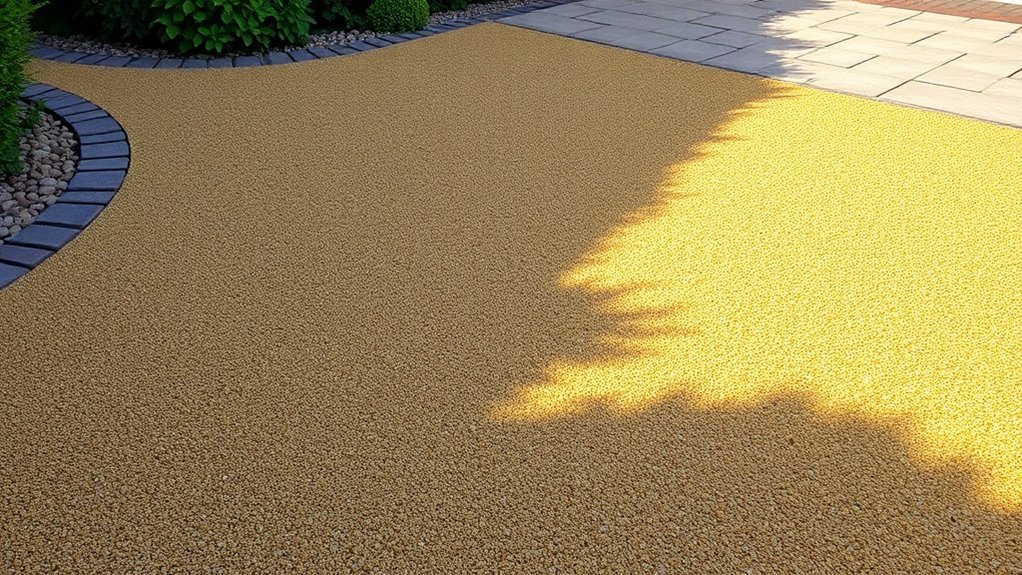
To ensure the longevity and performance of resin-bound gravel surfaces, it’s crucial to follow proper installation and technical standards. Here are some essential points for quality assurance:
- Base Preparation: Create a solid base with tarmacadam or concrete, excavating 150-200mm if needed. Preparing the base is essential for a stable foundation.
- Mixing Ratios: Aim for a resin-to-aggregate ratio of 6.5%-7.5% by weight for optimal durability. Use a forced-action mixer to prevent premature curing.
- Surface Thickness: Keep a minimum thickness of 18mm for driveways and 15mm for pedestrian areas to ensure even coverage.
- Edging Installations: Properly install edging to contain the resin mixture and aid drainage, using compatible materials.
Following these guidelines will significantly improve the durability and performance of your resin-bound gravel surfaces.
Environmental and Structural Considerations
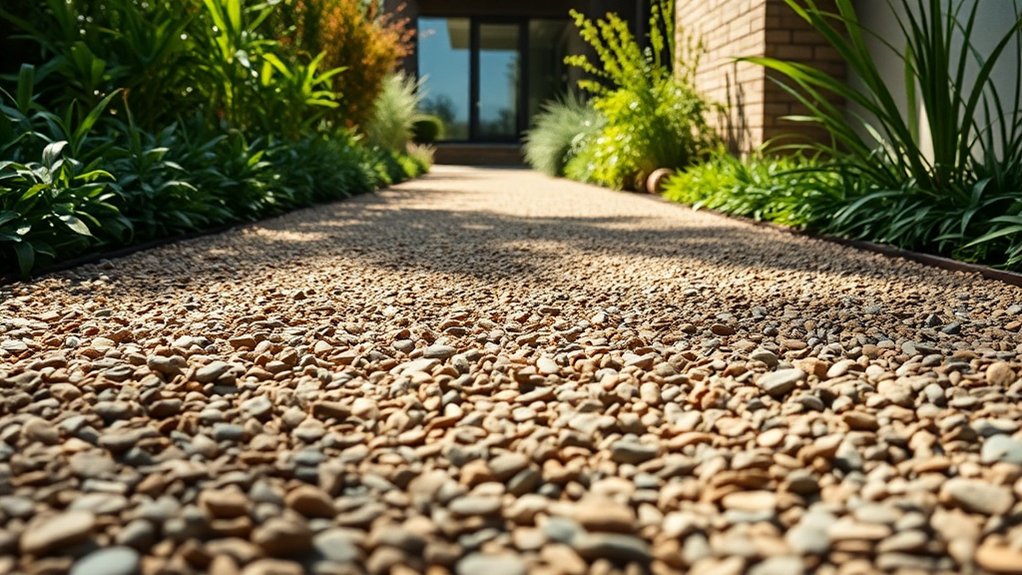
Proper installation and adherence to technical standards are crucial for resin-bound gravel surfaces, impacting both environmental and structural aspects. These surfaces allow rainwater to drain naturally, which helps reduce surface water runoff and supports Sustainable Urban Drainage Systems (SuDS). This can help alleviate local flooding and promote groundwater replenishment. Furthermore, using recycled materials in the aggregates lowers the demand for new resources, thereby reducing the carbon footprint. A well-built resin-bound driveway can last over 20 years, leading to fewer repairs and less waste. Additionally, these surfaces encourage plant growth and lower heat absorption, supporting urban biodiversity and helping to combat the urban heat island effect. Importantly, resin bound surfaces can achieve permeability rates of up to 95%, significantly enhancing water management in urban settings.
Maintenance and Long-Term Compliance
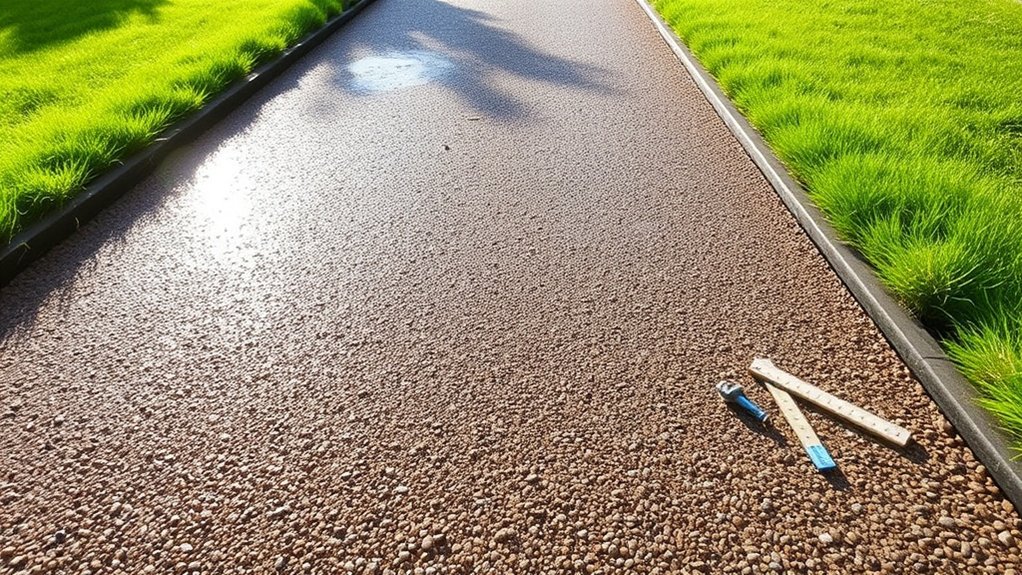
Maintaining resin-bound gravel surfaces is essential for ensuring their long-term performance and appearance. Here are some straightforward practices to keep your surfaces in top condition:
- Regular Cleaning: Sweep the surface regularly and pressure wash it once a year to remove debris and keep it looking bright.
- Winter Care: Use plastic shovels for clearing snow and apply white rock salt, ensuring any residues are cleaned away afterwards.
- Load Management: Avoid parking heavy vehicles on the surface. If necessary, use boards to distribute weight and minimise damage.
- Stain Prevention: Clean up spills immediately and keep an eye out for stains to avoid a tougher clean-up later on.
Frequently Asked Questions
How Long Does a Resin-Bound Driveway Typically Last?
A resin-bound driveway usually lasts between 15 and 25 years, influenced by factors such as installation quality and upkeep. To extend its lifespan, make sure to carry out regular maintenance like sweeping and resealing every five years. This simple care routine can make a significant difference, ensuring your driveway remains in good condition for as long as possible.
Can I Install Resin-Bound Gravel Myself?
Yes, you can install resin-bound gravel yourself. You’ll need some key tools, such as a paddle mixer, trowels, and protective edging. Make sure to mix and apply the resin carefully for a smooth, professional finish. For example, using a mixer ensures even consistency, which is crucial for the final look.
What Colors and Finishes Are Available for Resin-Bound Surfaces?
There’s a wide range of colour combinations and finish options available for resin-bound surfaces. You can choose from earthy tones, greys, blacks, whites, and even custom shades. Each option offers a unique look, enhancing the aesthetic while also being durable and easy to maintain. For example, a warm terracotta can add a rustic charm, while a sleek charcoal grey provides a modern feel.
Is Resin-Bound Gravel Suitable for All Weather Conditions?
Yes, resin-bound gravel is highly durable and performs well in all weather conditions. Its flexibility in freezing temperatures and resistance to heat ensure it remains stable, making it a dependable option year-round. For instance, unlike traditional gravel, resin-bound surfaces won’t shift or wash away during heavy rain or snow, providing a consistent and reliable surface for driveways and paths.
How Do I Choose the Right Contractor for Installation?
To choose the right contractor, check their qualifications and experience with resin installations. Discuss the project timeline and ensure they provide a detailed contract. It’s also important they understand proper installation methods and materials. For example, ask about their previous projects and how they handle different surfaces. This will give you confidence in their expertise.
Conclusion
When creating your resin-bound gravel driveway or walkway, you’re not only improving your property but also ensuring it meets regulations. It’s important to comply with planning permissions and Sustainable Drainage Systems (SuDS) to promote environmental sustainability. Regular maintenance is essential to keep your investment looking great over time. With proper care, your stylish surface will endure while also being kind to the environment.