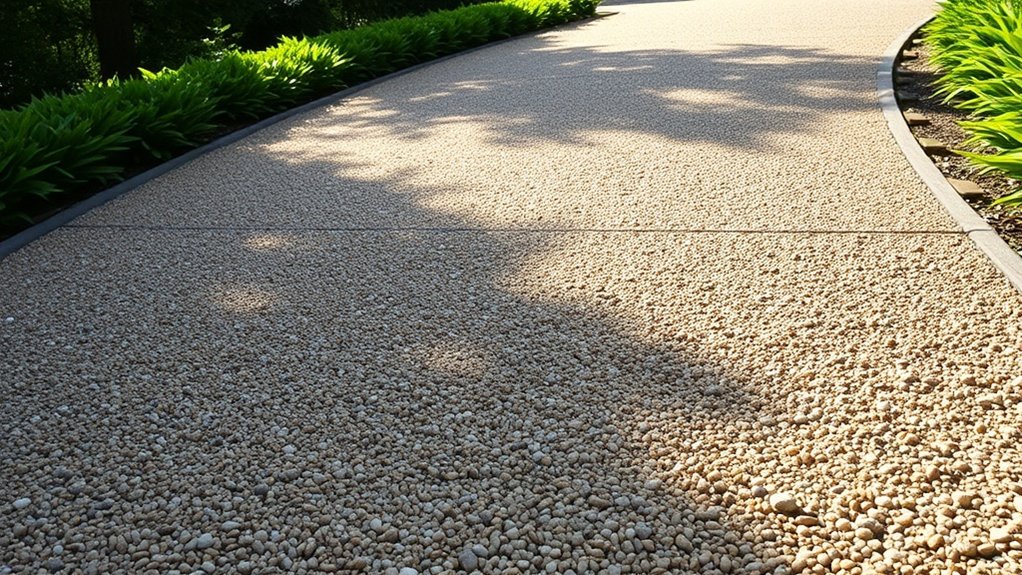
To ensure a durable resin-bound gravel surface on slopes, maintain a gradient of between 1% and 15% for effective drainage. Carefully assess your site and prepare a solid sub-base to avoid any instability. Opt for a flexible, UV-resistant resin and mix it with suitable aggregate for a strong bond. Apply in layers of 15mm to 18mm for consistent thickness. Additionally, consider the environmental impact of your material choices. There are key techniques to further boost durability and stability.
Key Takeaways
- Ensure a slope gradient between 1% and 15% to promote effective drainage and prevent water pooling.
- Use high-viscosity resin with a 7% resin-to aggregate ratio for better stability on slopes.
- Start application from the bottom and work upwards to control the resin spread and avoid pooling.
- Carry out thorough site assessments to prepare a solid base and choose suitable aggregate types for load-bearing and drainage.
- Allow adequate curing time: foot traffic can begin after 6-8 hours, but vehicle access should wait at least 24 hours.
Understanding Slope Gradients for Resin-Bound Gravel
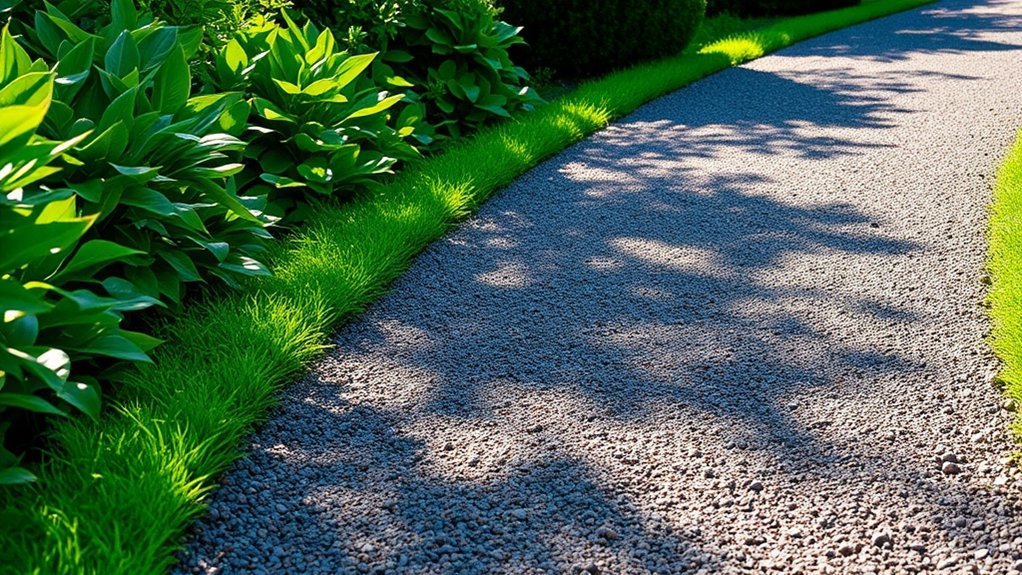
When planning a resin-bound gravel project, understanding slope gradients is crucial for durability and drainage. Aim for a gradient of between 1% and 15% to optimise drainage and maintain surface integrity. Ensure a minimum slope of 1% to prevent water pooling. If your slope is steeper than 10%, consider using special formulations to manage resin flow during installation and avoid uneven coverage. Additionally, the ideal gradient for installation ranges between 1:12 and 1:40 to optimize water management. For gravel driveways, a slope of around 2% is ideal to reduce movement of loose aggregate. A well-compacted sub-base is essential for effective drainage and to prevent erosion. Additionally, incorporating anti-slip finishes can enhance safety on steeper gradients, reducing slip risks during wet conditions.
Assessing Your Site for Proper Base Preparation
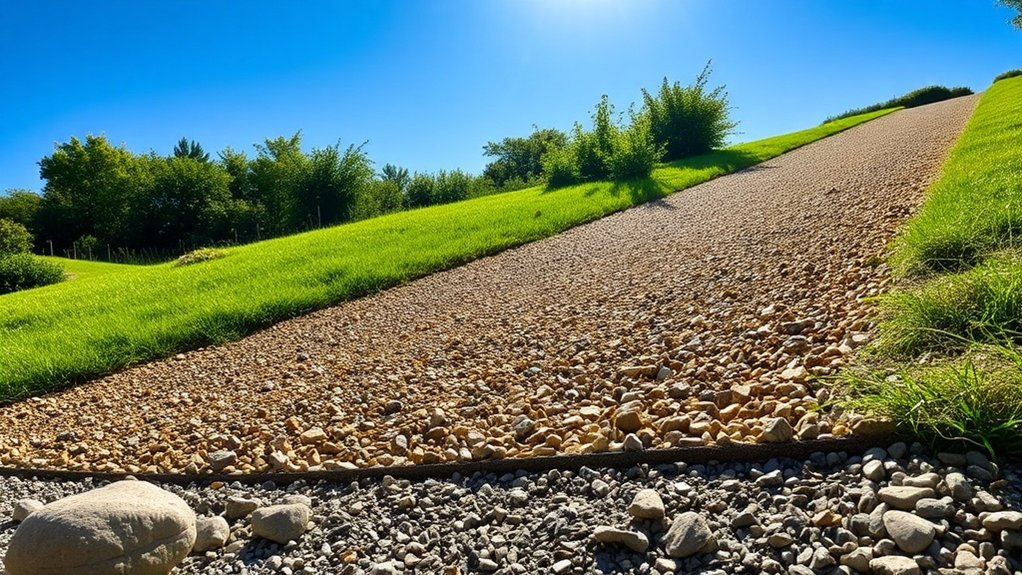
Before laying resin-bound gravel, it’s crucial to accurately assess your site’s gradient to ensure proper drainage and base stability. Use a level or measuring tool to check for any slopes that could cause water to pool; even slight inclines can affect the durability of your installation. For example, a slight slope towards your home may lead to water damage over time. A solid base not only supports the surface but also helps prevent future issues such as cracking or subsidence. Ensuring the selection of a proper sub-base type is essential for achieving effective drainage and longevity of the resin-bound surface. Additionally, proper sub-base preparation is key to avoiding sinking or cracking under heavy loads.
Gradient Measurement Techniques
How can you accurately assess the gradient of your site to ensure proper base preparation for resin-bound gravel? Start with simple gradient measurement techniques. Use the formula: rise divided by run to calculate the gradient. For a quick visual check, convert this to a percentage slope. Tools like spirit levels and tape measures will help confirm your readings.
Begin at the lower end of the slope and take measurements, adjusting for the height of your instruments as needed. It’s helpful to have a partner hold leveling targets for added reliability. Additionally, ensure that your calculations adhere to British Standards for effective drainage. A solid base layer is crucial for durability and performance, further enhancing the stability of your installation.
Once you’ve gathered your data, input the measurements into a spreadsheet for automatic calculations. This slope assessment allows you to visualise gradient profiles, ensuring that your resin-bound surface is set up for durability and effective drainage, ultimately preventing surface issues down the line.
Base Stability Importance
Ensuring base stability is crucial for the durability and performance of your resin-bound gravel installation. Any movement in the structure can lead to serious surface problems.
Conducting a thorough site evaluation will help you determine the right base preparation techniques for a solid foundation.
- Inspect existing materials for cracks and signs of wear.
- Select suitable aggregate types based on the load they need to bear.
- Consider installing geotextile membranes if dealing with weak soils.
Importance of a Stable Sub-Base on Slopes
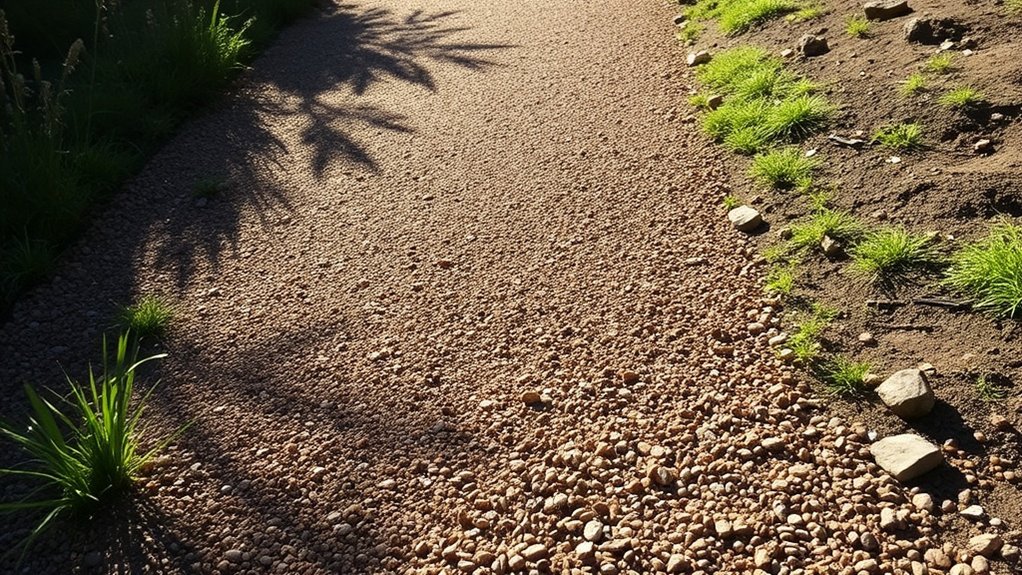
A stable sub-base is crucial for installing resin-bound gravel on slopes, as it affects the surface’s integrity and durability.
Using properly compacted materials like MOT Type 1 or MOT Type 3 helps prevent settlement, ensuring the surface can support heavy loads without shifting.
For sloped areas, consider techniques such as using angular gravel and crushed stone to create interlocking structures that enhance drainage.
A thickness of 100-250mm is ideal for various soil conditions, and using non-frost susceptible materials helps maintain stability during freeze-thaw cycles.
Installing drainage channels along the edges of the slope can further reduce erosion by allowing water to infiltrate without pooling.
Ultimately, a well-built sub-base is key to a lasting resin-bound gravel surface.
Choosing the Right Resin for Your Project
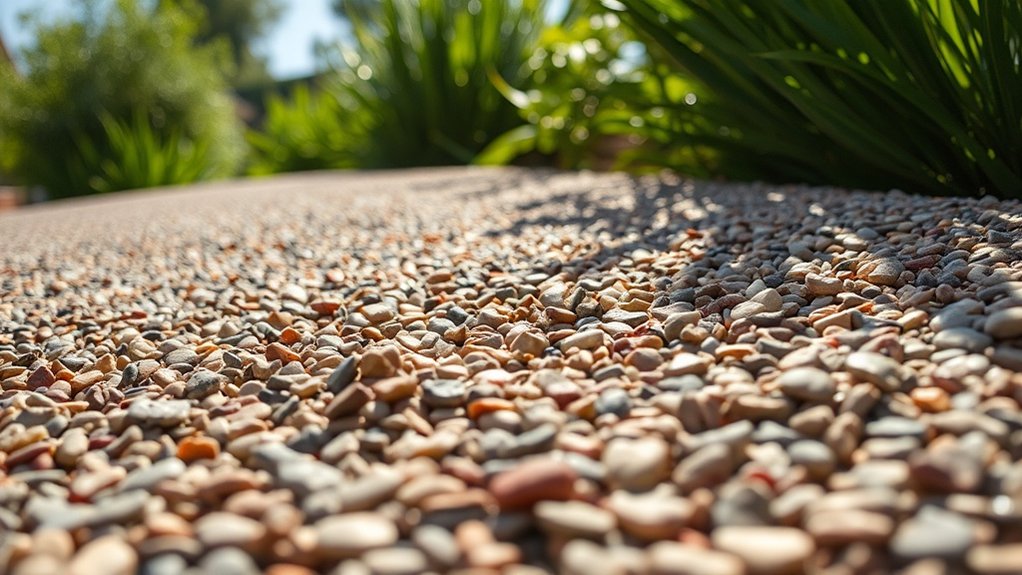
When selecting the right resin for your project, it’s essential to consider your environment and the performance you need.
Epoxy is excellent for strong bonding but can degrade under UV exposure.
On the other hand, polyurethane is flexible and weather-resistant, making it a great choice for outdoor applications.
Always check the compatibility with hardeners, as this can significantly affect the durability and longevity of your resin-bound gravel installation.
Resin Type Selection
Choosing the right resin for your project is crucial for the performance and durability of your resin-bound gravel surface. Here are some key considerations:
- Epoxy-based resins: These provide excellent adhesion and robustness, particularly on slopes.
- UV-resistant additives: These help prevent discolouration, keeping your chosen colour options vibrant.
- High-viscosity formulations: They resist movement, ensuring your aggregate stays in place.
It’s also vital to select the right resin texture. For steep slopes, opt for high-strength resins that improve aggregate bonding, preventing displacement under heavy traffic.
Additionally, consider weather-resistant options that can withstand freeze-thaw cycles and high moisture levels. By carefully choosing your resin type, you’ll achieve a strong and attractive surface that lasts.
Hardener Compatibility Considerations
Once you’ve selected the right resin for your project, ensuring the compatibility of the hardener is crucial.
Choosing an incompatible hardener can lead to incomplete curing, resulting in weak or sticky surfaces. Always follow the manufacturer’s guidelines for mixing, maintaining the correct hardener to resin ratio of H1: R:1.03–1.05.
Keep in mind that environmental factors, such as temperature, can affect hardener performance, so adjust your choice accordingly.
Accurate measuring tools are vital for consistency; any mistakes can compromise the strength of your final product.
Mixing Resin for Optimal Consistency
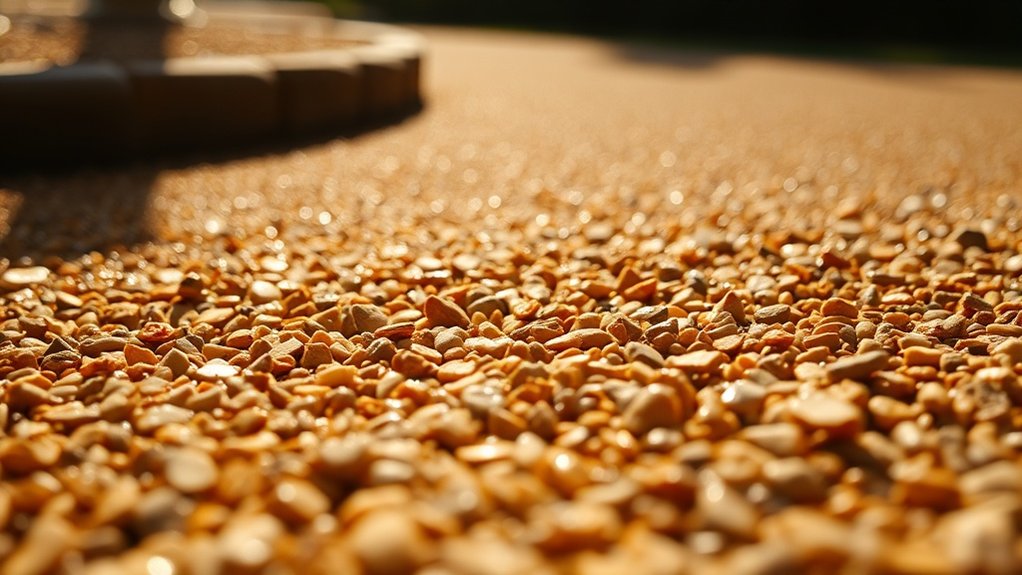
To achieve the right consistency when mixing resin, it’s essential to follow the manufacturer’s recommended ratio of resin to hardener, typically a two-part system that ensures strong bonding and durability.
- Use pre-weighed resin kits for accurate measurements.
- Consider using forced action mixers for even viscosity.
- Keep an eye on mixing time to avoid premature curing.
Begin by thoroughly mixing aggregates, ensuring they’re clean and dry. Gradually add the resin binder to the pre-mixed aggregates, mixing until each particle is evenly coated and glossy.
Consistent mixing techniques, including timing and equipment selection, are crucial for optimal results. A well-mixed batch results in a durable surface that can handle heavy loads and environmental stresses.
Application Techniques for Sloped Areas
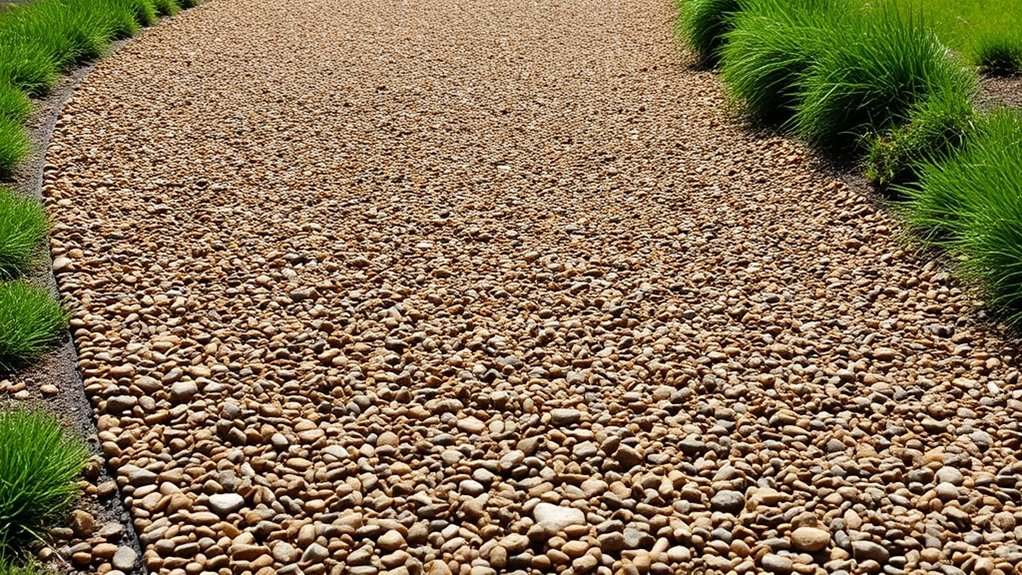
When applying resin-bound gravel on sloped areas, begin at the bottom and work your way up. This helps you control the spread of the material.
Layer the application carefully, ensuring each section is compacted before moving on. Use a high viscosity resin to minimise unwanted flow.
This approach not only boosts stability but also ensures a uniform finish that can handle the challenges of sloped surfaces.
Work Bottom to Top
Starting from the bottom of sloped areas is crucial for creating a uniform and stable resin-bound gravel surface. This approach ensures consistent resin application, preventing it from flowing downhill and causing uneven coverage.
- It stops resin from pooling and thinning at the top.
- Gravity assists in keeping the resin in place as it cures, improving safety on slopes.
- Working upwards allows for better mixing of materials, ensuring uniformity.
Layer-by-Layer Application
When applying resin-bound gravel on slopes, using a layer-by-layer technique enhances stability and appearance. Start by mixing the resin and aggregate thoroughly, then divide the mixture into manageable sections. This method helps address application challenges effectively. Begin spreading from the bottom of the slope, ensuring each layer is even and not overly thick. Leave rough edges to improve bonding with the next layer.
| Layering Technique | Benefits |
|---|---|
| Consistent Thickness | Reduces sagging |
| Small Batches | Maintains workability |
| Smooth Surface | Improves slip resistance |
| Controlled Spreading | Ensures even coverage |
| Rough Edges | Aids interlocking |
This approach guarantees a durable and visually appealing surface.
Use High Viscosity Resin
To achieve the best results in sloped areas, using high viscosity resin is crucial for managing material flow and ensuring a stable application. This thicker formulation minimises downhill flow, providing excellent coverage and durability on inclines.
- High viscosity ensures even coverage and maintains a consistent thickness.
- The right resin-to-aggregate ratio enhances adhesion on steep gradients.
- Adding anti-slip materials improves grip without sacrificing flow control.
The viscosity plays a vital role; a 7% resin-to-aggregate ratio guarantees structural strength while preventing separation.
Ensuring proper saturation helps maintain stability during application. By using high viscosity resin, you not only improve grip but also secure long-lasting results on slopes, taking full advantage of its thicker, more consistent application.
Layering Approach for Even Coverage
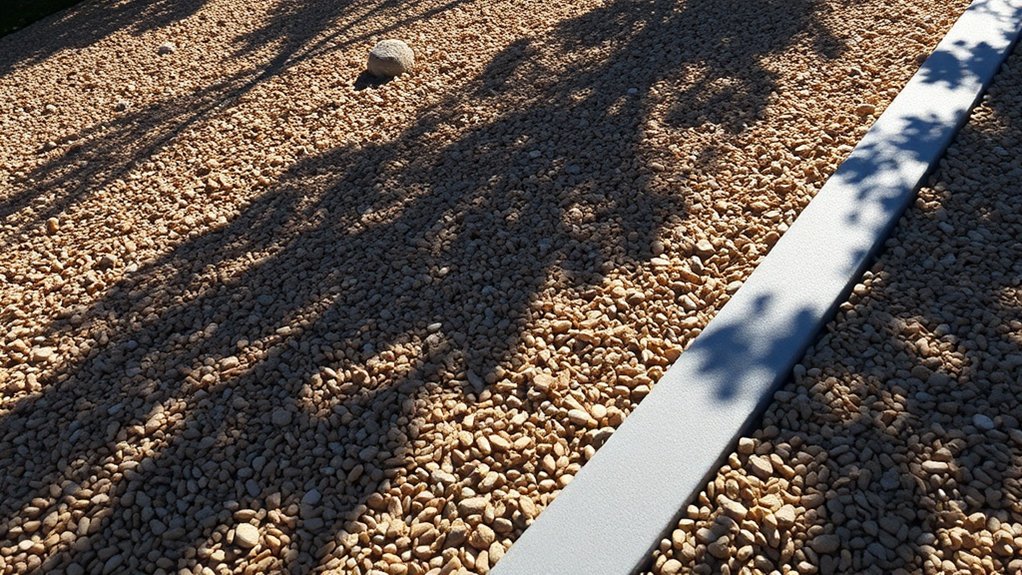
To achieve even coverage with resin-bound gravel, follow a careful layering method that ensures strong adhesion and prevents movement, especially on slopes.
Start with a high-viscosity resin mixed with additives, such as fine aggregates, to improve grip and control flow. Work in manageable sections, applying the resin from the bottom of the slope upwards for consistent coverage.
It’s essential to establish a stable sub-base by compacting aggregates to avoid shifting over time. Aim for a resin-bound layer thickness of 15mm to 18mm, adjusting based on the expected traffic.
Pay close attention to your application techniques to maintain an even depth, and compact the gravel promptly to avoid displacement. This layered approach will help create a durable surface that can withstand the challenges of inclined areas.
Incorporating Anti-Slip Materials
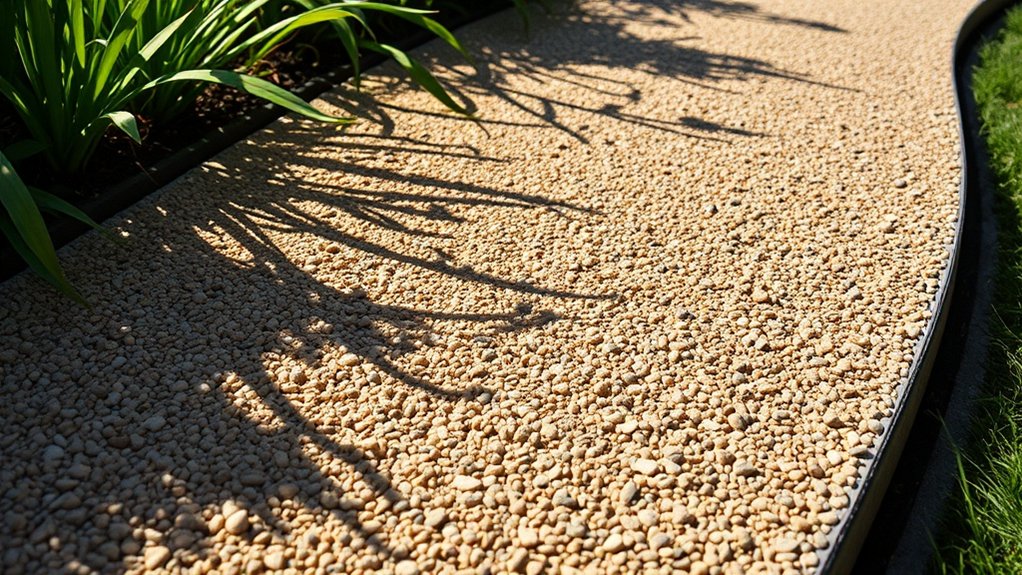
After establishing a solid foundation with the correct layering technique, you can improve the safety and performance of your resin-bound gravel by incorporating anti-slip materials.
- Use finely crushed glass, such as PERMABOUND GRIPDUST, for a textured, high-friction finish.
- Mix anti-slip additives into your resin blend to ensure consistent grip.
- Broadcast anti-slip particles during installation to enhance traction without compromising aesthetics.
These anti-slip options not only reduce the risk of slipping but also blend seamlessly into your surface.
By scattering crushed glass before the resin sets, you create an effective, eco-friendly solution that maintains visual quality.
For optimal results, ensure a proper resin-to-aggregate ratio and control the amount of broadcast to preserve bond strength and durability.
Selecting Suitable Aggregate for Grip
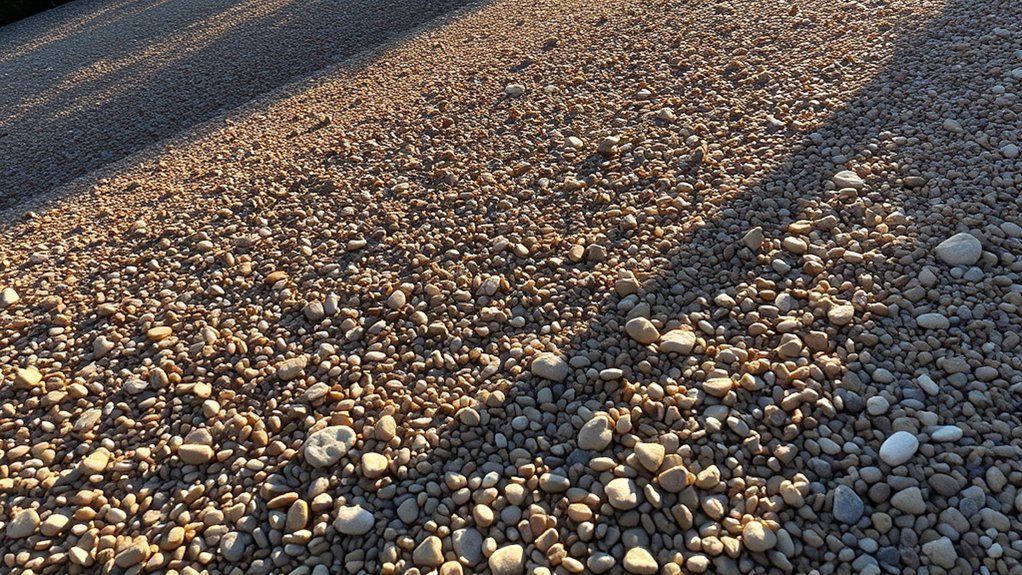
When choosing the right aggregate for grip, it’s important to consider both the material properties and the environment in which it will be used.
Natural aggregates such as basalt and granite are highly durable and provide angular shapes that enhance traction. For a good balance of appearance and grip, select mid-range sizes (2-5mm).
Smaller particles (1-3mm) are better for creating denser surfaces on steep slopes. You might also consider flint shingle or glass aggregates for their unique textures, which can improve stability underfoot.
Ensure that the aggregates are clean and dry to maintain their friction qualities. Graded crushed stone can also create interlocking patterns that help resist movement down slopes.
Ensuring Proper Thickness Standards
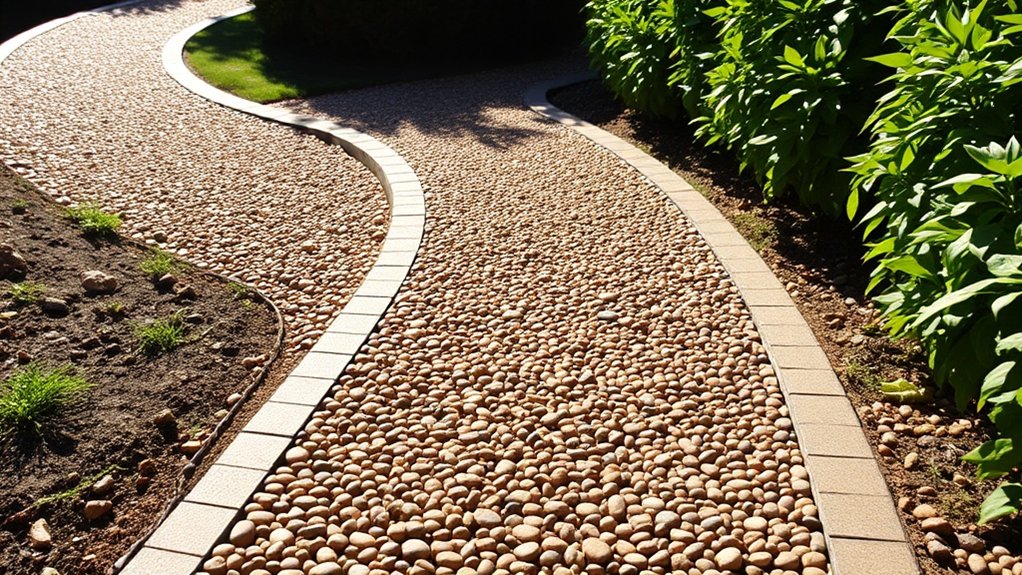
Selecting the right aggregate for grip is crucial for a durable resin-bound surface, but ensuring the proper thickness is equally important for performance and longevity.
- Adhere to installation guidelines tailored for specific applications to enhance durability.
- Conduct a thorough thickness assessment to prevent early surface failure.
- Adjust thickness according to the aggregate size to ensure structural integrity.
For example, driveways should be 18-20mm thick for standard vehicle use, whereas commercial areas require a minimum of 22mm.
The thickness should always be at least three times the largest aggregate size.
Curing and Setting Times for Resin-Bound Gravel
Understanding the curing and setting times for resin-bound gravel is crucial for a long-lasting surface. Generally, curing takes between 6 to 48 hours, depending largely on the temperature.
In warm conditions above 20°C, you can start foot traffic after 6 to 8 hours, but full vehicle access should wait at least 24 hours.
In colder or damp weather, curing may take over 48 hours, so it’s best to keep traffic off until fully cured to avoid damage.
To speed up the process in cooler temperatures, you might consider using a catalyst.
Consistent weather conditions are key for even curing, so keep an eye on the forecast to ensure optimal results for your resin-bound gravel.
Environmental Considerations for Installation
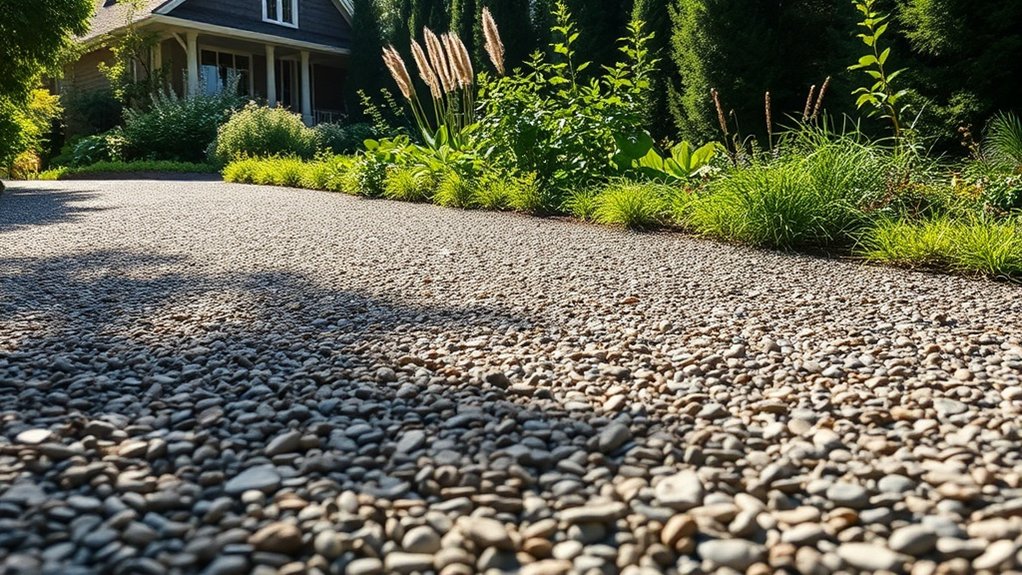
When considering resin-bound gravel for your project, it’s important to think about the environmental factors that affect both installation and ongoing sustainability.
Here are some straightforward ways to minimise your project’s impact:
- Use permeable resin to allow natural water drainage, helping to prevent flooding.
- Incorporate at least 25% recycled aggregates to save resources and reduce your carbon footprint.
- Design your surface with local wildlife in mind, helping to protect biodiversity and minimise disruption to habitats.
Frequently Asked Questions
Can Resin-Bound Gravel Be Installed During Rainy Weather?
You can’t install resin-bound gravel in rainy weather. Moisture can interfere with the curing process, leading to issues like cloudiness and weak bonds. For a durable and attractive finish, it’s crucial to work in dry conditions. Make sure to plan your installations accordingly.
How Long Does Resin-Bound Gravel Last on Inclines?
Resin-bound gravel usually lasts between 15 to 25 years on slopes. Its longevity depends on factors such as installation methods and the quality of materials used. For instance, a well-prepared base and high-quality resin can significantly enhance its durability, providing a reliable surface for driveways and paths.
What Maintenance Is Required for Resin-Bound Surfaces?
Regular cleaning of resin-bound surfaces is essential to prevent debris accumulation. Conduct a light pressure wash at least once a year, and always check for any cracks or damage to ensure the surface remains intact and visually appealing.
Can I Use Resin-Bound Gravel for Steep Driveways?
Yes, you can use resin-bound gravel for steep driveways. It offers benefits such as permeability and durability. To ensure a stable and long-lasting surface, it’s important to use thicker resin mixtures and prepare the sub-base properly. For example, if your driveway has a significant slope, these techniques will help prevent issues like shifting or cracking over time.
Are There Color Options Available for Resin-Bound Gravel?
Yes, there are plenty of colour options available for resin-bound gravel. You can choose from earthy shades to vibrant colours, which allows you to create unique surfaces that suit your style. For example, if you prefer a natural look, opt for warm browns or greens; if you want something bolder, consider bright reds or blues.
Conclusion
Installing resin-bound gravel on inclines can create a durable and attractive surface that stands the test of time. With the right installation, you’ll find maintenance is minimal as the surface resists weeds and damage. Using quality materials and techniques is essential to ensure your gravel pathway or driveway remains safe and appealing for years. So, roll up your sleeves and get started on making a lasting impression!