
Finding top-quality resin-bound gravel starts with choosing between polyurethane and epoxy resins. Look for UK suppliers who hold BBA certification and follow FeRFA standards – these are crucial markers of quality in the British market.
Quality resins should come with proper ISO certifications and detailed technical specs. For typical British driveways and paths, select aggregates between 1-3mm for smooth finishes or 2-5mm for more textured surfaces.
Your subbase must be solid – typically concrete or well-compacted MOT Type 1 stone. Think of it like building a house; the foundations matter as much as the materials above ground.
Essential checks:
- BBA certification
- FeRFA membership
- ISO standards compliance
- Technical documentation
- Correct aggregate sizing
- Proper subbase specs
Speak with local suppliers and request samples before committing to large orders. Quality materials might cost more initially but save money long-term through better durability and fewer repairs.
Key Takeaways
Five key steps for sourcing quality resin-bound gravel:
- Look for suppliers with proper BBA certification and FeRFA membership – these are the UK’s gold standards for resin materials. A good supplier should proudly display these credentials.
- Ask for ISO certificates and test reports upfront. Reputable UK suppliers will have these readily available, much like you’d expect an MOT certificate when buying a used car.
- For British weather, UV-stable resin is non-negotiable. It stops your driveway from yellowing or breaking down under our varied weather conditions.
- Match your aggregate to both looks and practicality. For example, lighter colours work brilliantly for evening visibility on driveways, while darker shades hide tyre marks better.
- Insist on detailed technical sheets and ongoing support. Quality suppliers should offer clear fitting guides and be available for queries – particularly useful if you’re working with a local installer.
Understanding Resin Types for Gravel Surfacing

Understanding Resin for Gravel Driveways
Two main resin types dominate the UK market: polyurethane and epoxy. Polyurethane resins excel in our British weather, offering vital flexibility and UV stability – perfect for those rainy days and varying temperatures. This material is particularly beneficial for environments that require permeable surfacing solutions in compliance with Sustainable Drainage Systems (SuDS) regulations. Additionally, selecting the right resin based on project requirements can significantly enhance the overall performance and longevity of your driveway.
Epoxy resins, whilst providing excellent bonding strength, tend to yellow over time in sunlight and can become brittle.
For installation, you’ve got two choices. Resin bound systems mix the stones and resin together, creating a smooth, puddle-free surface that’s brilliant for driveways and garden paths.
Resin bonded systems scatter stones onto the resin layer, giving you that traditional gravelled look with better stability.
The choice ultimately depends on your needs – bound systems work wonderfully for modern homes and areas needing wheelchair access, whilst bonded systems suit period properties and areas where you want extra grip underfoot.
Determining the Right Resin Quantity

Calculate your resin needs by measuring your surface area and deciding on depth – typically 15-20mm works best for most projects. Standard resin kits cover roughly 3-4 square metres, but double-check the manufacturer’s specifications for your chosen product. Getting the resin-to-aggregate ratio spot-on is crucial for a lasting finish; this ensures adherence to BBA Certification standards for quality. For accuracy, use an online calculator or speak with your local supplier, who can help work out exact quantities in metric measurements. This prevents wastage and ensures you’ve got enough material to complete the job properly. A quick tip: Always order about 10% extra to account for any miscalculations or tricky areas around edges and corners. Remember that a standard kit includes 20kg of aggregates to ensure comprehensive coverage.
Selecting Quality Suppliers for Resin

Selecting Quality Suppliers for Resin
Choosing the right resin suppliers is vital for project success, with material quality directly affecting both durability and finish. Strong supplier partnerships ensure reliable delivery and consistent results. Look for suppliers holding BBA certification and following FeRFA guidelines – these are key UK industry standards. Regular compliance audits verify that materials meet REACH and UK standards, ensuring the products you source are fit for purpose. Additionally, ensure that the suppliers provide UV-stable resin options suitable for outdoor surfaces.
| Criteria | Importance |
|---|---|
| Certifications | Shows compliance and quality |
| Product Quality | Ensures lasting results |
| Technical Support | Helps with proper installation |
| Stock Availability | Keeps projects on schedule |
Focus on suppliers offering UV-stable resins and clean aggregates with proven UK market experience. A supplier’s willingness to provide clear documentation and after-sales support makes a real difference to your project’s success.
Evaluating Resin Quality Assurance
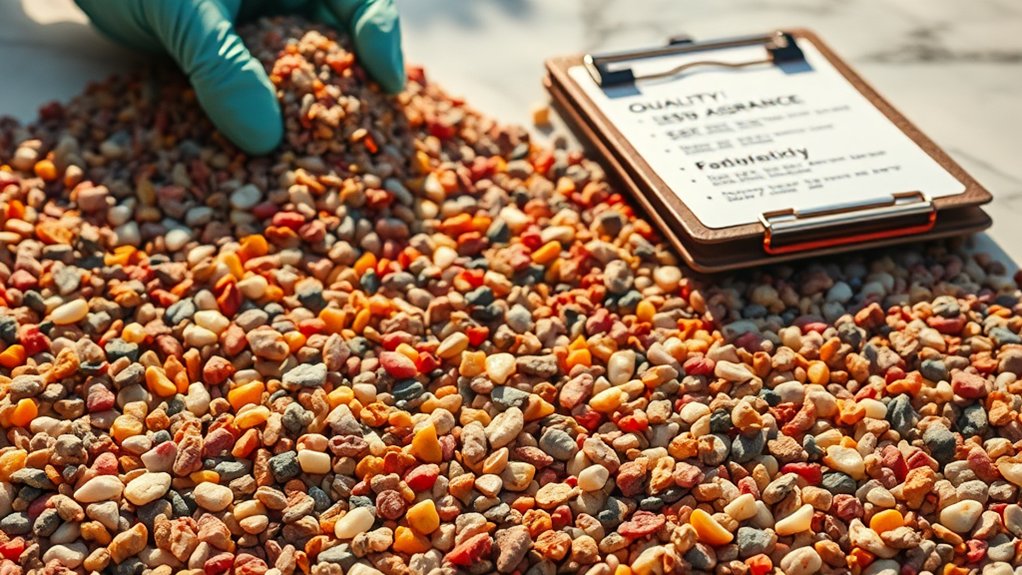
Quality checks for resin must focus on supplier transparency and proper documentation to ensure your project’s success.
Essential steps include checking ISO certifications, material testing reports and batch consistency records from manufacturers. A reliable supplier should provide clear technical data sheets and maintain strict quality control measures – much like checking hallmarks on precious metals.
Regular spot checks of resin samples help maintain standards and prevent issues like premature wear or discolouration.
Getting these basics right means better durability and finish quality for your resin surfaces.
Flexibility and Clarity
Testing resin-bound gravel’s flexibility and clarity is crucial for a quality finish that lasts. The best resins offer just the right amount of flex – think of it like a good pair of trainers that give slightly without losing shape. This flexibility helps the surface cope with the UK’s changeable weather and ground movement, stopping cracks from forming.
The resin’s clarity matters too. You want your chosen stones to look their best, much like looking through a crystal-clear window rather than a foggy one. Top-quality resins stay clear without turning yellow, even after years of British sunshine and rain.
Before installation, proper testing checks both the resin’s stretch (elongation) and strength. It’s like testing a rubber band – it needs to stretch without snapping but also hold firm under pressure.
These qualities ensure your driveway or path stays looking smart and performs well for years to come.
Industry Standards Compliance
Industry Standards Compliance
Meeting industry standards is vital for quality resin-bound gravel installations across the UK. Proper compliance ensures your installation lasts longer and remains safe for daily use. Essential standards to follow:
| Industry Standard | Compliance Importance | Certification Benefits |
|---|---|---|
| BBA Certification | Proves durability for council projects | Shows tested product reliability |
| FeRFA Guidelines | Sets quality benchmarks for fitting | Ensures professional standards |
| REACH Regulations | Requires proper material handling training | Keeps workers safe on site |
| SUDS Compliance | Ensures proper drainage for British weather | Stops water pooling |
These standards aren’t just red tape – they’re practical measures that protect both installers and property owners. A BBA-certified installation, for example, means your driveway will handle British weather conditions properly, whilst SUDS compliance prevents those annoying puddles during heavy rain.
Supplier Certification Verification
Checking supplier certifications is vital for quality resin products. Focus on suppliers with BBA certification – this means their materials have passed strict UK durability tests. They should also hold BS EN ISO 14001:2015 certification, showing they’re serious about environmental standards.
Carry out supplier checks every three months to ensure they follow FeRFA guidelines and maintain proper standards.
Look for manufacturers who use top-grade raw materials and have strict quality controls in their factories. Getting independent experts to inspect their sites helps verify their claims.
These checks help you source reliable resin-bound gravel that will last and perform well for your projects.
Choosing the Appropriate Aggregate Sizes

Selecting Aggregate Sizes for Resin-Bound Gravel
Proper aggregate sizing proves essential for a lasting resin-bound surface. Key points to consider:
- Standard Sizes: 1-3mm or 2-5mm aggregates work best for domestic paths and driveways, offering excellent drainage whilst maintaining a smooth finish.
- Tree Pit Requirements: Larger 5-8mm or 10mm stones suit tree pit installations perfectly, allowing proper root ventilation and water flow.
- Surface Depth: Layer thickness must measure three times the largest stone size – for example, 6mm stones need an 18mm depth minimum.
- Weather Resistance: Smaller aggregates (1-3mm) cope better with British weather, particularly in areas prone to heavy rain or frost.
The right aggregate size balances practical needs with aesthetic appeal, ensuring your resin-bound surface remains functional and attractive for years to come.
Exploring Different Aggregate Types

Selecting the right aggregate type is crucial for your resin-bound surface. Each variety brings distinct benefits to both function and appearance, making it essential to match your choice with your project’s requirements.
| Aggregate Type | Environmental Impact | Aggregate Aesthetics |
|---|---|---|
| Natural Stone | Low; durable | High; various colours |
| Recycled Aggregates | Reduces waste | Moderate; unique textures |
| Semi-Precious | Moderate; higher cost | Exceptional; vibrant hues |
Natural stone, like Cotswold or Yorkshire aggregate, offers excellent durability for driveways and paths. Recycled options, including crushed glass or porcelain, provide an eco-friendly alternative whilst creating distinctive finishes. Semi-precious aggregates, though pricier, deliver striking visual effects perfect for showcase areas or garden features.
The table highlights key factors to consider when choosing your aggregate, balancing environmental concerns with aesthetic goals. Whilst natural stone remains a popular choice for traditional British properties, recycled options are gaining favour amongst environmentally conscious homeowners.
Ensuring Compliance With Material Specifications

Meeting Material Standards for Resin-Bound Surfaces
Proper material compliance on resin-bound projects safeguards both quality and safety whilst ensuring your installation lasts. Essential compliance areas include:
- Diisocyanate Training: All installers must hold valid certificates for handling toxic substances – much like a gas safety certificate for plumbers.
- SuDS Compliance: Your surface must allow proper water drainage, particularly crucial for British weather. Think of it as creating a giant sponge that prevents puddles and flooding.
- FeRFA Guidelines: Stick to industry-approved mixing ratios and material combinations. Getting this wrong would be like using the wrong fuel in your car – costly and potentially dangerous.
- BBA Certification: Choose tested and approved materials from recognised suppliers. This stamp of approval works similarly to the British Standard kite mark on electrical goods.
Each requirement directly impacts project success, with cutting corners often leading to expensive repairs or complete reinstallation.
Preparing the Subbase for Installation
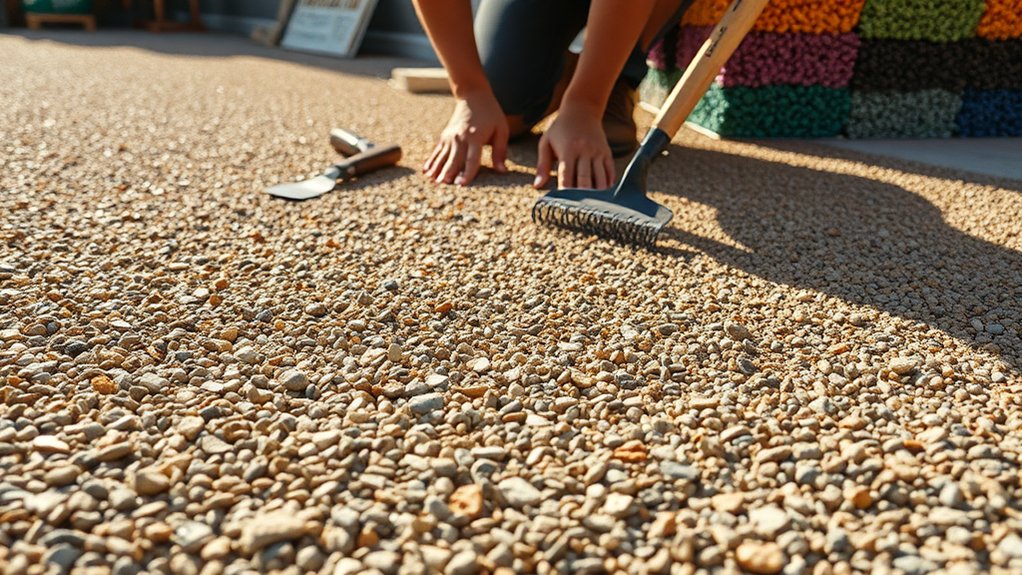
Preparing the subbase for resin-bound gravel installation makes all the difference between a long-lasting surface and one that fails prematurely. First, clear the site thoroughly of vegetation and debris to ensure proper moisture management. For the subbase, MOT Type 3 or open-graded tarmacadam work best – choose the thickness based on your soil type.
Compact the base properly using a plate compactor, ensuring the surface stays level without any dips. A well-prepared subbase prevents future settling and drainage issues.
| Step | Details |
|---|---|
| Site Clearing | Remove all vegetation and debris |
| Subbase Material | MOT Type 3 or Crush & Run |
| Compaction Technique | Plate compactor for best results |
| Drainage Solutions | SuDS-compliant materials |
Think of the subbase as the foundation of a house – get it right, and everything else falls into place. Skimp on this step, and you’ll likely face problems down the line, no matter how good your resin mix is.
Essential Installation Equipment and Tools

Essential mixing tools must be selected carefully for resin-bound gravel installation to ensure proper blending of resin and aggregate.
A thermometer is vital, as temperature directly affects curing times. Proper safety kit – including goggles, gloves and protective footwear – is non-negotiable for any installation job.
Think of it like baking: the right tools and correct temperature make all the difference to the end result.
Mixing Tools Selection
Essential Mixing Tools for Resin-Bound Gravel
The right mixing tools ensure a proper resin-bound gravel installation, affecting both the mixing quality and final finish. Key equipment includes:
- Forced Action Mixer: SoRoTo pan mixers work best, as they blend materials thoroughly without trapping air.
- Paddle Mixers: Crucial for mixing resin binders evenly – much like blending cake ingredients before adding dry components.
- Drill Attachments: A sturdy 110V drill with matching paddle mixer handles initial mixing tasks. Think of it as a robust version of your kitchen hand mixer.
- Adjustable Speed Control: Prevents over-mixing and ensures consistent results – particularly important when working with quick-setting resins.
These tools, whilst requiring initial investment, pay for themselves through better-quality installations and fewer mixing problems.
Temperature Control Equipment
Essential temperature control is vital for quality resin-bound gravel installations, as temperature changes affect curing and finish.
You’ll want a good infrared thermometer and digital probe thermometer to get precise readings. Use portable heaters or cooling mats to maintain proper working conditions.
For British weather, opt for specialised cold-weather resins during winter months and cooling additives in summer.
Keep your mixing kit in insulated containers whilst moving between jobs, and have weatherproof covers handy to shield work areas from rain or intense sun.
A simple temperature monitoring setup helps you keep tabs on conditions throughout the job, so you can adjust your approach when needed.
This attention to temperature control makes the difference between a sound installation and a dodgy one.
Safety Gear Requirements
Safety Gear Requirements for Resin-Bound Gravel Installation
Essential protective equipment ensures safe working conditions whilst installing resin-bound gravel surfaces. Four crucial items:
- Hard Hats: Guard against overhead hazards and falling materials.
- Grip-Soled Boots: Essential for secure footing, particularly on slopes.
- Gloves: Shield hands from resin chemicals and abrasive materials.
- Eye Protection: Block splashes and protect against chemical exposure.
Proper safety kit reduces workplace risks and allows better focus on quality installation work.
Cutting corners on protective gear isn’t worth the risk – quality equipment protects both your health and work standards.
Think of it as essential kit rather than optional extras.
Environmental Considerations for Resin-Bound Surfaces

The environmental benefits of resin-bound surfaces make them a smart choice for UK properties. These surfaces are permeable, meaning rainwater drains naturally through them rather than running off into already-strained local drainage systems.
Think of it as having a built-in sustainable drainage solution – particularly useful given Britain’s frequent rainfall. The surfaces filter out pollutants as water passes through, helping protect our groundwater and streams.
Unlike traditional concrete or tarmac driveways that need replacing every few years, resin-bound surfaces last longer, creating less waste. They’re also effective at reducing localised flooding, a growing concern in many UK towns and cities.
In urban areas, these surfaces help combat the ‘heat island’ effect, where built-up areas become significantly warmer than surrounding countryside.
Implementing Quality Control and Testing Procedures

Essential quality control and testing procedures ensure resin-bound gravel surfaces perform well and last longer. A proper testing framework helps maintain material quality and meet UK standards.
- Regular Quality Audits: Check installations every three months to maintain standards and keep up with latest industry practices.
- Compliance Checks: Ensure materials have proper BBA certificates and follow FeRFA guidelines – much like an MOT for your car.
- Material Inspection: Check new materials before use, looking for obvious damage or contamination, just as you’d check fresh produce at the supermarket.
- Onsite Testing: Measure key properties like thickness and strength regularly. Think of it as taking vital signs to spot any issues early.
Frequently Asked Questions
What Is the Lifespan of Resin-Bound Gravel Surfaces?
Resin-bound gravel driveways and paths last between 20 to 30 years with proper care – similar to the lifespan of a quality conservatory. The durability largely depends on the initial installation quality and British weather conditions. Much like caring for a garden patio, regular sweeping and occasional pressure washing help maintain the surface. Stick to the manufacturer’s guidelines, particularly during our wet winters, to get the most from your investment.
Can Resin-Bound Gravel Be Installed in Cold Weather?
Installing resin-bound gravel in cold weather is possible, but you’ll need proper temperatures. The ground and air temperature must stay above 5°C throughout installation and curing. Working in colder conditions risks poor bonding and cracking – much like trying to set concrete in winter. For best results, check the weather forecast and ensure proper ground preparation before starting your project.
How Do I Clean Resin-Bound Surfaces Effectively?
Regular sweeping and gentle washing are essential for maintaining resin-bound surfaces. Use a soft brush for routine cleaning and a pH-neutral cleaner mixed with warm water for deeper cleans – much like caring for stone flooring. Avoid pressure washers or harsh chemicals, as these can damage the surface. For stubborn stains, a light scrub with a soft-bristled brush should do the job. Best results come from tackling spills promptly and cleaning the surface at least once a month.
What Are the Common Repair Methods for Resin-Bound Gravel?
Clean the area thoroughly, widen any cracks and fill with a compatible resin mixture. Regular upkeep ensures the surface stays safe and looks uniform, whilst proper repairs help avoid trip hazards and maintain the driveway’s strength. For best results, match the original resin colour and aggregate type when making repairs.
Is Resin-Bound Gravel Suitable for Heavy Vehicle Traffic?
Resin-bound gravel can handle heavy vehicles, but its lifespan may reduce to 10 years under frequent lorry or commercial traffic. A properly installed system with the correct depth and mix can withstand substantial loads, much like you’d find in commercial car parks or loading bays. The key is professional installation and appropriate base preparation to ensure durability.
Conclusion
Quality resin-bound gravel materials aren’t cheap, but they’re worth the investment. Choose UV-stable resins from established UK suppliers like SureSet or Addagrip, and ensure aggregates meet British Standards for size and durability. A proper mix needs 4-6mm stones for driveways or 2-5mm for pathways. Local builders’ merchants might offer decent prices, but always check their product certifications first. Good suppliers will provide detailed technical specs and installation guides – if they don’t, look elsewhere. Consider sustainable options too, as many UK manufacturers now offer eco-friendly resins that comply with SUDS requirements.