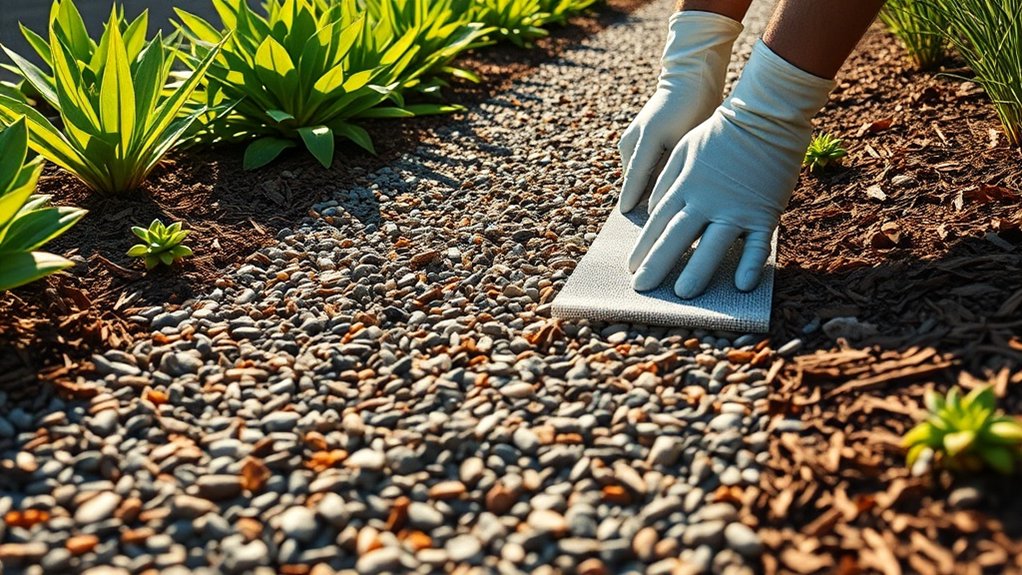
To prevent weed growth on resin-bound gravel, start with professional installation to ensure a solid base. Regularly sweep and pressure wash the surface to remove any organic matter that can encourage weeds. If you spot any weeds, pull them out by hand promptly. You might also consider applying selective herbicides suitable for resin surfaces. To deter moss and algae, treat your gravel with biodegradable solutions. By maintaining a strong foundation and following these practices, your gravel can remain tidy and effective. There are plenty more tips for effective management.
Key Takeaways
- Ensure professional installation with a well-compacted, permeable sub-base to prevent deformation and limit weed growth.
- Regularly sweep and pressure wash the surface to remove organic matter that can attract weed seeds.
- Use iron sulphate-based moss killers and biodegradable herbicides to effectively manage unwanted growth.
- Adhere to FeRFA guidelines for the correct resin-to-aggregate ratios to create a tightly bound, weed-resistant surface.
- Conduct seasonal inspections and maintenance to tackle any localised weed issues and keep the area looking its best.
Importance of Professional Installation
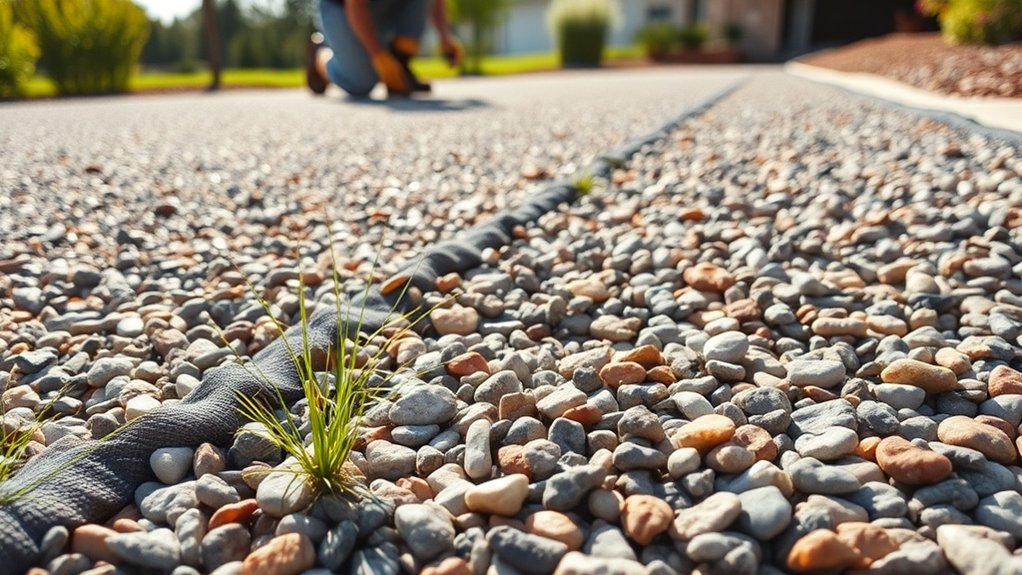
Choosing professional installation for your gravel surface is a smart choice for both aesthetics and long-term durability. Skilled installers use precise techniques to create a stable, permeable sub-base that resists deformation and minimizes cracks where weeds can thrive. They also implement geotextile membranes to block weed growth from below while ensuring proper drainage to prevent waterlogging. The right resin-to-aggregate ratio results in a tightly bound surface that enhances weed resistance. Additionally, the surface allows natural drainage, which further reduces the chances of weed growth by preventing water accumulation. Furthermore, adherence to FeRFA guidelines ensures that installation meets industry quality standards, contributing to the overall effectiveness of weed prevention. While the initial installation costs may be higher, the quality of workmanship provides a seamless finish and reduces future maintenance.
Regular Surface Cleaning Techniques
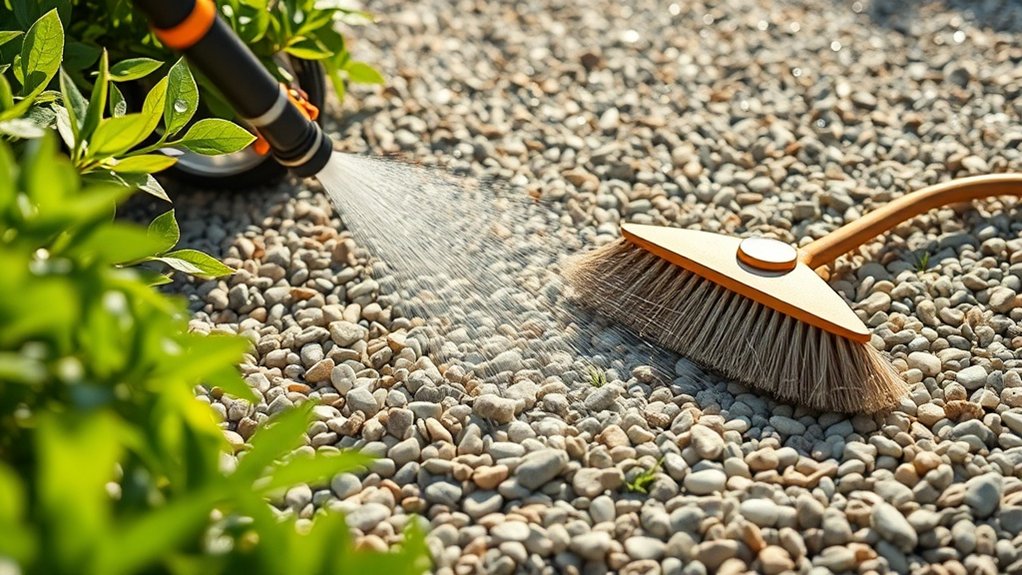
To keep your gravel surface looking its best and free from weeds, regular sweeping and pressure washing are key. Use a stiff broom or leaf blower to clear away debris and dirt, as this reduces the organic matter that encourages weeds to grow. When pressure washing, follow the recommended guidelines to ensure you clean effectively without harming the surface. Additionally, maintaining a durable surface is crucial as it can resist cracking and minimize opportunities for weeds to take root. Implementing regular maintenance practices will also help ensure that dirt layers do not accumulate, further reducing the likelihood of weed growth.
Sweeping Techniques
Effective sweeping techniques are crucial for maintaining gravel surfaces and preventing weed growth. To keep your resin-bound gravel weed-free, consider the following:
- Sweeping Frequency: Aim to sweep at least once a week, and increase this during autumn and spring to manage fallen leaves and seeds.
- Broom Selection: Opt for a stiff-bristled broom to tackle embedded debris, steering clear of wire bristles as they can damage the surface.
- Technique: Sweep in line with the aggregate pattern using firm, even strokes for a thorough clean. Regular maintenance reduces the likelihood of weed appearance on your driveway, and acknowledging proper maintenance helps extend the lifespan of resin-bound gravel surfaces.
Jet Washing Guidelines
Maintaining a clean gravel surface is key to preventing weed growth, and adding jet washing to your cleaning routine can significantly boost your efforts. Choose a pressure washer with adjustable settings, ideally between 1,000 and 2,500 PSI, and use a flat or fan jet nozzle for even coverage while keeping a safe distance from the surface.
| Equipment Type | Recommended Pressure | Nozzle Angle |
|---|---|---|
| Domestic Jet Washer | 1,000-2,500 PSI | 25-40° |
| Rotary Cleaners | Up to 150 bar | N/A |
| Flat Nozzle | 1,000-2,500 PSI | 25-40° |
| Avoid Single Jet Lance | Above 2,500 PSI | N/A |
| Cleaning Solutions | pH-neutral | Mild Detergents |
Managing Moss and Algae Growth
To manage moss and algae growth effectively, it’s essential to know the treatment options available and how to apply them properly.
By adopting long-term prevention strategies, you can reduce the factors that encourage moss on your gravel surfaces. For example, ensuring proper drainage and regular maintenance can significantly help.
Let’s look at the best ways to keep your outdoor spaces clean and free from moss.
Treatment Products Overview
To effectively manage moss and algae growth on resin-bound gravel, choosing the right treatment products is crucial for achieving lasting results. Here are some effective options:
- Iron sulphate-based moss killers quickly eliminate moss, often within four days, making removal straightforward.
- Biocides and specialised removers penetrate deeply to eradicate growth and prevent recurrence for up to six months.
- Natural cleaning agents such as hydrogen peroxide provide a non-toxic alternative that won’t harm your resin.
Using these products wisely will help keep your gravel area looking tidy while controlling unwanted moss and algae.
Regular maintenance and timely application are essential for preserving the integrity of your resin-bound gravel surface.
Application Techniques
Effective application techniques are crucial for managing moss and algae on resin-bound gravel surfaces.
Begin by pressure washing with a washer up to 150 bar, using cold water and sweeping motions to clear the area gently.
After cleaning, apply a concentrated biocide foam to eliminate any remaining growth, allowing two weeks for full effectiveness.
If you encounter stubborn moss, consider using iron sulphate-based killers, which work best in late winter or early spring.
Always conduct patch tests before applying any products to ensure they’re safe for your surface.
Regular maintenance, such as sweeping every fortnight, improves treatment effectiveness and prevents debris accumulation that encourages moss growth.
Timing your applications during dry weather will yield the best results.
Long-term Prevention Strategies
Managing moss and algae on resin-bound gravel can be straightforward with the right long-term prevention strategies.
By recognising the factors that promote their growth, you can take effective steps to keep them at bay:
- Regular cleaning: Sweep away leaves and debris, and wash the surface with medium-pressure water twice a year to avoid moisture build-up.
- Vegetation management: Trim back overhanging plants to reduce shade and dampness, making it less inviting for moss and algae to thrive.
- Improving air circulation: Increase airflow around your gravel area to help it dry quicker and lower humidity levels.
These measures not only prolong the life of your resin-bound gravel but also keep it looking good, while making maintenance easier over time.
Manual Weed Removal Strategies
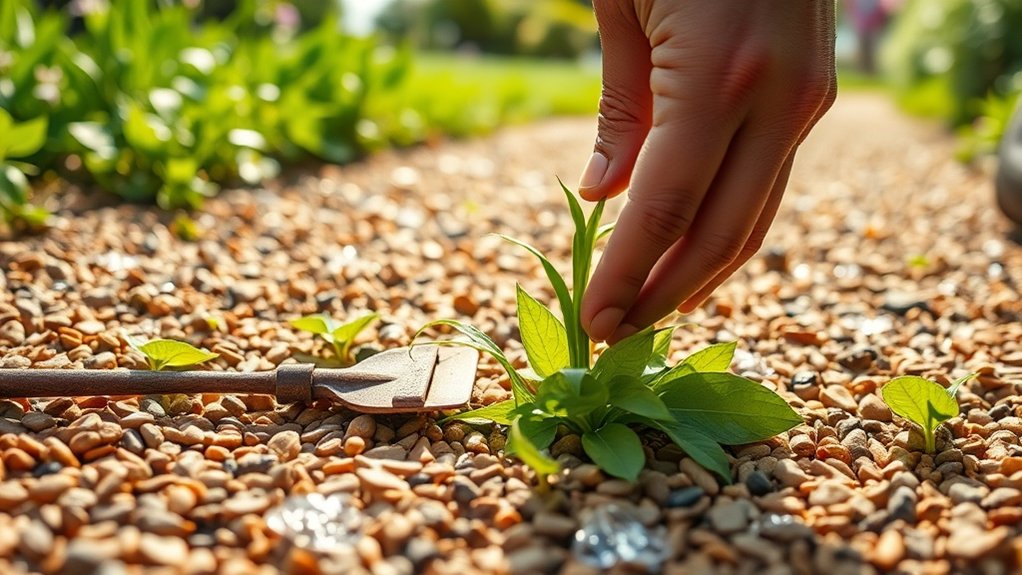
Manual weed removal strategies provide an effective way to manage unwanted growth on gravel surfaces. For small areas, hand pulling is ideal; ensure you grasp the weed at its base for complete root removal. It’s best to do this when the soil is damp, such as after rain. For larger areas or tougher roots, mechanical tools like flathead screwdrivers or V-notch weeders can be very useful.
| Technique | Best For | Tools Needed |
|---|---|---|
| Hand Pulling | Small, scattered patches | Gloves |
| Mechanical Tools | Larger areas | Weeding knives, hoes |
| Pressure Washing | Removing surface debris | Pressure washer, nozzles |
| Regular Monitoring | Early detection of weeds | Inspection tools |
Chemical Weed Control Options
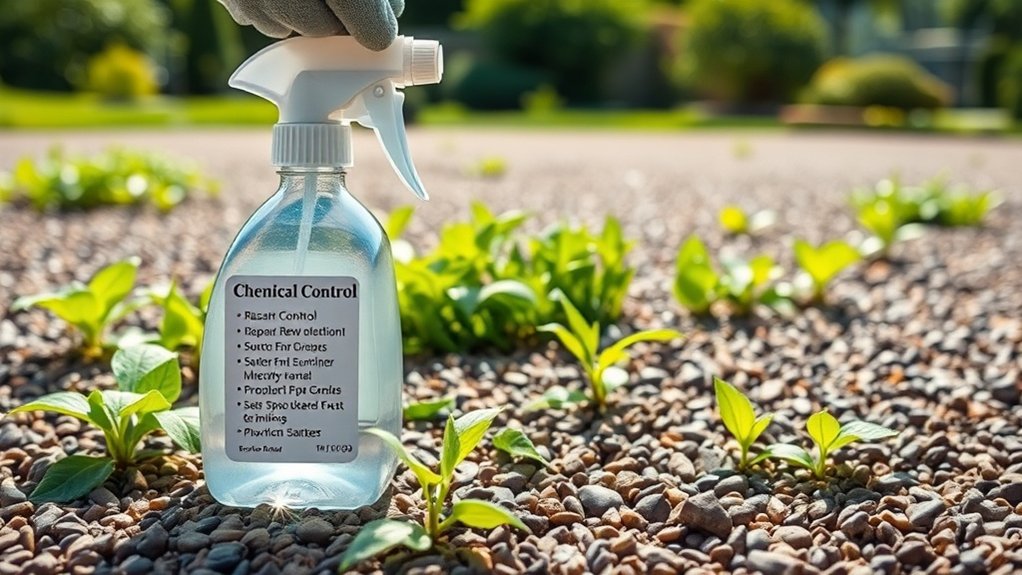
When choosing chemical weed control options, it’s important to select products that are both safe and effective for your gravel surface. Opt for selective herbicides specifically designed for resin-bound driveways; these target weeds without harming the surface.
Timing is crucial, so consider applying mild herbicides once or twice a year around the edges to effectively prevent seed germination.
- Use biodegradable treatments to keep the area clean.
- Dilute weed killers with water to reduce the risk of staining.
- Always follow the manufacturer’s guidelines for safe application.
Regularly treating localised weed problems will help keep your gravel looking pristine.
Additionally, ensure you comply with local environmental regulations to protect your surroundings. By being proactive with your choice of herbicides and their timing, you can maintain a weed-free gravel area with ease.
Protective Treatments and Maintenance
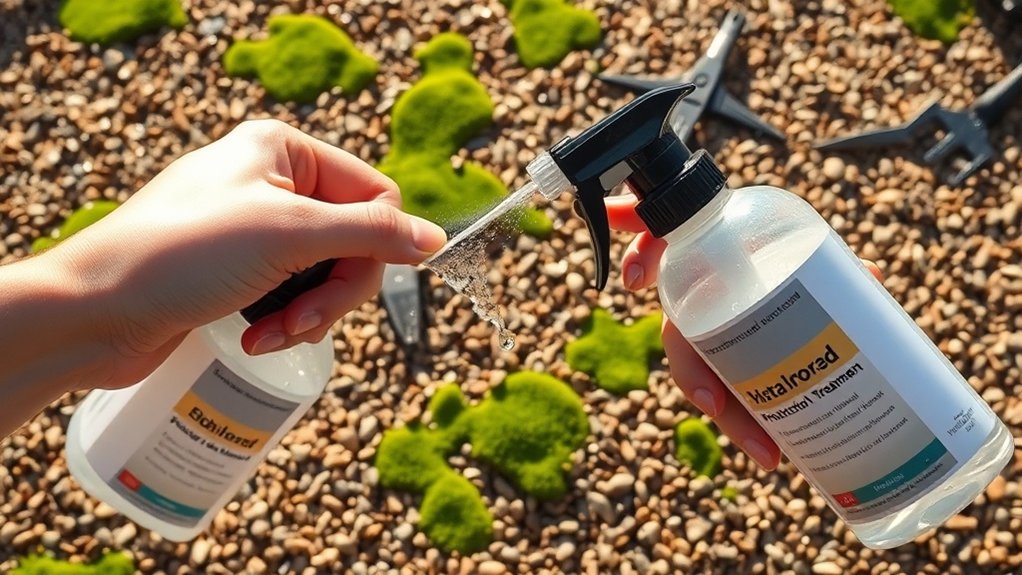
To keep your gravel surface in top condition and prevent weeds, regular maintenance is key. Start by sweeping your resin-bound gravel frequently to clear away debris that can attract weed seeds.
In autumn, make sure to promptly remove fallen leaves to prevent organic matter build-up. Aim to wash the surface twice a year with water—avoid using high-pressure hoses as they can damage the resin.
Use eco-friendly treatments to tackle moss and algae, which can retain moisture and encourage weed growth. If necessary, consider applying mild herbicides along the edges to deter weeds.
Manual removal of weeds is crucial; pull them out early to stop them from establishing deep roots. Finally, maintain tidy edges with barriers and regular trimming to keep your gravel looking neat and weed-free.
Benefits of a Proper Base Preparation
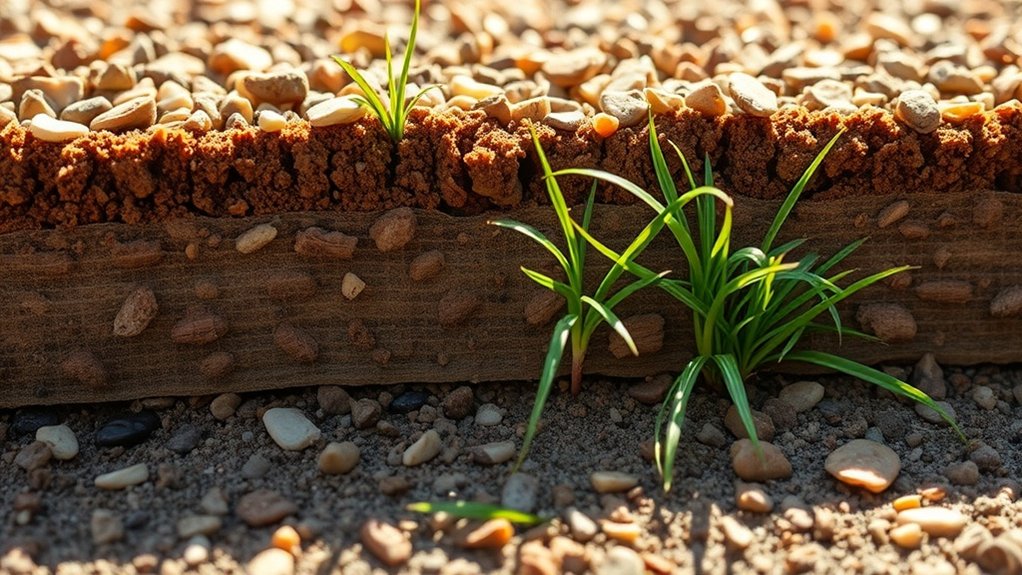
Proper base preparation may seem like a small detail, but it’s vital for the long-term success of resin-bound gravel surfaces. A well-compacted base provides essential support, improves drainage, and increases load-bearing capacity.
This strong foundation also reduces weed growth by eliminating gaps where roots can take hold.
- Stabilises the substrate to prevent surface deformation.
- Improves drainage to avoid puddles and erosion.
- Promotes eco-friendliness by filtering out pollutants.
Long-term Maintenance Practices
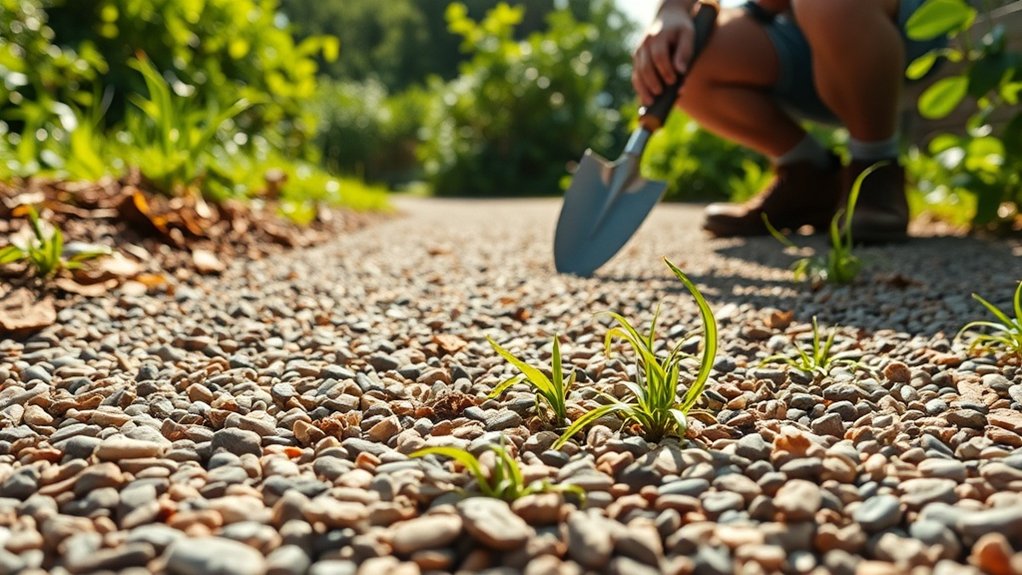
Effective long-term maintenance is vital for keeping resin-bound gravel surfaces looking good and functioning well.
Regular sweeping helps remove debris that can harm soil health and encourage weed growth. Seasonal inspections are important; check for wear and clear away organic material to maintain your landscape design.
Use biodegradable products to treat weeds and apply herbicides along borders to prevent soil and seed migration. Schedule professional inspections every few years and reapply sealants as necessary to boost durability.
Ensure your maintenance team is well-trained in proper techniques that follow manufacturer guidelines. This proactive approach not only maintains the surface’s appearance but also strengthens its resistance to invasive plants.
Frequently Asked Questions
How Often Should I Apply Sealant to Resin-Bound Surfaces?
You should apply sealant to resin-bound surfaces every year. However, if the area experiences heavy foot or vehicle traffic, consider applying it more frequently to ensure durability and protection. For instance, a driveway that sees daily use may benefit from more regular applications than a garden path. Maintaining the sealant will help prolong the surface’s lifespan and keep it looking its best.
Can Pets Safely Walk on Treated Resin-Bound Driveways?
Yes, pets can safely walk on treated resin-bound driveways. The smooth surface ensures comfort and reduces the risk of injury. The materials used are non-toxic, meaning they won’t harm your pets. So, whether it’s your dog enjoying a stroll or your cat exploring the garden path, you can rest assured they’re safe on this type of driveway.
What Types of Mulch Are Best for Resin-Bound Areas?
For resin-bound areas, opt for organic mulch paired with landscape fabric. This combination effectively retains moisture and suppresses weeds, creating a sustainable and attractive surface that enhances your outdoor space.
Does Resin Binding Affect the Drainage of My Driveway?
Resin binding actually improves your driveway’s drainage. It helps manage water effectively, reducing puddles and promoting better water retention. This makes your driveway more efficient in handling stormwater. It’s a practical solution for maintaining a dry and functional outdoor space.
How Long Does Resin-Bound Surfacing Typically Last?
Resin-bound surfacing typically lasts between 15 to 25 years, depending on the quality of the resin and how well it is maintained. Using high-quality materials and ensuring regular care, such as cleaning and resealing, can significantly extend its lifespan and durability. For instance, a well-maintained driveway can endure the wear and tear of everyday use much longer than one that’s neglected.
Conclusion
To keep your resin-bound gravel looking great and free from weeds, follow these simple strategies. Regular maintenance and proper installation are essential for durability. By being proactive about moss and algae, you not only protect your investment but also create an attractive space. Adopt these practices, and you’ll maintain a tidy landscape that stays clear of unwanted growth.