
To avoid common mistakes in aggregate selection, focus on quality rather than price to ensure durability. Check the aggregate size and grading with a sieve analysis to achieve optimal performance. Source and test materials thoroughly for consistent quality and compatibility with cement. Be mindful of moisture content during storage to prevent complications. Calculate the required volumes accurately and plan delivery schedules accordingly. Lastly, keep up to date with building regulations to ensure compliance. This will significantly enhance your aggregate selection process.
Key Takeaways
- Choose high-quality aggregates instead of cheaper alternatives to improve durability and minimise long-term repair costs. For example, investing in stronger aggregates can save you money down the line by reducing the need for repairs.
- Carry out thorough compatibility tests to ensure that aggregates won’t react negatively with cement or binders. This helps prevent structural problems that could compromise the integrity of your project.
- Conduct a sieve analysis to check that the aggregate size and grading are correct. This ensures a consistent distribution, which is crucial for optimal performance.
- Use effective moisture management and storage techniques to keep aggregates in good condition and avoid moisture-related issues, such as degradation or contamination.
- Stay informed about current building codes and compliance standards to ensure your aggregate selection meets all regulations, safeguarding the integrity of your project.
Prioritize Quality Over Price

When selecting aggregates for your construction project, it’s crucial to prioritise quality over price. High-quality aggregates improve durability and longevity, which helps prevent premature failures and expensive repairs. Investing in top-notch materials also reduces the likelihood of construction delays caused by structural issues. It’s important to thoroughly evaluate suppliers. Reliable ones can provide certifications and test reports that demonstrate compliance with industry standards. This diligence not only protects your project’s integrity but also aligns with REACH Regulations for health and environmental protection. Remember, opting for cheaper materials might save you money initially, but it often results in higher overall costs due to frequent repairs. Ultimately, choosing quality aggregates ensures long-term cost-effectiveness and enhances your project’s reputation among stakeholders. Additionally, using high-quality aggregates significantly contributes to the overall compressive strength of your structures, ensuring they can withstand environmental stresses over time.
Verify Proper Aggregate Size and Grading
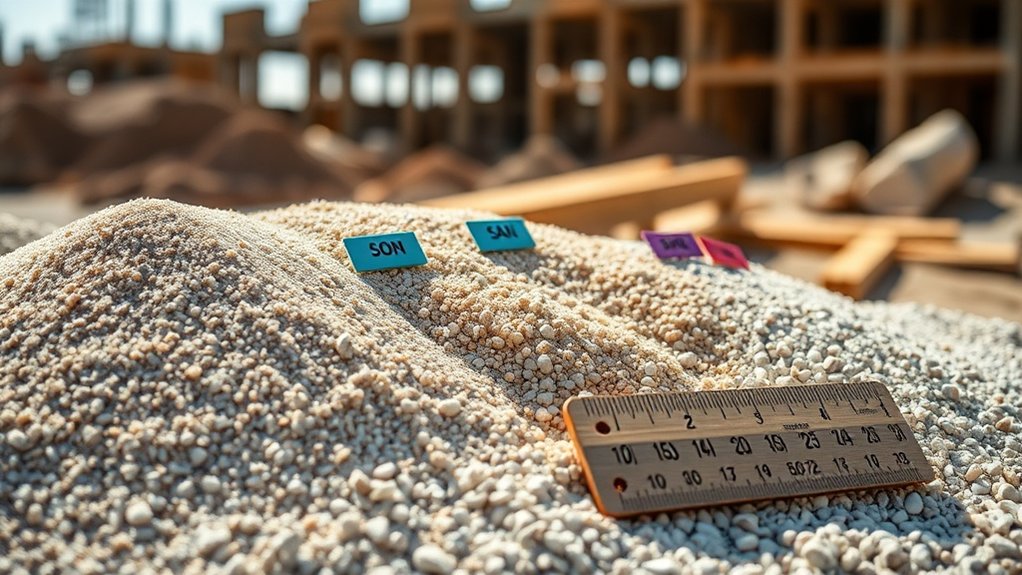
Verifying the correct aggregate size and grading is crucial for ensuring the structural integrity and performance of your construction project. Follow these steps:
- Conduct a Sieve Analysis: Use BS 812-103.1 to assess aggregate gradation, ensuring all materials meet the specified size requirements.
- Review Gradation Curves: Examine gradation curves for a consistent distribution, confirming that your aggregates are well-graded to reduce voids and improve performance. A well-graded aggregate mix enhances aggregate gradation by filling voids efficiently and improving overall stability. Choosing angular stones is especially important for applications that experience high traffic.
- Align with Project Specifications: Ensure your chosen aggregate size matches the intended application, whether for concrete or asphalt, referring to standards like BS EN 12620.
Conduct Thorough Testing and Sourcing

Choosing the right aggregate size and grading is crucial for effective testing and sourcing. To ensure sample integrity, take representative samples from various sources, such as conveyor belts and stockpiles, using splitters to keep the particle size distribution consistent. This practice helps reduce errors in testing, which is essential for assessing hardness, toughness, and durability. Common laboratory tests, like crushing and abrasion tests, evaluate aggregate performance and inform your material choices. Always stick to validated methods for accurate results. Representative sampling is key to ensuring that you obtain a true reflection of the material’s characteristics. Poor sampling can lead to inconsistent quality control, ultimately affecting the quality of concrete or asphalt. Utilizing aggregate size and shape can enhance drainage and stability, ensuring your materials perform well during exposure to harsh conditions.
Ensure Material Compatibility
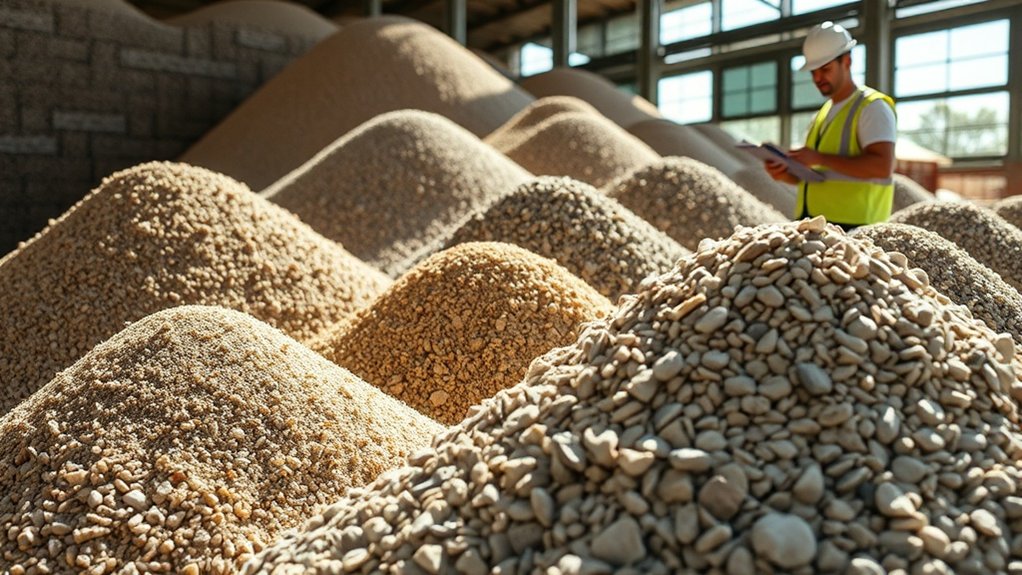
Ensuring material compatibility is crucial for the durability and performance of concrete and asphalt mixtures, as incompatible aggregates can lead to serious structural problems.
To achieve optimal compatibility, consider the following:
- Chemical Resistance: Ensure aggregates are chemically inert to prevent reactions with cement and environmental factors, such as the alkali-silica reaction (ASR), which can weaken structures.
- Aggregate Testing: Carry out compatibility tests, such as mortar bar tests or petrographic analysis, to assess the potential reactivity with binders.
- Surface Texture: Opt for aggregates with rough textures to enhance bonding with the cement matrix, which boosts strength and longevity.
Account for Moisture Content and Storage

Moisture content and storage conditions are vital for the performance of aggregate materials, directly affecting the consistency and quality of concrete and asphalt mixtures.
To achieve optimal results, utilise reliable moisture measurement techniques, such as gravimetric methods or real-time monitoring systems like radar and optical sensors. These tools help track moisture levels accurately, reducing inconsistencies in batches.
It’s also important to implement effective storage solutions, such as covered stockpiles, to protect against weather-related moisture variability.
Regular moisture testing, calibration of measurement devices, and diligent documentation of moisture data are essential practices for managing aggregate moisture content.
Calculate Usage Accurately and Plan Delivery

To ensure efficient aggregate usage, it’s crucial to accurately calculate the volume ratio and consider the impact of the compaction coefficient on your project.
For example, if you’re laying a new driveway, knowing how much material you need after compaction can save you time and money.
Additionally, transportation costs can significantly influence your budget, so it’s important to plan delivery schedules that suit your project’s timeline.
Aggregate Volume Ratio
Accurate calculation of the aggregate volume ratio is crucial for achieving the right concrete properties and avoiding expensive mistakes during the construction process.
To ensure precision in your aggregate calculations, follow these steps:
- Determine dry volume: Adjust the wet concrete volume by a factor of 1.54 to account for bulking and shrinkage.
- Calculate aggregate proportions: Divide the aggregate ratio by the total mix ratio and multiply by the dry concrete volume.
- Consider specific gravity: Use a typical bulk specific gravity of 2.7 for precise absolute volume calculations.
Compaction Coefficient Importance
Understanding the aggregate volume ratio is crucial for effective compaction planning. The compaction coefficient indicates the ratio of in-place wet density to the maximum wet density of your aggregate.
To determine relative density, you can use the formula: Percent Relative Compaction = (D1/D2) × 100. This helps you understand how much your material will compress during standard compaction methods.
Different materials have different compaction factors; for example, crushed stone has a factor of 0.60, whereas wet sand and gravel can reach 0.91.
Accurate calculations of delivery volumes depend on these factors. Misjudging your required volume can lead to significant costs, so always confirm compaction coefficients with your aggregate supplier or through testing specific to your material.
Transportation Cost Considerations
Effective management of transportation costs begins with accurate calculations of aggregate usage.
To enhance your logistics and reduce expenses, follow these essential steps:
- Measure Project Dimensions: Carefully measure the area and required thickness to work out the cubic volume needed.
- Convert Volume to Weight: Apply the specific density of the aggregate to establish the exact tonnage required, factoring in a waste allowance to avoid running short.
- Plan Delivery Scheduling: Organise deliveries wisely, taking into account distance, seasonal demand, and traffic patterns to optimise costs.
Consider Environmental Impact

When choosing aggregates, it’s important to consider sustainable sourcing practices to reduce environmental impact.
Opt for materials that lower your carbon footprint and incorporate recycled aggregates when possible. This approach helps prevent habitat destruction and protects water quality, leading to more responsible resource management.
For example, using recycled concrete not only saves natural resources but also cuts down on waste.
Sustainable Sourcing Practices
Sourcing aggregates sustainably helps reduce environmental impact and boosts the efficiency of construction projects. Here are some key practices to consider:
- Sustainable Quarrying: Opt for quarries that emphasise site rehabilitation, limit habitat disruption, and adhere to strict environmental standards.
- Local Sourcing: Choose aggregates from local suppliers to cut down on transportation emissions, improve supply chain efficiency, and bolster local economies.
- Recycled Aggregates: Incorporate crushed concrete and other demolition waste as alternatives to virgin aggregates, ensuring they meet quality requirements through thorough testing.
Minimize Carbon Footprint
Sustainable sourcing practices are essential for minimising the carbon footprint of aggregate selection in construction projects. To cut down on transportation emissions, source aggregates locally and optimise delivery routes.
Using rail or barge transport is more environmentally friendly than relying solely on lorries. It’s also important to choose extraction methods that have minimal impact on ecosystems and to use controlled mining techniques.
Optimising aggregate specifications can ensure efficiency—tailor properties to suit the specific needs of your project to avoid waste.
Moreover, enhancing processing energy efficiency through advanced technologies can reduce power consumption and improve material flow.
Finally, implement emissions tracking to regularly assess your practices. This allows for adjustments that can further reduce your overall environmental impact.
Recycled Aggregate Utilization
Recycled aggregate utilisation provides significant environmental advantages that can help reduce the ecological impact of construction projects. By using recycled aggregates, you can achieve several key benefits:
- Resource Conservation: Incorporating recycled aggregates helps preserve natural resources and reduces the need for land used for quarries and landfills.
- CO2 Reduction: Recycling construction and demolition waste lowers CO2 emissions associated with producing natural aggregates and manufacturing cement.
- Cost Efficiency: Recycled aggregates can be more than 30% cheaper than natural aggregates, even when factoring in longer transportation distances.
Though there may be challenges in processing, such as the need for more energy to clean contaminants, the overall environmental benefits are still positive.
Stay Updated on Building Codes and Standards

As building regulations and standards are constantly changing, staying informed is crucial for ensuring compliance and optimising project outcomes.
Regularly review updates, such as the new ground improvement requirements in the Massachusetts tenth edition effective from 11 October 2024.
Employing compliance strategies that align with these evolving standards can reduce risks and enhance project integrity.
Be aware of amendments in other regions, like Rhode Island’s energy performance standards and New Hampshire’s enforcement procedures.
By adapting your practices to these codes, you ensure your projects meet all regulatory requirements, helping to avoid costly delays and modifications.
Regular training on these changes will keep you ahead in the competitive construction sector.
Engage With Experienced Professionals

Staying informed about building codes and standards is essential for selecting the right aggregates. However, collaborating with experienced professionals takes your project to the next level. Their expertise ensures you choose aggregates that meet your specific project requirements.
Here’s why working with them is beneficial:
- Smart Selection: Professionals can recommend the best aggregate types based on structural and design needs, helping you avoid expensive errors.
- Quality Control: They assess the quality of aggregates to ensure compliance with both local and international standards.
- Streamlined Communication: Experts help facilitate clear dialogue among all stakeholders, reducing the risk of misunderstandings.
Frequently Asked Questions
How Do I Identify High-Quality Aggregates?
To identify high-quality aggregates, carry out comprehensive testing to ensure they meet the required standards. Check the gradation, particle size distribution, and ensure there are no contaminants. Also, look for consistent shape and texture to ensure optimal performance. For example, well-rounded aggregates typically provide better compaction and strength in concrete.
What Are the Benefits of Using Recycled Aggregates?
Using recycled aggregates provides notable advantages, such as reducing environmental impact, conserving natural resources, and cutting project costs. For instance, using crushed concrete from demolished buildings can offer similar strength and durability as new materials. This approach not only helps to minimise landfill waste but also reduces carbon emissions by sourcing materials locally.
Can I Mix Different Types of Aggregates?
Yes, you can mix different types of aggregates, but it’s essential to ensure they are compatible. Carefully consider the mixing ratios to balance properties, avoiding significant discrepancies in absorption and strength. For instance, combining coarse gravel with fine sand can enhance concrete durability, but you must ensure they work well together to maintain quality and performance.
How Does Weather Affect Aggregate Quality?
Weather significantly affects aggregate quality. Seasonal changes can influence moisture content, temperature, and curing rates, which in turn impact the strength of concrete. For instance, in colder months, the risk of freezing can hinder proper curing, while excessive heat can lead to rapid evaporation of water. To counter these challenges, it’s essential to adjust mix designs and implement protective measures during extreme weather conditions.
What Certifications Should I Look for in Aggregate Suppliers?
When evaluating aggregate suppliers, look for certifications such as the Concrete Sustainability Council (CSC), Responsible Sourcing, and ISO 9001. These certifications indicate that suppliers adhere to high standards, ensuring quality, environmental responsibility, and ethical practices in sourcing and production. For instance, a supplier with CSC certification demonstrates a commitment to sustainable practices in concrete production, which can be crucial for environmentally-conscious projects.
Conclusion
In aggregate selection, cutting corners can lead to costly errors. Prioritising quality, checking sizes, and ensuring compatibility are essential for a strong project foundation. Don’t underestimate the importance of accurate calculations and considering environmental factors. Keeping up to date with regulations and consulting experienced professionals can help you avoid future issues. Remember, addressing these aspects early can prevent significant problems later on.