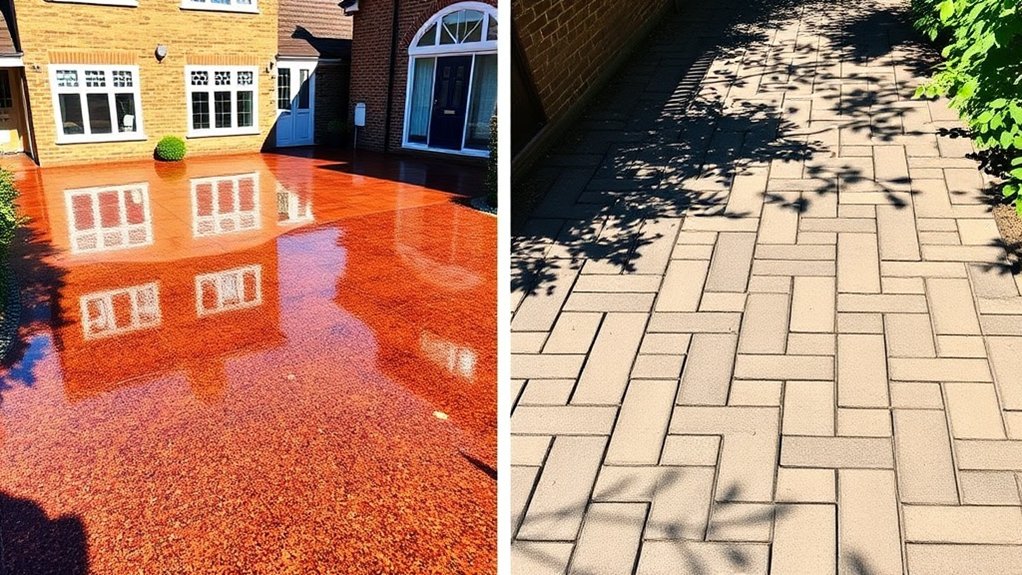
When deciding between a resin driveway and block paving in Collier Row, consider factors like cost, installation time, and environmental impact. Resin driveways typically have a lower initial cost, require less upkeep, and offer better drainage, which is great for managing rainwater. They also install quickly and provide a range of design options. On the other hand, block paving has its classic appeal but often comes with higher long-term maintenance costs. There’s plenty more to learn about each option, so read on for further details.
Key Takeaways
- Resin driveways are more affordable, costing between £80 and £140 per square metre, while block paving tends to be pricier.
- Resin driveways can be installed in just 1 to 3 days, whereas block paving takes 3 to 5 days to complete.
- With 95% water permeability, resin-bound surfaces help reduce flood risks and promote effective drainage systems.
- Durability is a strong point for resin driveways, as they require little maintenance and are less prone to cracking and weed growth compared to block paving.
- In Collier Row, modern design preferences make resin driveways a more suitable choice for contemporary homes.
Cost Comparison: Upfront and Long-term Value
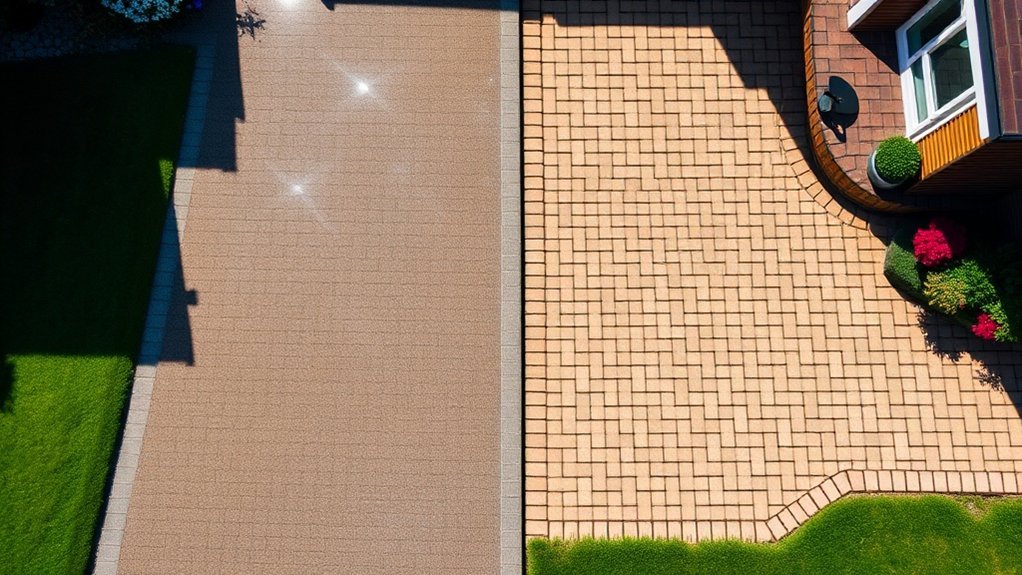
When considering a new driveway, it’s important to compare the upfront costs and long-term value of resin and block paving.
Resin materials typically range from £40 to £78 per square metre, while block paving can reach £134 per square metre. Although block paving may appear cheaper at first, ongoing maintenance costs—like weeding and resealing—can add up over time. Furthermore, resin surfaces require minimal maintenance, which can translate to significant savings over the years. Additionally, resin driveways are designed to withstand harsh weather conditions, ensuring longevity and durability.
On the other hand, resin offers benefits like minimal maintenance and a permeable surface that helps with drainage, potentially saving you money in the long run.
When looking at overall costs per square metre, resin averages between £80 and £140, while block paving ranges from £70 to £130.
Installation Process: Time and Disruption
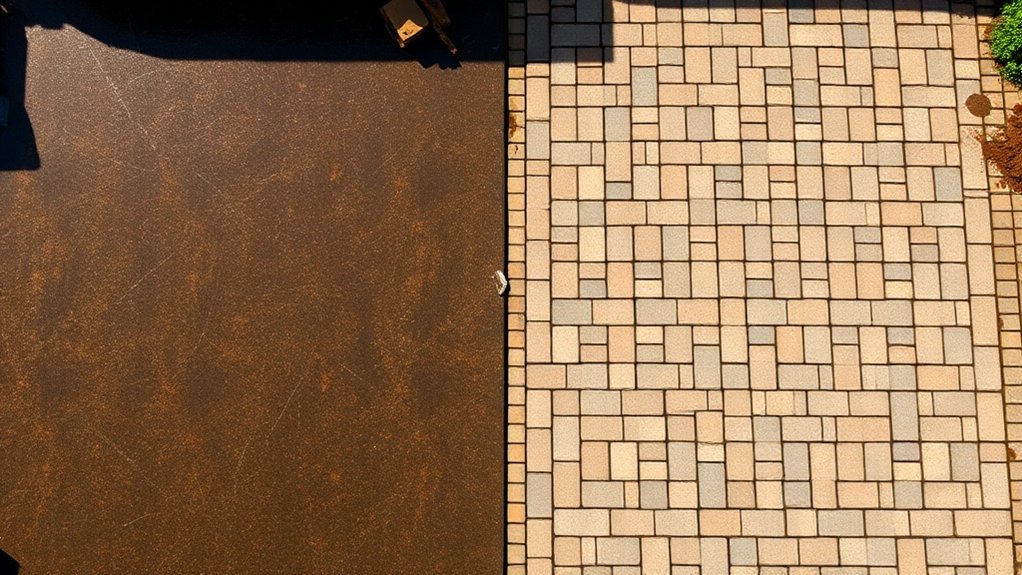
When considering resin versus block paving for your driveway, it’s crucial to understand the installation and curing times involved. Resin driveways generally need 1 to 3 days for installation and require 24 to 36 hours before vehicles can be driven on them, although foot traffic is permitted after just 6 to 8 hours. This means minimal disruption for your household. Additionally, understanding the curing process is essential for ensuring the longevity and performance of your driveway. A properly prepared surface, including clean and stable foundations, significantly contributes to the durability of resin-bound installations.
On the other hand, block paving takes about 3 to 5 days to install and allows for immediate light use after compaction, making it a practical choice if you need quick access.
Here’s a quick comparison of the materials:
| Material | Installation Time | Curing Time |
|---|---|---|
| Resin | 1-3 days | 24-36 hours (vehicles) |
| Block Paving | 3-5 days | Immediate light use |
| Concrete | 7 days | 7 days (vehicles) |
| Asphalt | 2 weeks | 100 days (full cure) |
| Light Vehicles | 24-48 hours | 30 days (heavy vehicles) |
Ultimately, your choice will depend on how quickly you want to use your driveway and how much disruption you’re willing to tolerate.
Drainage Solutions: Permeability and Flood Risk
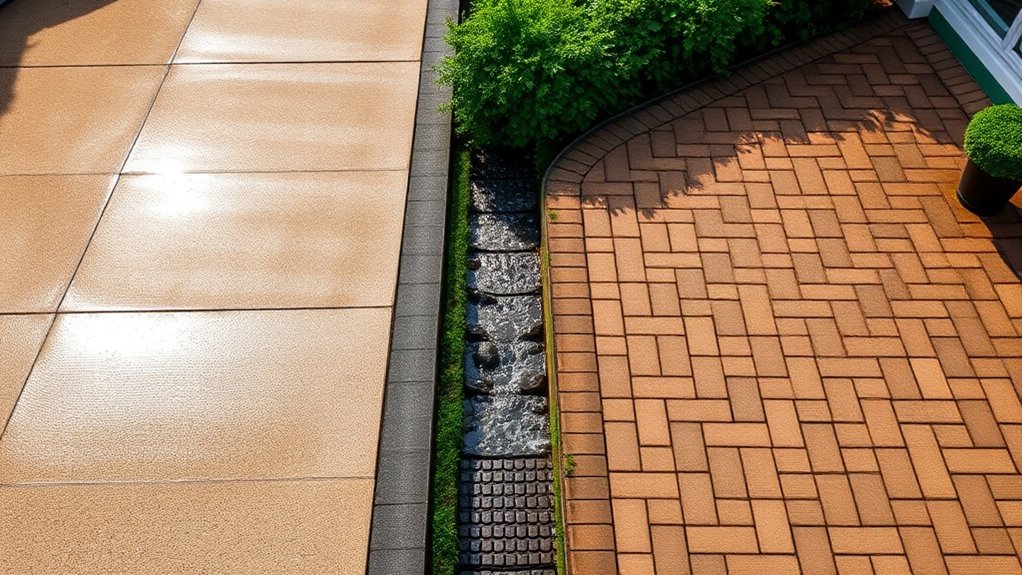
When choosing between resin and block paving for your driveway, it’s crucial to consider drainage solutions, especially in relation to permeability and flood risk.
Resin-bound driveways excel in permeability, allowing up to 95% of water to soak through. This significantly reduces puddles and the risk of urban flooding. The porous design helps to delay flood peak times and eases stormwater pressures. Additionally, resin-bound driveways are eco-friendly as they utilize recycled materials and manage rainwater naturally. Moreover, these driveways are known to store up to 3,000 gallons of water under a 1,000-square-foot area, which supports groundwater replenishment.
On the other hand, block paving is generally non-permeable, which can lead to increased surface runoff and a higher flood risk, particularly in flood-prone areas.
While some block paving options may allow for limited infiltration with permeable fillers, this is often inadequate without a proper drainage system.
Durability: Performance in Winter and Maintenance
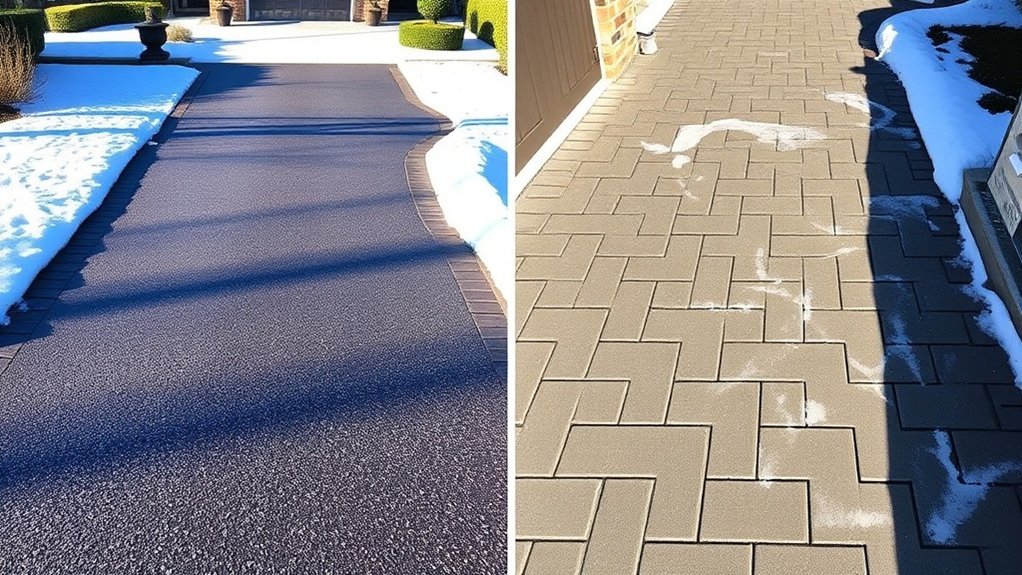
When comparing resin driveways and block paving, winter performance and maintenance reveal key differences.
Resin driveways are highly resilient in winter due to their flexible structure, which allows them to cope with ice expansion without cracking. They need very little upkeep—just the occasional sweep and a light pressure wash.
On the other hand, block paving can suffer from freeze-thaw damage, leading to cracking and displacement if not properly sealed.
Maintenance is more demanding, requiring regular repointing, weed control, and resealing, which can add up over time.
If winter performance and low maintenance are priorities for you, a resin driveway is likely the better choice for durability and ease of care.
Aesthetic Appeal: Visual Options and Accessibility
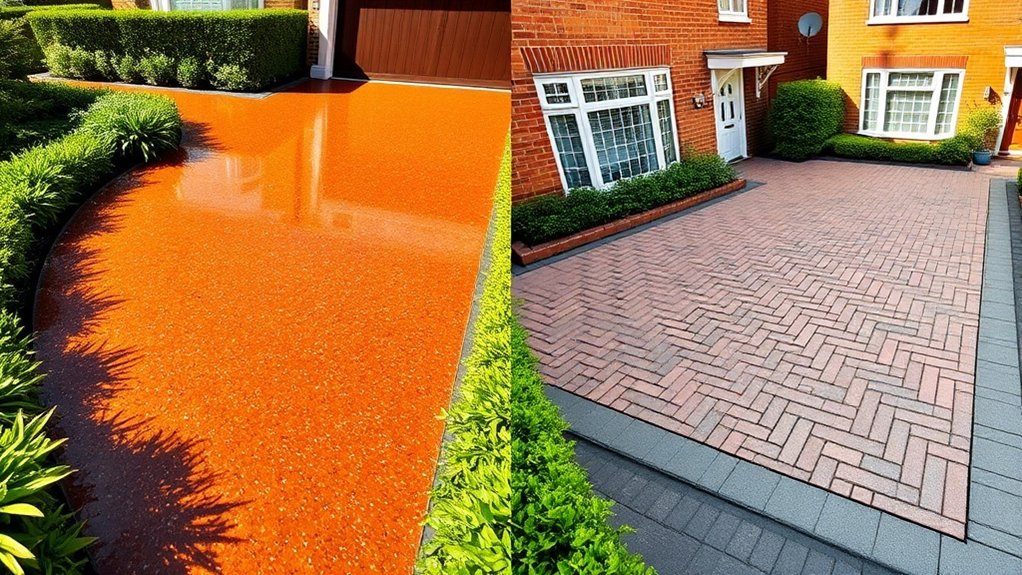
When it comes to aesthetic appeal, resin driveways and block paving each offer distinct visual options to suit different tastes.
Resin driveways allow for great design flexibility, featuring a wide array of colours and natural aggregates like marble and quartz. Their smooth, seamless finish not only looks modern but also boosts curb appeal, making them a great choice for contemporary homes.
On the other hand, block paving exudes classic charm with its various shapes and patterns, which work well for traditional properties. The individual blocks can be arranged in creative layouts, adding texture and character.
In terms of accessibility, resin’s smooth surface reduces tripping hazards, making it safer for all users.
Meanwhile, block paving’s individual blocks are easy to replace if damaged.
Ultimately, your decision will depend on your personal style and practical needs.
Local Considerations: Microclimate and Planning
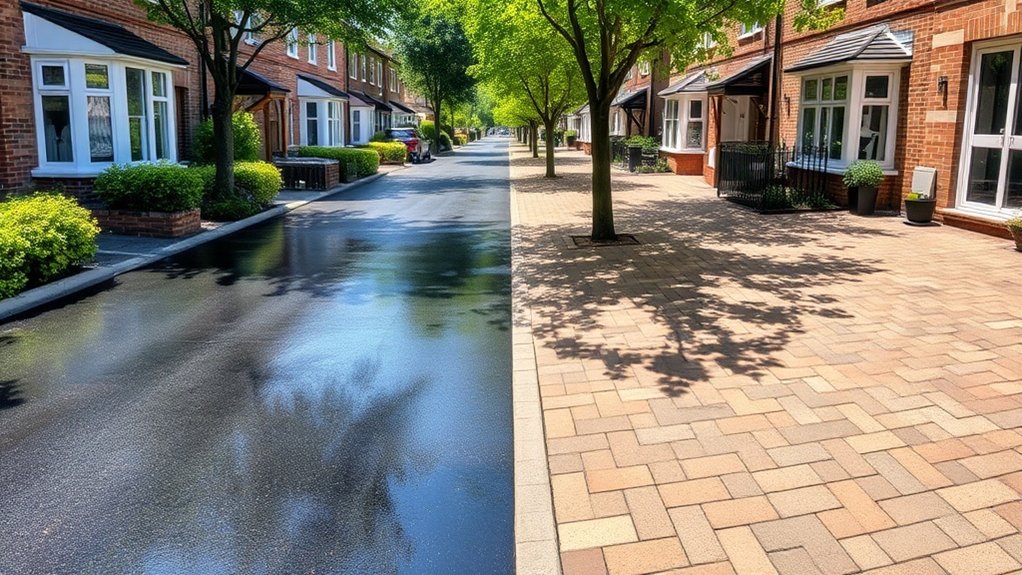
When planning a driveway in the UK, it’s crucial to consider local rainfall patterns and their impact on drainage.
Many planning authorities require permeable surfaces to manage surface water runoff and reduce flood risks. For instance, if you live in an area prone to heavy rainfall, opting for materials like permeable block paving can be beneficial.
Local aesthetics also play a significant role in your choice between resin and block paving.
Resin offers a modern look, while block paving can provide a more traditional feel.
Ultimately, your decision should reflect both functionality and the visual appeal you want for your property.
Rainfall Impact Analysis
Understanding the impact of local rainfall on driveway materials is crucial for effective planning and design. In Collier Row, the average monthly rainfall varies between 40 and 70 mm, with rain occurring 2.8 to 3.3 days each month. This means you should consider both light showers and occasional heavy downpours when designing your driveway.
If you choose a resin-bound driveway, ensure it’s a permeable system to manage water runoff properly; otherwise, it may act like an impermeable surface.
On the other hand, permeable block paving allows for better water drainage, reducing surface runoff. Including features like microdrainage can help direct water flow, prevent ponding, and safeguard your property from potential flooding during intense rain.
Planning Authority Guidelines
Local planning authority guidelines are crucial for designing and installing driveways, particularly regarding microclimate considerations and drainage management.
If you’re planning a new driveway in Collier Row, you must adhere to specific regulations set by Havering Council. For example, if your new driveway will access a public road and involves altering existing access, such as installing a dropped kerb, you’ll need planning permission.
On the other hand, using permeable materials can exempt you from needing permission for smaller areas. However, non-permeable surfaces may require approval due to their potential impact on drainage and local runoff.
Always check with the planning authority to ensure compliance and avoid fines or enforcement actions.
Local Aesthetic Preferences
Your choice of driveway style in Collier Row is significantly influenced by local aesthetic preferences. The area favours modern minimalist designs, which feature clean lines and neutral colours.
Many homeowners choose porcelain slabs or tiles for their straight edges and tidy appearance. Popular colour combinations like red-grey or warm greys-tans boost curb appeal with added visual interest.
Geometric patterns with grass inlays create a pleasing mix of hardscaping and greenery. Traditional colours like brick-red and sage green also blend well with the local landscape.
Whether you prefer resin or block paving, it’s essential to consider how these trends will fit into Collier Row’s overall aesthetic.
Repair and Maintenance: Long-term Care

When considering long-term care for your driveway, the maintenance differences between resin and block paving can affect your choice.
Block paving requires regular weeding, re-sanding of joints, and frequent moss removal, leading to higher maintenance needs. You’ll also need to manage repairs, such as lifting blocks and repointing, especially due to cracking and water damage.
On the other hand, resin driveways are much easier to maintain. They only need occasional sweeping and a periodic jet wash. The seamless surface helps prevent weeds and moss, reducing your upkeep.
Repairs for resin are straightforward; it’s resistant to cracks and doesn’t require replacing individual sections. Overall, resin provides a more convenient long-term solution with less maintenance required.
Environmental Impact: Sustainability and Drainage
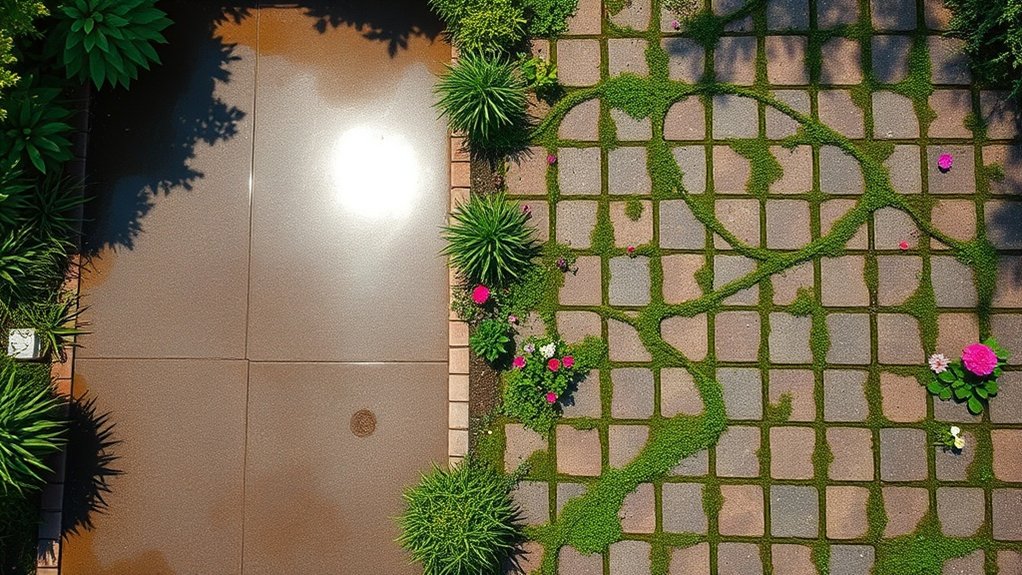
When considering environmental impact, resin bound driveways are a great choice due to their permeability. This allows rainwater to drain naturally, helping to reduce the risk of flooding.
Moreover, it supports groundwater recharge, making it a sustainable option. The use of recycled materials in these surfaces also cuts down on resource extraction, promoting eco-friendly practices.
Permeability and Water Management
When choosing between resin driveways and block paving, it’s important to understand their differences in permeability and water management.
Resin-bound driveways allow water to pass through the surface, reducing surface runoff and promoting natural groundwater recharge. This is particularly beneficial during heavy rainfall, enhancing drainage efficiency.
In contrast, block paving relies on the gaps between pavers and infill materials to manage water, which can be less effective than resin’s direct drainage.
While both options can help reduce flood risk, resin is superior in preventing water stagnation and erosion.
Consider how each choice affects water management and contributes to sustainable urban drainage when making your decision.
Material Sustainability Considerations
When deciding between resin driveways and block paving, it’s important to consider their environmental impacts and sustainability. Resin-bound driveways offer greater longevity and utilize a higher percentage of recycled materials, which helps to reduce your carbon footprint. For instance, they can incorporate materials like recycled stones and glass, promoting sustainable sourcing.
| Aspect | Resin Driveways | Block Paving |
|---|---|---|
| Lifespan | Over 20 years | 10-15 years |
| Use of Recycled Materials | High (3,000 straws/m²) | Low |
| Compliance with SuDS | Yes | No |
| Environmental Impact | Low | Moderate |
Property Style: Matching Aesthetics With Home Design
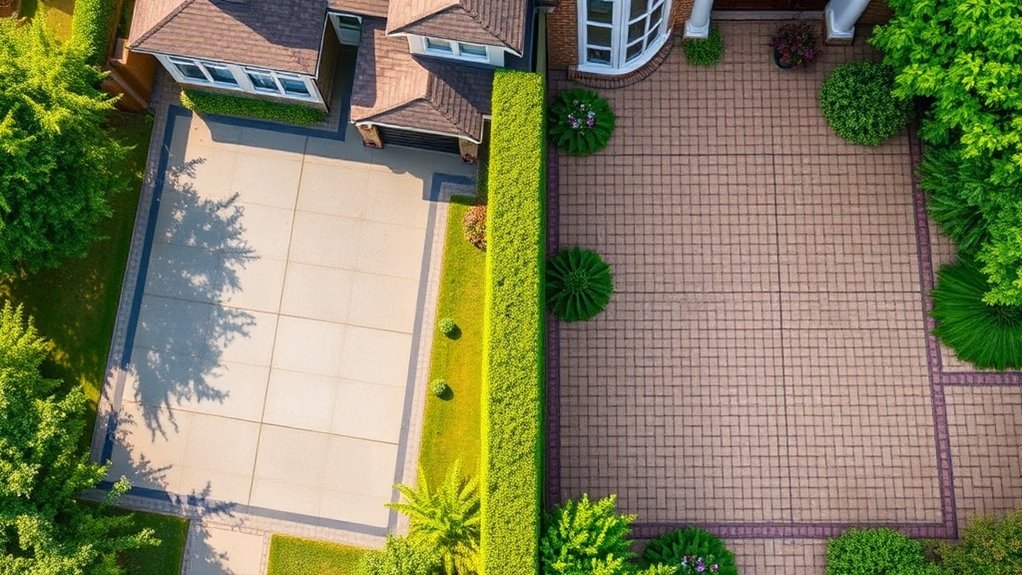
To achieve a cohesive look for your home, it’s important to consider how your driveway material complements its architectural style.
In Collier Row, traditional homes often opt for block paving, which enhances the historical charm with textured patterns and classic edging. In contrast, modern properties benefit from the sleek, smooth finish of resin, which aligns with contemporary design trends and comes in a variety of colours to match existing features.
When selecting materials, think about how they integrate with your home’s façade and the surrounding landscape. Be aware that conservation-area restrictions may affect your choices.
Ultimately, choosing the right driveway material not only enhances curb appeal but also ensures that all design elements of your home work in harmony.
Contractor Selection: Expertise and Warranties
How can you ensure your driveway contractor is the right choice for your project? Start by checking their certifications and make sure they’ve the necessary licenses and public liability insurance.
Membership in recognised trade organisations is a positive sign, indicating a commitment to quality and consumer protection.
Given Collier Row’s specific soil conditions, ask for local references and a portfolio of their previous work.
It’s also essential to have a clear written contract that outlines materials, project scope, and timelines.
Lastly, discuss warranty options; reputable contractors often provide installation guarantees from manufacturers and warranties on their workmanship.
This blend of expertise and assurance will help you make an informed decision for your driveway.
Final Thoughts: Making the Right Choice for Your Driveway
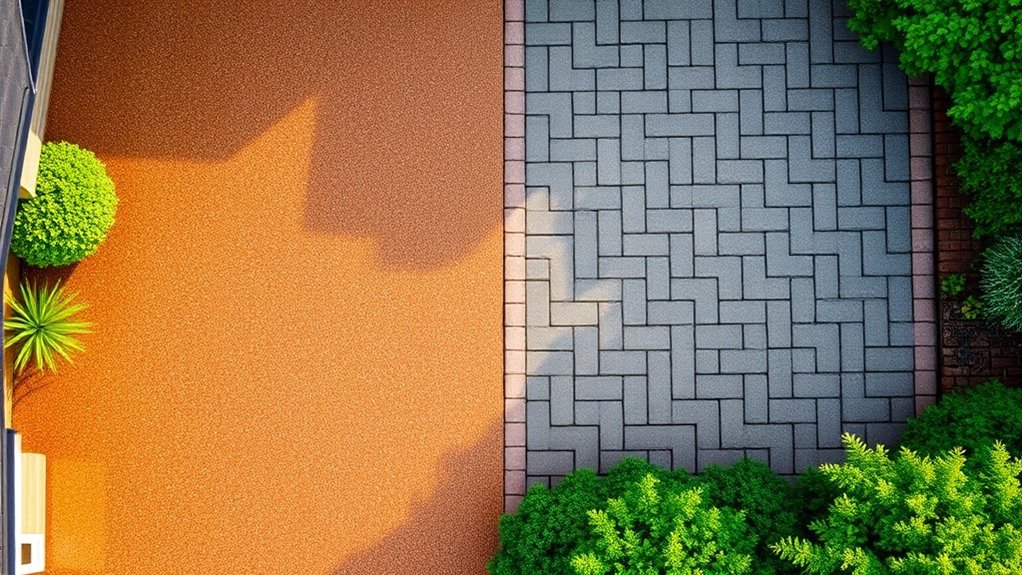
When choosing the right driveway for your home, it’s vital to consider several factors that suit your needs and local conditions. Current trends indicate that homeowners often prioritise aesthetics, maintenance, and durability.
| Factors | Resin Driveway | Block Paving |
|---|---|---|
| Cost | Mid-range, lower maintenance | Variable, higher upkeep |
| Aesthetics | Sleek, contemporary look | Numerous patterns available |
| Durability | Good with proper installation | Excellent for heavy vehicles |
| Maintenance | Minimal upkeep required | Regular maintenance needed |
| Longevity | 15-25 years | 20-25 years |
In the end, consider what matters most to you—be it long-term value, visual appeal, or ease of upkeep—to make the best choice for your driveway.
Frequently Asked Questions
How Do Resin and Block Paving Compare in Terms of Installation Labor Costs?
When comparing installation labour costs, resin tends to be pricier due to its more complex techniques, averaging between £80 and £120 per m². In contrast, block paving is generally more affordable, costing around £50 per m². This makes block paving the more economical choice for many homeowners.
What Are the Typical Lifespan Expectations for Resin and Block Paving?
Resin driveways generally have a lifespan of 20 to 25 years, whereas block paving typically lasts between 15 and 25 years. The longevity of both options largely depends on how well you maintain them; regular upkeep can significantly extend their lifespan. So, choose wisely!
Can Resin Driveways Be Installed Over Existing Surfaces?
Yes, you can lay resin driveways over existing surfaces, as long as they’re in good condition. It’s important to prepare the surface properly by cleaning and priming it to ensure that the resin adheres well and lasts a long time. For instance, if you’re considering installing resin over old concrete or tarmac, just make sure there are no cracks or significant damage first.
How Do Local Climate Conditions Affect Resin and Block Paving?
Local climate conditions significantly impact both resin and block paving. Resin can suffer from cracking due to temperature fluctuations, especially in colder months. In contrast, block paving’s interlocking design provides better stability against strong winds and prevents water pooling, making it a more resilient option in diverse weather conditions. For instance, during heavy rainfall, block paving drains efficiently, while resin may struggle to cope.
Are There Specific Planning Permissions Needed for Resin or Block Paving?
You might assume that you don’t need planning permission for driveways made from resin or block paving, but that’s not always the case. It’s essential to check your local regulations before starting your installation to ensure you have the correct permits. For instance, if your driveway involves significant alterations to drainage, planning permission may be required. Always do your homework to avoid any potential issues down the line.
Conclusion
Ultimately, choosing between a resin driveway and block paving in Collier Row depends on your priorities. Imagine a sleek, glossy surface that shines in the sunlight compared to the traditional appeal of textured blocks. Think about your budget, maintenance requirements, and how each option fits with your home’s style. Whether you prefer a modern finish or a classic design, consider the advantages of each to ensure your driveway enhances your property and lasts for years to come.