Resin-bound gravel can discolour for several reasons, mainly due to UV light exposure, rust stains, and chemical spills. UV light can weaken the resin, leading to yellowing. Rust stains often arise from iron particles reacting with moisture. Additionally, inadequate maintenance can result in uneven colouring.
To combat these issues, it’s essential to establish a regular cleaning routine, apply a UV-resistant sealant, and address stains promptly. If you’re dealing with ongoing discolouration, there are effective repair methods and preventative strategies that you can consider.
Key Takeaways
- Exposure to UV light can cause resin-bound gravel to fade, resulting in a yellowish or milky look over time.
- Rust stains occur from iron oxidation in the aggregates, worsened by moisture and environmental factors.
- Using poor-quality resin and improper installation can lead to uneven colour and increased risk of discolouration.
- Regular cleaning, inspections, and applying UV-resistant sealants can help prevent or reduce discolouration problems.
- For significant damage or discolouration, it’s best to consult a professional for proper restoration and maintenance.
Causes of Resin-Bound Gravel Discoloration
While resin-bound gravel looks great, several factors can cause it to discolour. The main culprit is UV light exposure, which can fade lighter aggregates and degrade resin that isn’t UV resistant, leading to yellowing. Additionally, applying a UV-protective sealant every couple of years can help prevent fading from sunlight exposure. Rust stains from iron objects and moisture problems can also cause cloudiness or patches of discolouration. Using low-quality resin and poorly washed aggregates can further result in uneven colour. Environmental contaminants, like oil spills, can also affect the surface’s appearance. To enhance durability, consider using premium resins that include UV stabilisers for better protection against fading.
Types and Signs of Discoloration
Understanding the different types and signs of discoloration in resin-bound gravel is crucial for keeping it looking good and maintaining its durability.
Common types of discoloration include UV-related fading, which appears as gradual yellowing or a milky look. Stone-reactive discoloration often presents as uneven patches, especially with lighter stones, making repairs tricky. UV-resistant resin can help mitigate some of these fading effects over time. To prevent further discoloration, opting for kiln-dried aggregate is essential for ensuring proper adhesion.
Moisture issues can lead to white patches from wet aggregates or rust stains from iron minerals. Chemical spills may cause rust spots or other stains, while poor installation can result in uneven colour and structural problems. Regular inspections for signs of wear or damage are necessary to address issues promptly and maintain the surface’s integrity.
Impact of UV Light on Resin
When UV light penetrates resin surfaces, it triggers chemical reactions that can weaken the material over time. This degradation breaks down the chemical bonds in the resin, leading to oxidation and resulting in yellowing and discolouration, particularly in resins that aren’t UV stable. The formation of free radicals can cause chain reactions that affect clarity and colour retention, making the resin brittle and more prone to cracking. On the other hand, UV stable resins are engineered to withstand these effects. They contain UV inhibitors that protect the polymer chains, making them essential for maintaining the durability and appearance of outdoor surfaces. Furthermore, choosing UV-resistant resin for installations can significantly enhance longevity and reduce fading effects.
Rust Stains and Their Origins
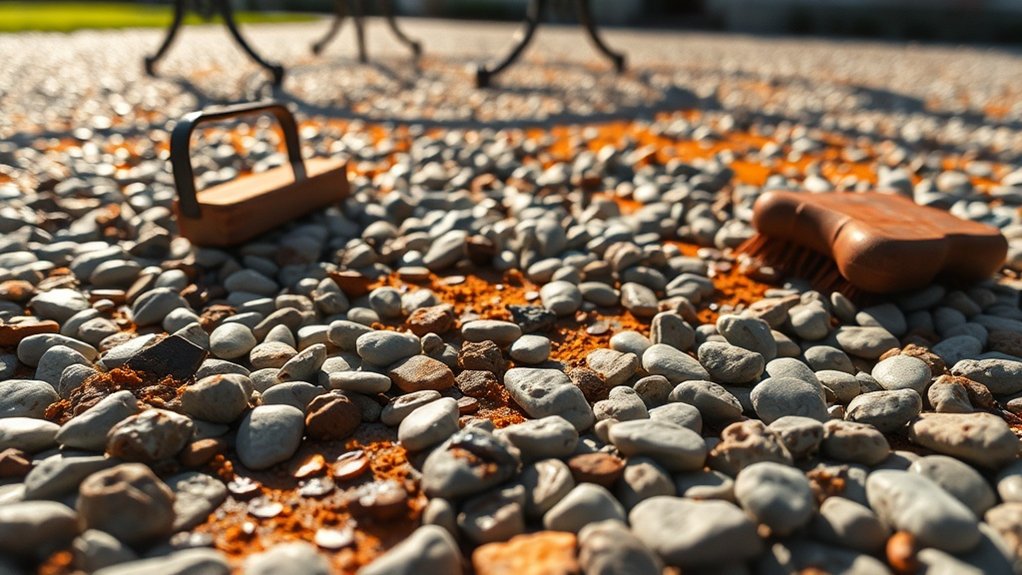
Rust stains are often a result of iron oxidation in natural stone aggregates, which can occur due to several factors:
- Moisture Exposure: Rain or standing water can speed up the rusting process.
- Aggregate Type: Materials like quartz and granite can rust more easily because they contain higher levels of iron.
- Environmental Conditions: Areas with high humidity or frequent rain are more susceptible to rust stains.
- Surface Integrity: Cracks or loose stones can allow moisture to reach iron particles, leading to oxidation.
These reddish-brown stains are mainly cosmetic and don’t affect the structure.
To reduce rust stains, choose low-iron aggregates and ensure proper drainage to keep moisture at bay.
Effects of Chemical Spills on Surfaces
Chemical spills can significantly damage resin-bound surfaces, often resulting in discolouration that can be difficult to reverse. The impact of a spill depends on the chemicals involved; strong acids and solvents may corrode or etch the resin, compromising its structural integrity.
The interaction between the surface material and these chemicals is crucial, as they may dissolve resin components or seep into pores, leading to persistent stains. Furthermore, spills can cause contaminants from the soil to rise, further affecting the surface.
If spills aren’t dealt with quickly, you risk irreversible damage, such as discolouration and brittleness. Understanding these interactions is vital for implementing effective cleanup strategies to protect and maintain your resin-bound gravel surfaces.
Role of Environmental Factors
Environmental factors significantly affect the longevity and appearance of resin-bound gravel surfaces. Here are some key considerations to help you prevent discoloration:
- UV Radiation: Direct sunlight can break down the resin, causing yellowing and fading. Think of it like how a sun-bleached garden chair loses its colour over time.
- Moisture: Standing water can lead to “blooming,” while improper curing in damp conditions may result in uneven discolouration. It’s similar to how wet paint can look patchy if not applied correctly.
- Temperature Extremes: Installing resin outside the ideal temperature range (10°C to 25°C) can risk improper curing and surface defects. Imagine trying to bake a cake in a too-hot oven—it won’t turn out right.
- Air Pollution: Dust and pollutants can dull the surface, requiring regular cleaning to keep it looking fresh. It’s like how a car needs a wash to remove grime and shine again.
Importance of Resin Type Selection
Selecting the right type of resin is crucial for ensuring the durability and visual appeal of your resin-bound gravel surfaces. Different resin varieties possess distinct traits that impact their performance.
For outdoor use, aliphatic polyurethane resins are preferable due to their UV stability and resistance to yellowing. On the other hand, while aromatic polyurethane resins are generally cheaper, they deteriorate quickly when exposed to sunlight, leading to discolouration.
When choosing a resin, key factors to consider include UV resistance, durability, and colour retention. Opting for high-quality, BBA-approved resins can provide assurance regarding their performance and longevity.
Aggregate Interaction and Color Stability
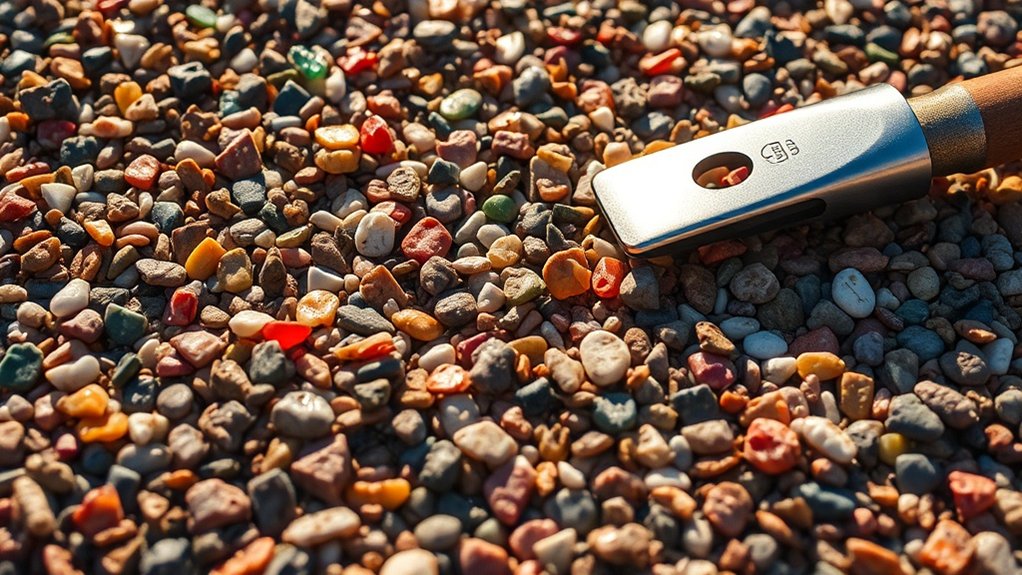
Understanding how aggregate properties interact with resins is crucial for maintaining colour stability in resin-bound gravel applications.
Here are some key factors to consider for the best results:
- Aggregate Chemistry: Select aggregates with stable mineral compositions to reduce the risk of discolouration.
- Moisture Management: Thoroughly wash and dry aggregates to avoid moisture retention, which can affect colour.
- UV Resistance: Use UV-stable resins to shield aggregate colours from fading due to sunlight exposure.
- Aggregate Grading: Choose aggregates with a consistent grading to ensure even resin coverage, leading to a uniform colour appearance.
Maintenance Practices for Longevity
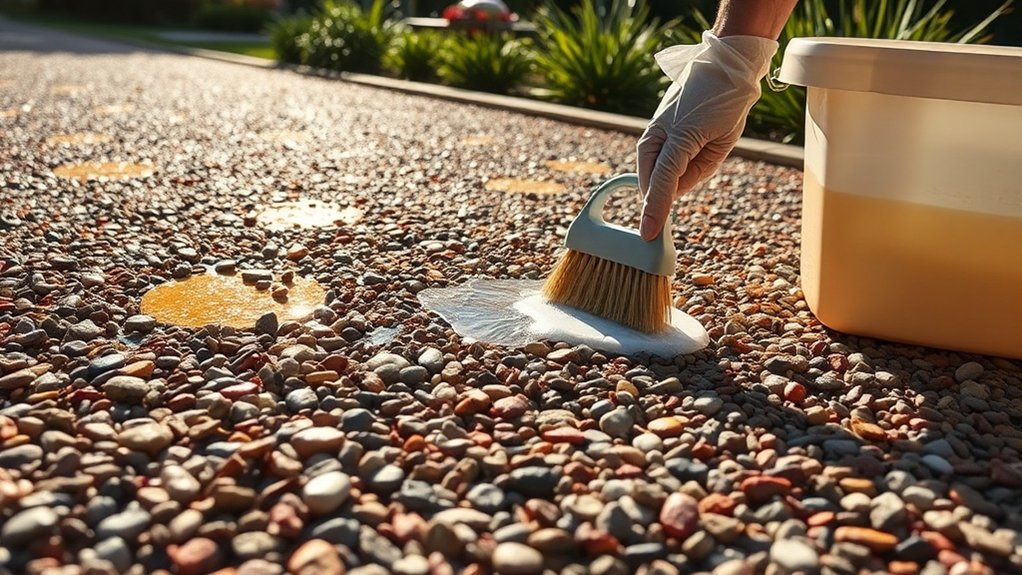
To ensure your resin-bound gravel surface lasts, a regular maintenance routine is crucial.
Start with a weekly clean—use a stiff broom to sweep away loose debris, which helps maintain both its look and permeability.
After heavy rain, pressure wash at a maximum of 150 bar, keeping the nozzle about 200mm away to prevent damage.
Tackle any moss or algae quickly with an appropriate herbicide, and rinse thoroughly afterward.
Regularly remove leaves and twigs to reduce the chance of weeds, and use pet-safe weed killers if necessary.
In winter, spread rock salt to prevent ice and use a plastic shovel for snow clearing.
Following these maintenance tips will keep your surface looking great and functioning well for years.
Repair Techniques for Discoloration
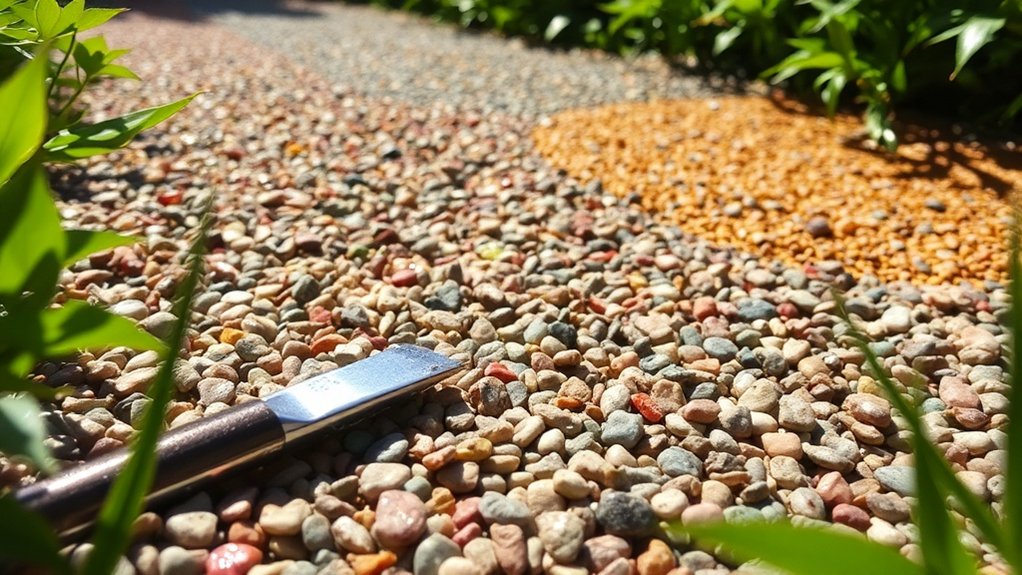
Dealing with discolouration on resin-bound gravel surfaces can be a hassle, but there are effective ways to restore their original look and functionality.
Here are some straightforward repair methods:
- Thorough Cleaning: Use a gentle pressure washer along with a mild detergent to eliminate dirt and light stains.
- Resin Sealant Application: Apply a UV-resistant sealant to guard against future fading and improve appearance.
- Tinted Topcoat Solutions: For more serious fading, consider applying a tinted topcoat that matches the original colour for a smooth finish.
- Professional Re-coating: If the discolouration is extensive, it may be worth hiring professionals to re-coat the surface with high-quality materials for the best outcome.
Preventative Measures to Avoid Issues
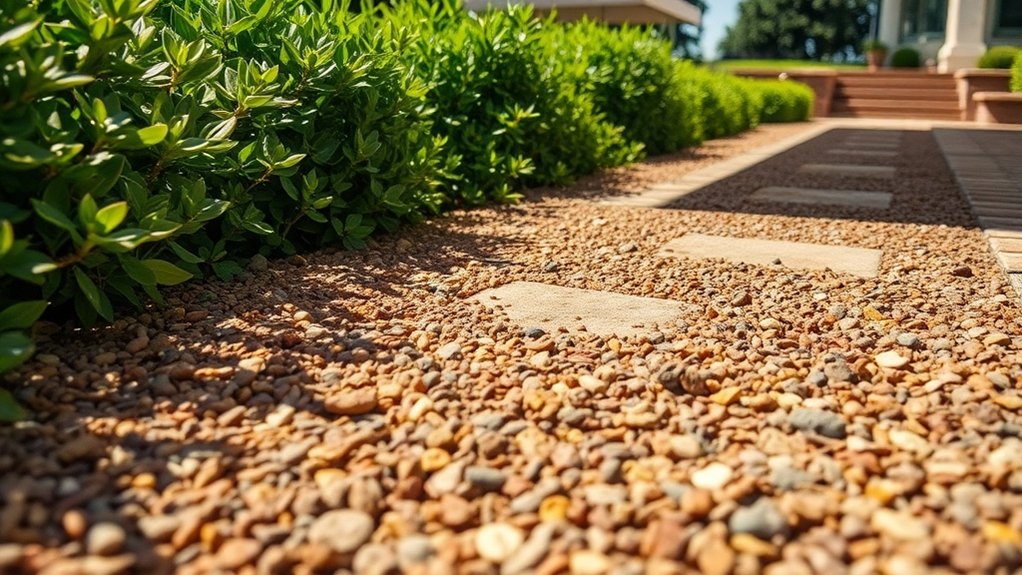
Preventing discolouration on resin-bound gravel surfaces requires regular maintenance.
Stick to a cleaning routine: sweep away debris weekly and rinse the surface with a garden hose or a gentle pressure washer once a month. Use pH-neutral detergents to avoid damaging the resin.
Check your surface every three months for stains or organic buildup, and deal with spills straight away to prevent lasting marks.
In the autumn, clear away leaves promptly, and when it snows, use plastic shovels to protect the surface from scratches.
Limit exposure to solvents and ensure proper drainage to avoid standing water, which can cause discolouration.
Reapply a UV-stable sealant every five to eight years to keep the colour vibrant, and make sure your maintenance team knows the best care practices.
When to Seek Professional Help
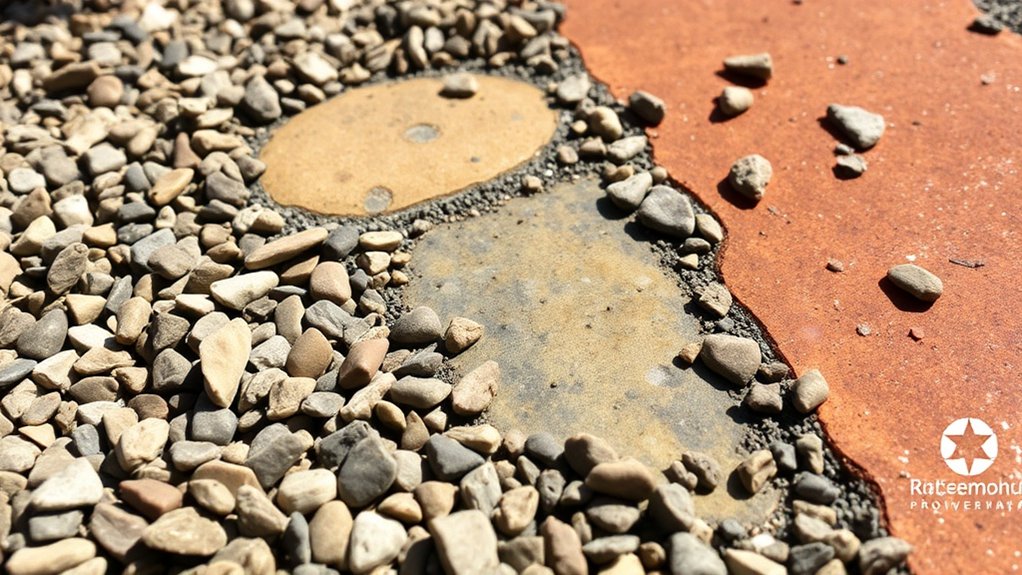
When you spot significant damage or ongoing discolouration on your resin-bound gravel surface, it’s crucial to seek professional assistance. Acting promptly can prevent further issues.
Here are some clear signs that indicate you need a professional evaluation:
- Cracks that are wider or deeper than 20cm.
- Damage to the underlying macadam layer.
- Oil contamination affecting large areas.
- Extensive surface deterioration.
Addressing these problems early can help you avoid costly repairs down the line.
Professionals possess the necessary skills and specialised equipment to carry out effective repairs, using high-quality resins and cleaning methods.
Don’t hesitate to contact them for a comprehensive assessment and the right solutions to restore your surface and prolong its lifespan.
Frequently Asked Questions
Can I Change the Color of My Existing Resin-Bound Gravel?
Yes, you can change the colour of your resin-bound gravel using dye options. Consider mixing UV stable pigments to get the shade you want. Just be sure to follow proper application techniques to ensure lasting results and vibrant finishes.
How Often Should I Reseal My Resin-Bound Gravel Surface?
You should reseal your resin-bound gravel surface every 5 to 8 years, depending on foot traffic and weather conditions. For instance, a driveway that sees a lot of vehicles may need attention sooner than a garden path. Regular maintenance ensures the surface remains attractive and durable, helping to protect your investment.
Will Extreme Temperatures Affect Resin-Bound Gravel Durability?
Extreme temperatures can affect the stability of resin, but resin-bound gravel is still durable. It is designed to withstand freeze-thaw cycles and has good UV stability, ensuring it lasts well. With proper installation and regular maintenance, the impact of temperature changes can be effectively managed, providing reliable performance throughout the seasons.
Can I Use Regular Cleaning Products on Resin-Bound Gravel?
Think of your resin-bound gravel as something precious; using harsh cleaners is like pouring boiling water on it. Opt for gentle cleaning methods and suitable products to keep it looking great and lasting longer. For instance, a simple mixture of warm water and mild soap can work wonders without damaging the surface.
What Is the Lifespan of Resin-Bound Gravel Installations?
Resin-bound gravel installations generally last between 15 and 25 years. Their longevity depends on factors such as the quality of the resin and its resistance to UV light. To ensure your installation remains in top condition, it’s advisable to clean it regularly and reseal every five years. This approach helps maintain its durability and appearance over time.
Conclusion
In the realm of resin-bound gravel, discolouration can be a concern for homeowners. Understanding the causes and implementing regular maintenance can help keep your surfaces looking their best. Regular inspections and prompt repairs can protect your driveway or pathway from the elements, maintaining its vibrant appearance. If you’re unsure about any issues, don’t hesitate to seek advice from professionals—taking care of your investment is essential.