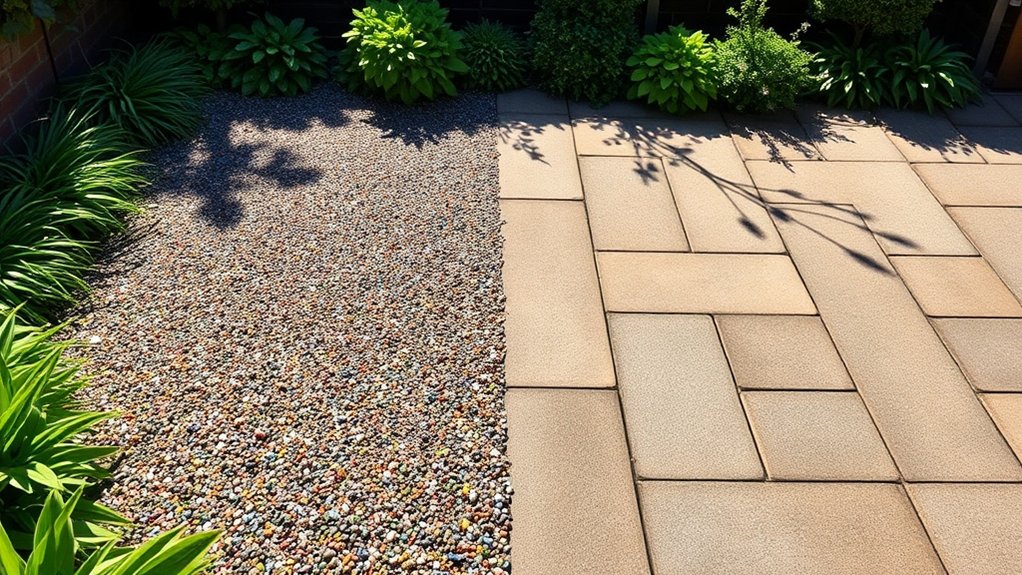
When deciding between resin-bound gravel and paving slabs for your patio, think about aesthetics, durability, and maintenance. Resin-bound gravel offers a sleek, modern look with excellent permeability, requiring minimal upkeep and being eco-friendly. On the other hand, paving slabs are sturdy and can handle heavy loads, but they need more maintenance and can look a bit disjointed. Overall, resin-bound gravel is a stylish and sustainable choice for enhancing your outdoor space. If you want to delve deeper, there’s plenty more to consider.
Key Takeaways
- Resin-bound gravel allows for extensive customisation with seamless finishes, enhancing aesthetic appeal compared to the segmented appearance of paving slabs.
- Being fully permeable, resin-bound gravel reduces surface runoff and supports sustainable drainage, whereas paving slabs are less effective at managing water runoff.
- Many users find that resin-bound gravel lasts longer with minimal maintenance, while paving slabs often require more upkeep and can suffer from cracking.
- Installation of resin-bound gravel is quicker, typically taking 1-2 hours, while paving slabs can take 3-5 hours to install.
- In the long run, resin-bound gravel may prove more cost-effective due to lower maintenance needs, unlike paving slabs which can incur higher upkeep costs.
Aesthetic Appeal: Resin-Bound Gravel vs. Paving Slabs
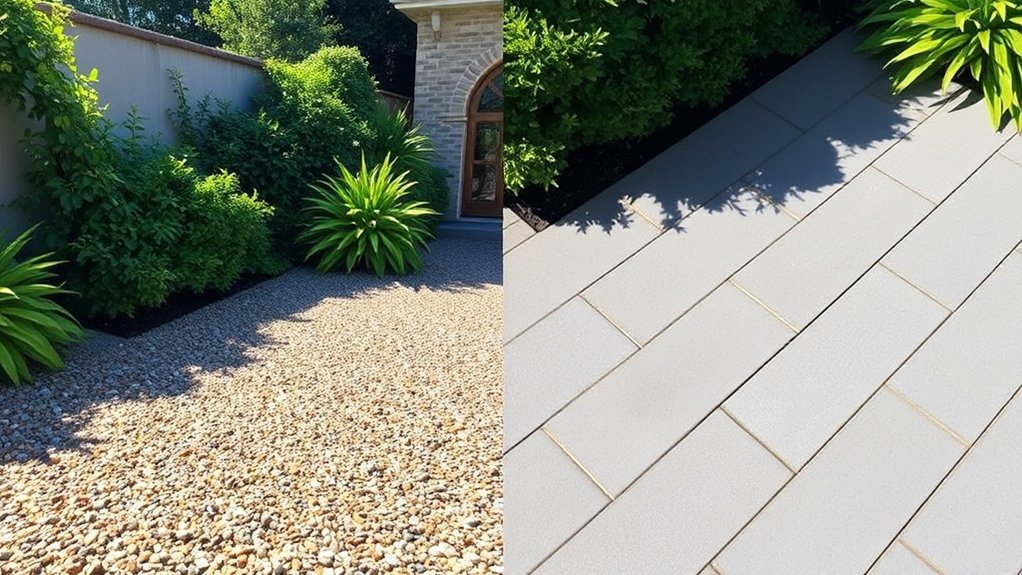
When it comes to the aesthetic appeal of your patio, resin-bound gravel and paving slabs provide different visual experiences.
Resin-bound gravel offers excellent design flexibility, allowing you to create custom patterns and a seamless finish that aligns with modern design trends. You can mix various colours and textures in a single application, resulting in unique effects tailored to your taste. This material is particularly appealing due to its modern and seamless aesthetic, which enhances the overall look of outdoor spaces. Additionally, the ability to incorporate custom designs such as logos or specific patterns gives homeowners a distinct edge in personalization.
On the other hand, paving slabs can be somewhat limiting; their segmented look, with visible joints, often disrupts a cohesive appearance. Additionally, their traditional shapes can restrict creativity.
While both options can enhance your outdoor area, resin-bound gravel stands out for its smooth surface and customisable features, making it an ideal choice for those looking for a sleek, contemporary aesthetic.
Environmental Benefits of Resin-Bound Gravel
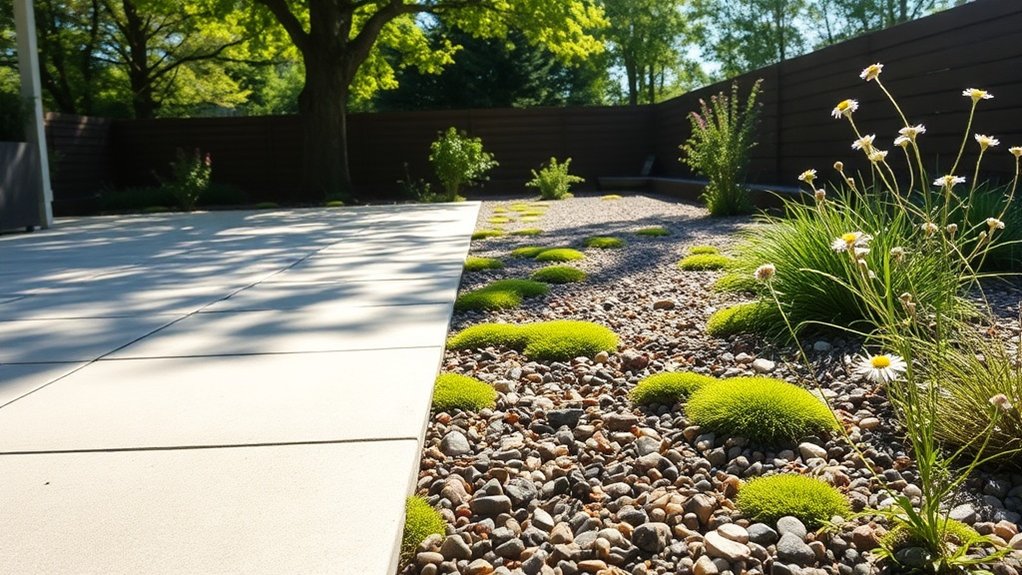
As urban areas face challenges with water management and heat retention, resin-bound gravel offers a sustainable solution with notable environmental benefits. Its fully permeable design allows rainwater to seep through, reducing surface runoff and supporting Sustainable Urban Drainage Systems (SuDS). This helps to mitigate flood risks and recharge groundwater, making cities more resilient to climate change. Additionally, resin-bound gravel supports flood prevention in high rainfall areas, further enhancing its effectiveness in managing urban water challenges. Moreover, it can store up to 3,000 gallons of water under a 1,000-square-foot area, contributing significantly to groundwater replenishment.
Furthermore, the lighter aggregates used in resin-bound gravel reflect sunlight, helping to combat the urban heat island effect and cool nearby areas. With up to 80% recycled materials, it aligns with eco-friendly practices, reducing the need for new resources and minimising waste. Its durability means fewer replacements and less maintenance, further decreasing environmental impact.
Choosing resin-bound gravel not only enhances your outdoor space but also contributes to a greener urban environment.
Durability: Comparing Lifespans and Resistance
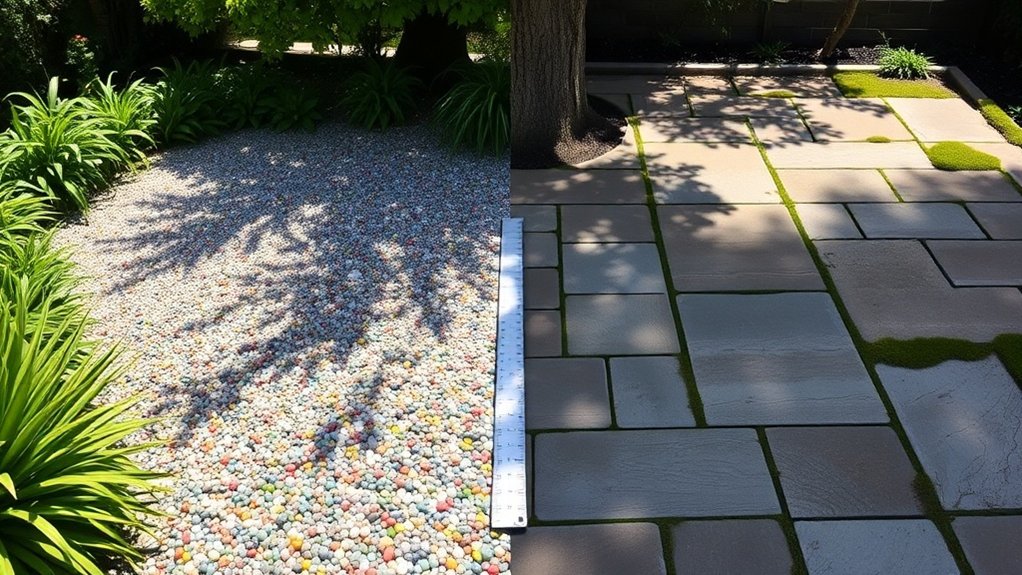
When deciding between resin-bound gravel and paving slabs, it’s crucial to consider their durability. Look at each material’s lifespan, resistance to damage, and maintenance needs. For example, resin-bound gravel typically lasts around 10-15 years with minimal upkeep, while paving slabs can last over 20 years if properly cared for. Additionally, resin-bound gravel is known for its extreme durability, making it an excellent option for areas with high foot traffic. The flexibility of the surface can accommodate minor base movements, reducing the risk of cracking that can occur over time.
Lifespan of Materials
Both resin-bound gravel and paving slabs are durable options for patios, but their lifespans can vary significantly depending on the type of material and how well they’re maintained.
Resin-bound gravel typically lasts between 15 to 30 years, largely influenced by the quality of installation and upkeep. In comparison, concrete paving slabs generally last around 20 to 30 years, while natural stone can endure for 25 to 50 years with the right care. Porcelain slabs also offer impressive longevity, lasting between 25 to 40 years.
It’s important to note that resin-bound gravel tends to resist cracking better than concrete, but natural stone is superior overall in terms of durability.
Regular maintenance is crucial for maximising the lifespan of both options, ultimately determining how long your patio will serve you well.
Resistance to Damage
Resin-bound gravel and paving slabs differ significantly in their durability, affecting their suitability for patios.
Resin-bound gravel is more resilient, thanks to its flexible resin-aggregate bond that adapts to ground movements and reduces the risk of cracking. On the other hand, paving slabs can easily develop cracks and suffer from surface erosion, especially if not installed correctly.
While high-quality resin can withstand freeze-thaw cycles, paving slabs are vulnerable to frost heave and may create uneven surfaces.
Moreover, resin-bound gravel is highly resistant to stains and easy to clean, while paving slabs can absorb harmful substances.
If you’re looking for a durable and damage-resistant patio solution, resin-bound gravel is the better option.
Maintenance Impact on Durability
Understanding the maintenance needs of resin-bound gravel and paving slabs is crucial for ensuring their durability and lifespan.
Resin-bound gravel requires minimal upkeep—just regular sweeping and the occasional low-pressure wash will do. This low maintenance is beneficial for sustainability, as it conserves resources over time.
In contrast, paving slabs need more intensive seasonal care, such as weed control and re-leveling, which can shorten their lifespan. Regular checks for shifting slabs are also important to maintain their stability.
While both materials can last 20 to 30 years, neglecting paving slab maintenance can significantly reduce their durability.
Choosing resin-bound gravel not only extends longevity but also simplifies maintenance and supports a more sustainable outdoor space.
Installation Process: Time and Labor Considerations
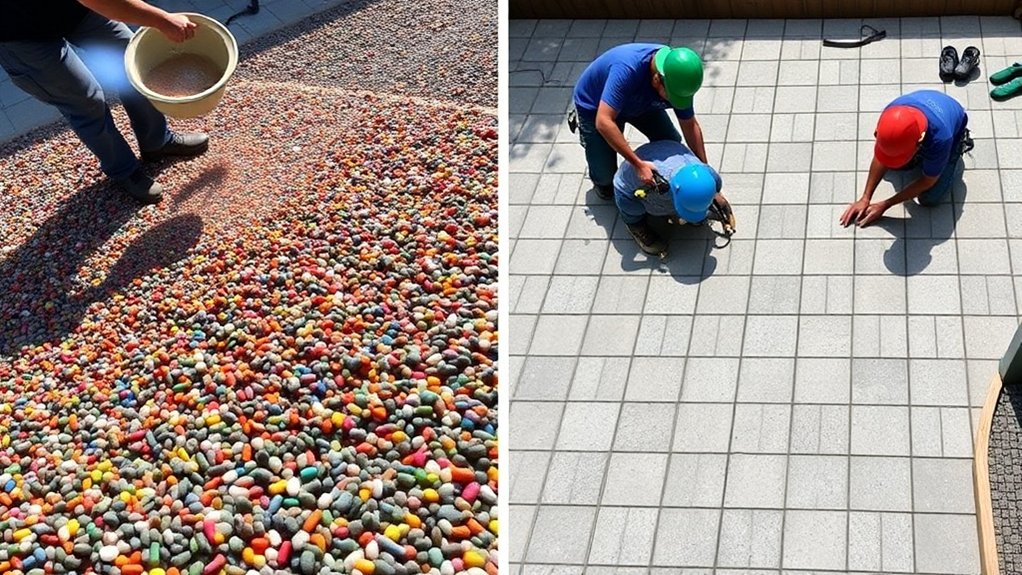
When comparing resin-bound gravel to paving slabs, the installation process is a crucial factor.
Resin-bound gravel generally offers a quicker installation, needing a well-coordinated team for efficient application.
In contrast, paving slabs require more time and labour for precise placement.
Knowing these differences in installation speed and labour requirements can guide you in selecting the best option for your patio project.
Installation Speed Comparison
When deciding between resin-bound gravel and paving slabs for your patio, installation speed is a key factor that can affect your project timeline.
Installing resin-bound gravel begins with surface preparation, taking about 1–2 hours. The mixing and laying process is relatively quick, requiring only an additional 1–2 hours for a small team. However, it’s crucial to work continuously to avoid day joints.
On the other hand, paving slabs typically take 3–5 hours to install, allowing for a more staged approach, which can simplify the process.
While resin-bound gravel cures in 6–8 hours, paving slabs can be used immediately after installation.
If you’re working on a large area, the complexity of resin-bound gravel might slow you down compared to paving slabs, making your choice vital for timely completion.
Labor Requirements Analysis
When assessing the labour requirements for installing resin-bound gravel, it’s clear that a well-coordinated team is essential for efficiency and quality.
Typically, a three-person installation team is necessary: a mixer, a luter, and a troweller. Each role requires specific skills. The mixer operates a forced action mixer and ensures proper material proportions, while the luter distributes the mixed material evenly across the surface.
The troweller is responsible for finishing the surface and identifying any issues before the mix sets. Each position is vital, as any inconsistencies can affect the overall project.
Additionally, specialised tools and protective gear are required to ensure safety and achieve the best results throughout the installation.
Sub-base Preparation Differences
Sub-base preparation is crucial for the durability and performance of your patio, whether you choose resin-bound gravel or paving slabs.
Here are the key differences to consider:
- Excavation Depth: For resin-bound gravel, you need to excavate 150-300mm, whereas paving slabs require a depth of 200-300mm.
- Compaction Techniques: Resin-bound systems require thorough plate compaction to ensure stability, which helps distribute the load effectively and reduces installation issues.
- Soil Stabilisation: Using geotextile membranes is essential for resin-bound bases. These membranes control moisture and prevent deformation from unstable sub-base materials.
Proper base preparation is vital for both options, affecting drainage and overall durability.
The method you choose will significantly influence your patio’s performance and lifespan.
Maintenance Requirements for Each Option
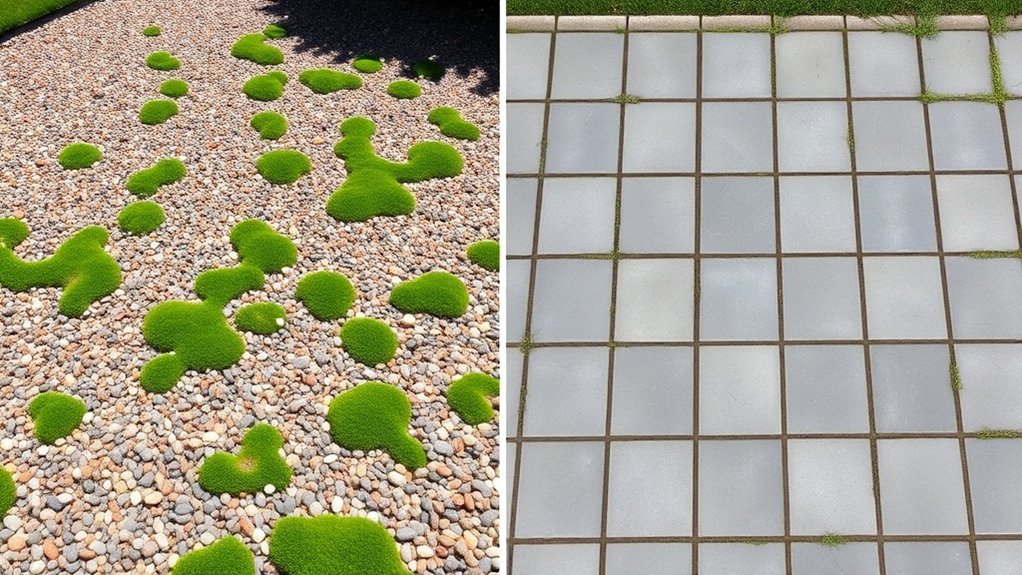
Maintaining your patio is crucial for both its durability and appearance. Understanding the maintenance requirements of resin-bound gravel compared to paving slabs can help you choose wisely. Here’s a straightforward comparison:
| Maintenance Aspect | Resin-Bound Gravel | Paving Slabs |
|---|---|---|
| Cleaning Frequency | Regular sweeping; wash once a month | Sweeping; occasional washing |
| Stain Management | Clean promptly with mild detergents | Use specialised stain removers |
| Weed Control | Manual removal; minimal growth | Use herbicides; clean joints regularly |
| Seasonal Maintenance | Thorough spring cleaning | Check for frost damage |
| Repair Considerations | Inspect for cracks | Reseal joints periodically |
Cost Analysis: Short-Term vs. Long-Term Expenses
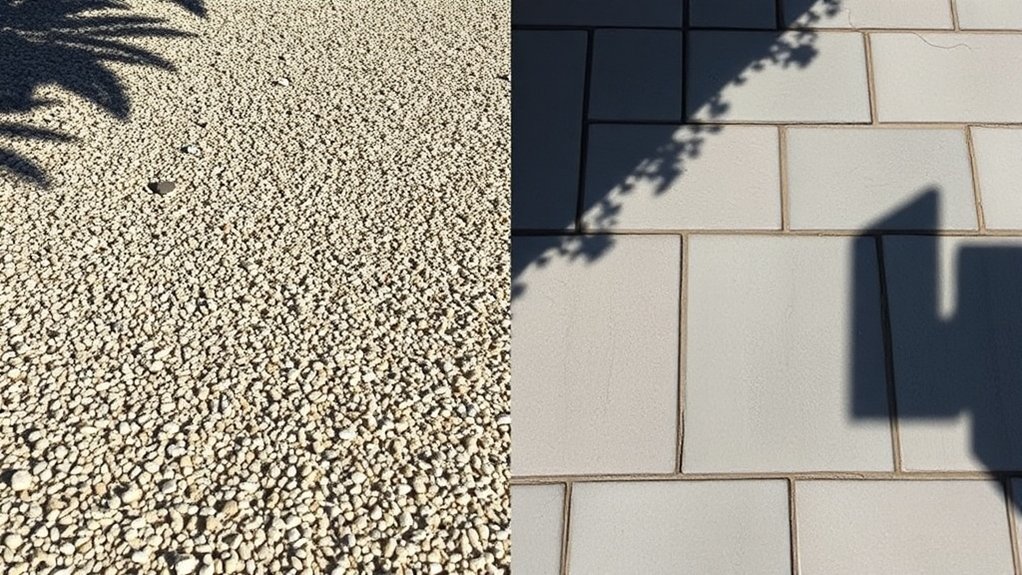
When choosing patio options, consider the initial installation costs alongside long-term value.
Resin-bound gravel might be pricier at the start, but its durability could lead to lower maintenance costs later on. In contrast, paving slabs might be cheaper upfront, but the ongoing upkeep and potential need for replacements could add up over time.
For example, if you choose paving slabs, you might find yourself spending more on cleaning and repairs in a few years.
Ultimately, think about what works best for your budget in the long run.
Initial Installation Costs
When considering your patio options, it’s important to assess the initial installation costs of resin-bound gravel compared to paving slabs, as these can significantly impact your budget.
Here’s a brief comparison:
- Material Costs: Resin-bound gravel typically costs between £5 and £8.50 per square foot, whereas paving slabs range from £5 to £12 per square foot.
- Labour Expenses: The installation labour for resin-bound gravel usually accounts for 30% to 50% of the total costs, averaging between £650 and £1,000.
- Total Pricing: The overall installation cost for resin-bound gravel is approximately £9 to £14 per square foot, while paving slabs can be similarly priced.
It’s crucial to factor in these costs to make an informed decision for your patio project.
Maintenance and Upkeep Expenses
When deciding between resin-bound gravel and paving slabs, consider not just the initial costs but also ongoing maintenance and upkeep expenses. Here’s a straightforward comparison to help you evaluate maintenance frequency and costs:
| Feature | Resin-Bound Gravel | Paving Slabs |
|---|---|---|
| Maintenance Frequency | Regular sweeping, annual wash | Occasional brushing, re-sanding |
| Cleaning Costs | £80–£160/year | £40–£120/year |
| Repair Costs | £60–£6,500 (for minor repairs) | £8–£24/slab + labour |
| Resealing Frequency | 10–15 years (if UV-stable) | Every 2–5 years |
Although resin-bound gravel may have lower initial upkeep costs, paving slabs can become more expensive over time due to the need for replacements and resealing. Choose based on your maintenance preferences!
Long-Term Value Assessment
When choosing the best patio solution for your outdoor space, value is key. Here are some important factors to consider for long-term value:
1. Initial Costs vs. Longevity: Resin-bound gravel ranges from £80 to £130 per square metre, while paving slabs can be priced between £60 and £150.
Although paving slabs may appear cheaper upfront, their replacement costs can accumulate due to issues like cracking and shifting over time.
2. Maintenance Requirements: Resin-bound gravel needs very little maintenance, which can save you money in the long run.
In contrast, paving slabs often require repairs or even complete re-laying, leading to higher ongoing costs.
3. Environmental Considerations: The permeable nature of resin-bound gravel allows for effective drainage, potentially reducing associated costs.
Non-permeable slabs, on the other hand, may require additional drainage solutions.
Customization and Design Flexibility
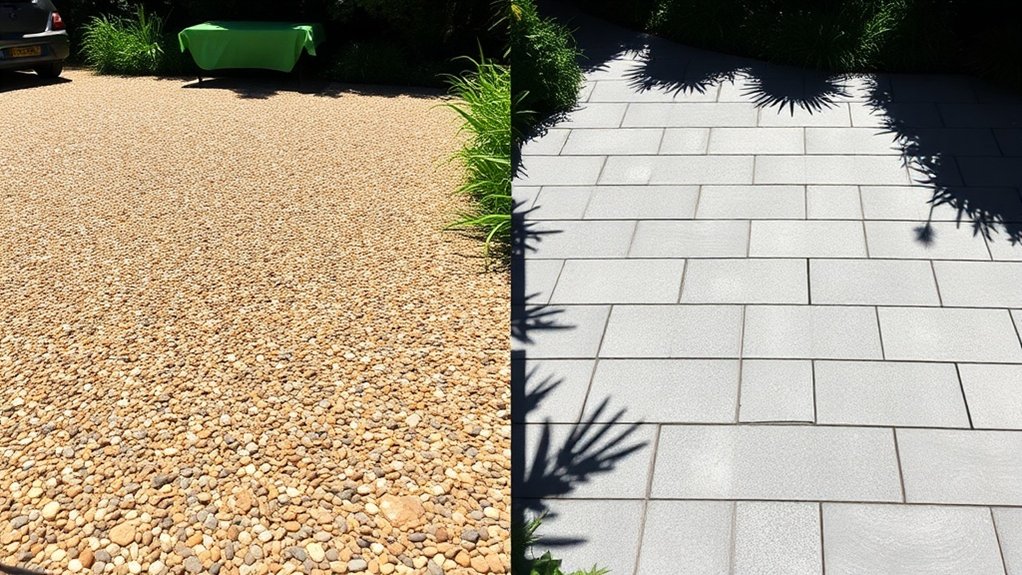
When it comes to designing your patio, resin-bound gravel offers remarkable customization and design flexibility. You can select from a wide range of colours and aggregate blends to create a unique look that reflects your style.
Using materials like granite, quartz, or recycled aggregates not only adds visual appeal but also supports sustainability. You might opt for geometric patterns or nature-inspired designs, ensuring your patio is both practical and attractive.
With various textures available, from smooth finishes to coarser options for better grip, the possibilities are extensive. Additionally, custom shapes and borders can further personalise your outdoor space, making it a distinctive area that truly represents your taste.
Permeability and Water Management
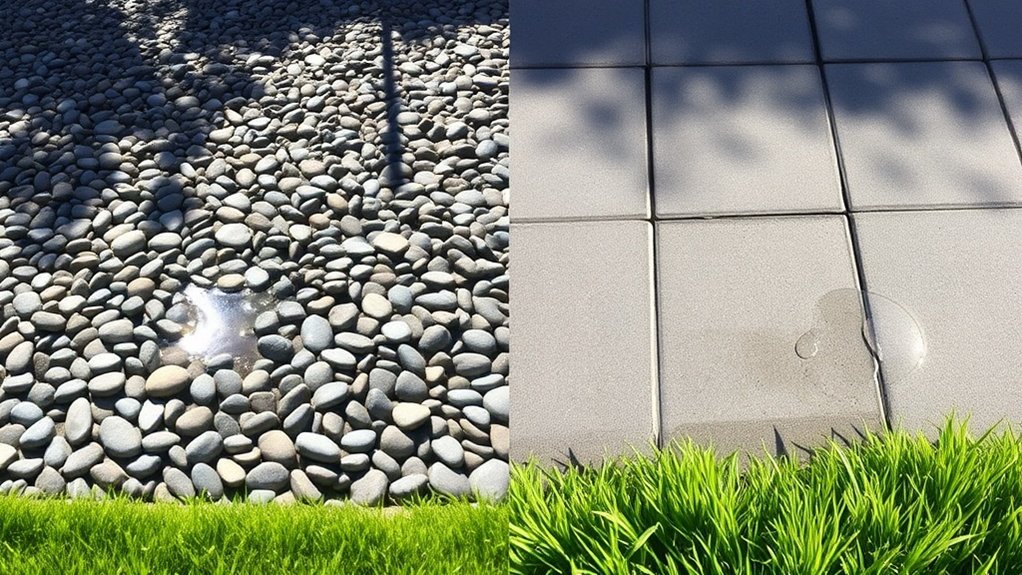
The unique design of resin-bound gravel not only enhances visual appeal but also plays a crucial role in effective water management. Its permeability allows water to drain directly through, minimising surface runoff and reducing the risk of flooding.
Here’s why it stands out:
- Natural Drainage: Water seeps into the ground, replenishing groundwater and eliminating the need for complex drainage systems.
- Sustainable: It complies with Sustainable Drainage Systems (SuDS) standards, making it ideal for flood-prone areas due to its quick water passage.
- Maintenance: With proper installation, it retains its permeability for 5–7 years, needing only occasional vacuuming to prevent blockages.
In contrast, paving slabs often necessitate external drainage solutions and can lead to increased runoff and pooling, making resin-bound gravel a better choice for effective water retention and management.
Impact on Local Ecosystems
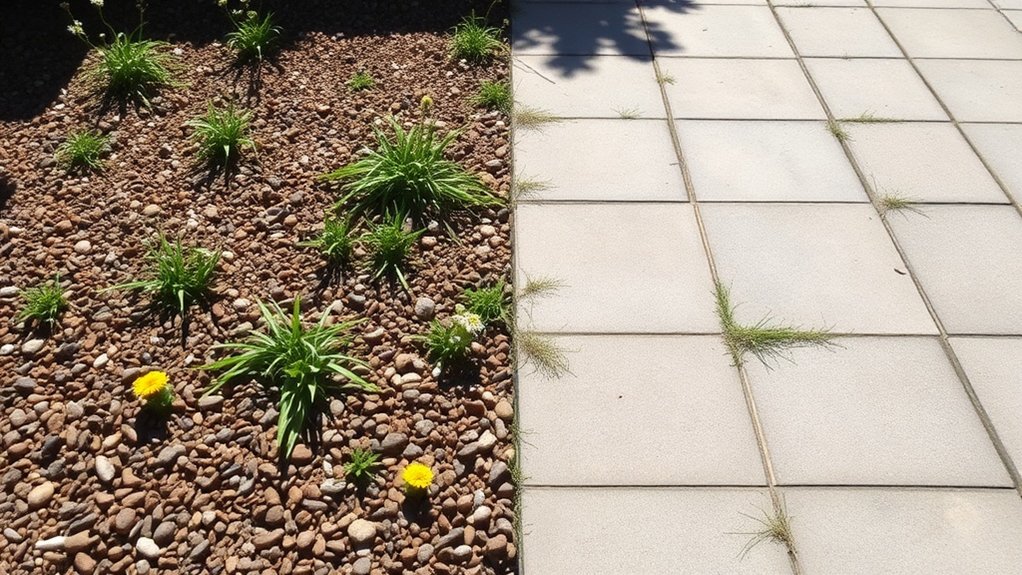
Traditional paving can harm local ecosystems, but resin-bound gravel provides a more eco-friendly option. This surface allows rainwater to filter through, reducing pollution in nearby waterways.
By keeping existing plants, you support urban wildlife and their habitats. Resin-bound gravel also helps recharge groundwater, keeping plants healthy and lowering the need for extra watering.
Its lighter colour helps to reduce the heat island effect, creating cooler areas that benefit various plant species. Choosing resin-bound gravel not only enhances your outdoor space but also supports the local environment.
Performance Under Heavy Loads
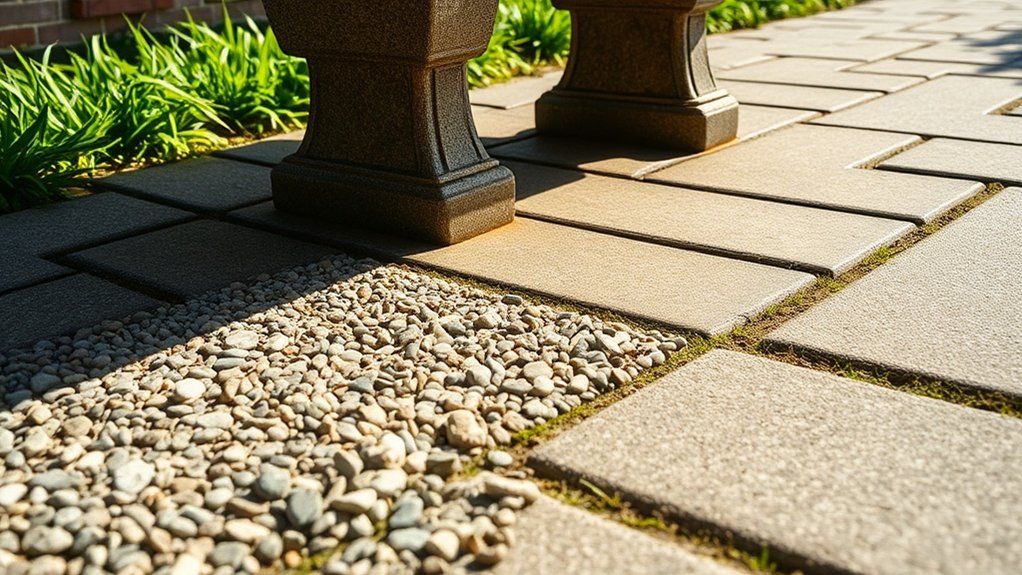
Understanding how your patio surfaces perform under heavy loads is crucial for ensuring their durability and functionality.
Here’s a straightforward comparison to help you choose wisely:
- Load Capacity: Paving slabs can support over 10 tonnes, while resin-bound gravel can manage around 7.5 tonnes.
- Traffic Suitability: Resin-bound gravel is great for residential areas, whereas paving slabs are better suited for commercial and industrial applications.
- Structural Integrity: Proper installation is key; paving slabs are less likely to crack over time and maintain their stability better under heavy use.
In terms of durability, paving slabs outperform resin-bound gravel in high-traffic areas.
Both options require a stable sub-base and regular upkeep to ensure they remain structurally sound and stable.
User Experiences and Reviews
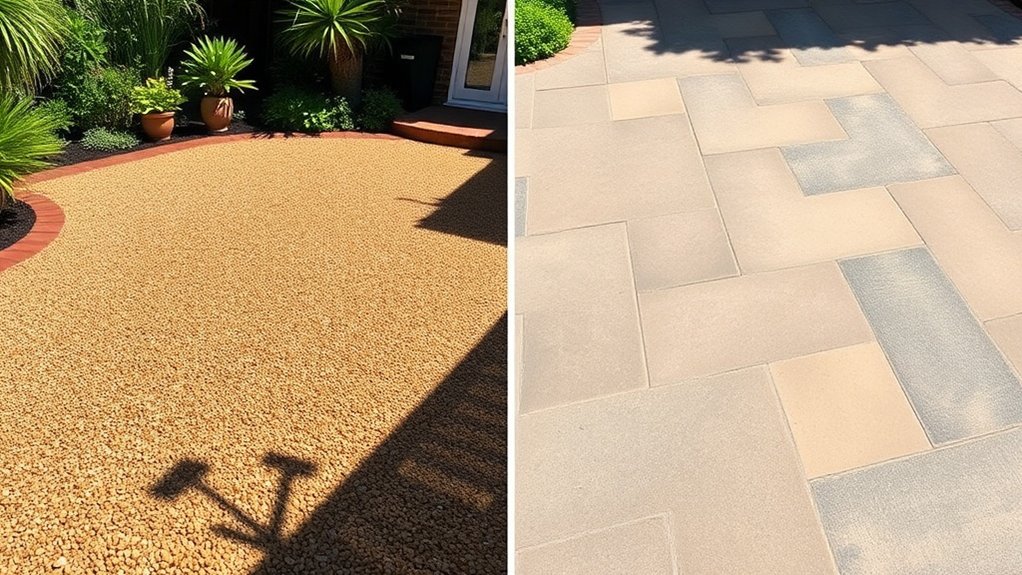
As homeowners consider patio options, user feedback highlights key differences between resin-bound gravel and paving slabs.
Many users report that resin-bound surfaces can last up to 25 years without issues like weed growth or fading. The low maintenance—often just a power wash—is a big plus.
On the other hand, paving slabs can lead to dissatisfaction, with problems like subsidence and weeds appearing within a year. Users often find themselves frustrated by unexpected repair costs from poorly laid slabs.
Frequently Asked Questions
Can Resin-Bound Gravel Be Installed in Cold Climates?
Yes, you can install resin-bound gravel in cold weather, but it’s best to ensure temperatures are above 5°C for optimal durability. Experienced professionals can adjust their methods to create suitable curing conditions, which helps improve the surface’s longevity and performance.
How Do Both Options Fare in Extreme Weather Conditions?
Both options offer weather resistance, but resin-bound gravel performs better in extreme conditions. It requires less maintenance compared to paving slabs, which can crack or shift with temperature fluctuations, necessitating regular checks and sealing.
Are There Color Options for Paving Slabs?
Yes, there are plenty of colour options for paving slabs! You can choose from earthy hues to cool greys, giving you the chance to create a style that enhances your outdoor area beautifully. For instance, if you prefer a natural look, warm browns and terracottas work well, while sleek greys can give a modern touch.
Can I DIY the Installation of Resin-Bound Gravel?
Yes, you can install resin-bound gravel yourself. Here are some key DIY tips: ensure the base is properly prepared, mix the resin accurately, and work quickly during installation to create a durable and visually appealing surface. For example, a well-prepared base provides stability, while a precise resin mix ensures even coverage.
How Does Each Option Affect Property Value?
Resin-bound surfaces improve the appearance of a property, making it more appealing to buyers and potentially increasing its value by 5-10%. On the other hand, paving slabs may not offer the contemporary look or eco-friendly benefits that attract today’s buyers, which could lead to a decrease in perceived value.
Conclusion
When comparing resin-bound gravel and paving slabs for patios, consider your needs. Resin-bound gravel provides a flexible, eco-friendly surface that allows water drainage and integrates well with nature. It’s visually appealing and sustainable. In contrast, paving slabs offer durability and a strong, stable surface, but may lack the charm of gravel. Think about what suits your style and requirements—do you prefer the natural look of gravel or the robustness of slabs?