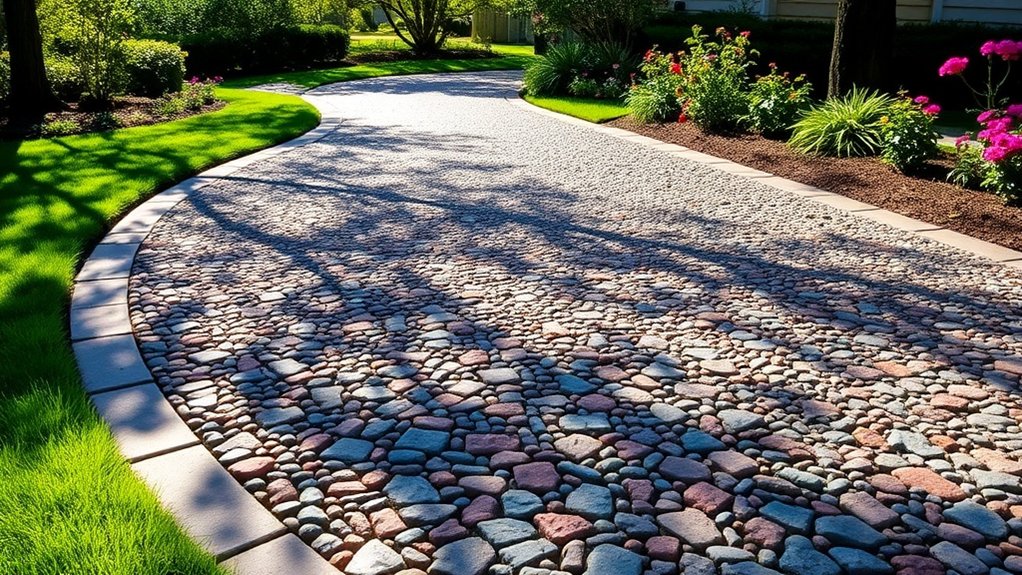
A resin-bound gravel driveway offers a low-maintenance solution, requiring just a weekly sweep and the occasional gentle wash to keep it looking its best. It’s tough against stains and weather damage, ensuring it stays attractive with minimal effort. The permeable nature of the surface prevents water pooling, which helps reduce moss and algae growth. In winter, using plastic shovels and specific salts will keep the driveway safe and intact. With the right care, it can last up to 30 years. Explore how you can further enhance your outdoor area.
Key Takeaways
Resin-bound gravel driveways are low-maintenance, needing just a quick sweep each week and an occasional wash to keep them looking smart and free from stains. They’re highly resistant to weeds, oils, and household chemicals, which means you won’t have to rely on harsh chemicals for upkeep.
A simple check for wear and tear can help you avoid costly repairs and extend the lifespan of your driveway. The permeable surface design prevents water pooling, which reduces the risk of frost damage and algae growth, making it more durable.
With professional installation, you can expect a crack-resistant surface that can last up to 30 years with proper care, offering excellent long-term value.
Effortless Cleaning Techniques

To keep your resin-bound gravel driveway looking its best, simple cleaning techniques are key. Use a stiff-bristled broom weekly or after windy days to sweep away loose dirt and debris. This helps prevent stains and surface damage.
For a gentle wash, mix warm water with a pH-neutral dish soap and apply it with a watering can or low-pressure sprayer. Let it sit for 5–10 minutes before giving it a light scrub. Regular maintenance is essential for resin driveways, ensuring they remain in excellent condition. Additionally, employing effective cleaning methods can further enhance the longevity of your driveway.
For tougher stains, a pH-neutral cleaner and a stiff brush will do the trick. Always rinse thoroughly to remove any residue.
Regular checks after cleaning will help you spot wear, ensuring your driveway stays in great condition for years.
Managing Moss and Algae Growth

To keep your resin-bound gravel driveway looking its best, it’s important to manage moss and algae growth, particularly in damp, shaded areas.
Start by sweeping away leaves and debris weekly, as these can harbour spores. Use a stiff-bristle brush to help prevent moss from establishing itself. A semi-annual jet wash at a moderate pressure can effectively remove any surface growth without harming the resin. Regular sweeping helps eliminate debris and moss spores that contribute to moss growth. Additionally, checking for water pooling after heavy rains is crucial, as it can promote algae growth.
For algae, consider applying an iron sulphate-based moss killer once a year, ideally in spring or autumn. Eco-friendly options like hydrogen peroxide can also work well.
Ensure proper drainage and trim back any overhanging branches to increase sunlight exposure. This reduces moisture retention and helps keep moss at bay on your driveway.
Winter Weather Considerations

As winter approaches, it’s important to take steps to protect your resin-bound gravel driveway.
Here are some key considerations for the colder months:
- Use plastic shovels for snow removal to avoid damaging the surface.
- Apply white rock salt or calcium magnesium acetate to prevent frost effectively.
- Regularly check for cracks or damage, especially after harsh weather. Regular removal of ice and frost is essential to prevent slippages and injuries. Maintaining the surface grip through proper installation and maintenance is crucial for ensuring safety during icy conditions.
Chemical Resistance and Maintenance

Winter weather can challenge your resin-bound gravel driveway, but knowing its chemical resistance and maintenance requirements can enhance its longevity. The driveway’s robust resistance to automotive chemicals ensures minimal surface wear, keeping it looking good.
| Chemical Type | Resistance Level | Maintenance Required |
|---|---|---|
| Oils and Petrol | High | Regular brushing |
| Solvents | Moderate | Immediate cleaning needed |
| Household Chemicals | High | Mild cleaning agents suffice |
| Weeds | Very High | No chemical killers needed |
| Grease Stains | High | Simple removal |
Ensuring Long-Term Durability

To ensure your resin-bound gravel driveway lasts, prioritise the quality of materials and the installation process. Using high-quality aggregates and UV-stable resin is crucial for long-lasting performance.
Here are key points to consider:
- Correct installation methods to establish a strong, permeable sub-base.
- Surface permeability to prevent water pooling and minimise frost damage.
- Regular maintenance to avoid premature wear.
A robust sub-base stops movement, while expert installation produces a seamless, crack-resistant surface. The right resin can extend your driveway’s lifespan to 30 years.
With the right care, you’ll have a durable and attractive surface that can endure weather changes without fading or cracking. Investing in these areas now will save you from expensive repairs down the line!
Frequently Asked Questions
How Long Does a Resin-Bound Driveway Typically Last?
A resin-bound driveway usually lasts between 15 to 25 years, influenced by factors such as the quality of installation and the type of aggregate used. To maximise its lifespan, regular maintenance is key—simple tasks like cleaning and re-sealing can make a significant difference. For instance, a quick wash with a pressure washer can remove debris, while a re-seal every few years helps protect the surface.
Can I Customize the Color of My Resin-Bound Driveway?
Yes, you can customise the colour of your resin-bound driveway. With a wide range of colour options available, you can create a unique surface that showcases your personal style. Whether you prefer a classic look or something more vibrant, there’s a colour to make your driveway stand out beautifully.
Is a Permit Required for Installing a Resin-Bound Driveway?
Yes, you will probably need a permit for your resin-bound driveway installation. It’s important to check your local regulations, as these can differ. Your contractor can assist you in navigating this process to ensure you meet all requirements and avoid any delays.
Are Resin-Bound Driveways Environmentally Friendly?
Yes, resin-bound driveways are environmentally friendly. They are made from eco-friendly materials and offer benefits like natural water drainage, which helps prevent flooding. Additionally, they absorb less heat, making them cooler in summer. Their construction has a minimal environmental impact, contributing to a greener urban environment.
What Is the Cost Comparison With Traditional Driveway Materials?
When considering driveway materials, resin-bound gravel ranges from £40 to £78 per m². In contrast, traditional options like block paving and tarmac can incur higher installation costs and ongoing maintenance, often resulting in greater long-term expenses. Choosing resin-bound gravel can be a more economical choice over time.
Conclusion
When you choose a resin-bound gravel driveway, you’re opting for a surface that remains pristine with very little maintenance. The vibrant colours of your driveway will stand out, free from moss and algae. It’s as simple as sweeping away the leaves, and thanks to its chemical resistance, any spills won’t cause damage. This durable option not only boosts your home’s curb appeal but also offers reassurance that it can endure the British weather.