To estimate the lifespan of resin-bound gravel on your property, focus on installation quality, the materials used, and the condition of the sub-base. Opt for UV-stable resins and top-quality aggregates to ensure durability. Factors such as UV exposure and freeze-thaw cycles can also influence how long it lasts. Regular maintenance is key to prolonging its life. By considering these aspects, you can better understand the expected performance of your gravel installation and achieve great results for your landscaping project.
Key Takeaways
- Assess the quality of installation and base preparation, as proper methods greatly affect how long resin-bound gravel lasts.
- Opt for high-quality, UV-stable resins and robust aggregates to boost durability and resistance to environmental challenges.
- Be mindful of environmental factors like UV exposure and freeze-thaw cycles that can shorten the gravel’s lifespan.
- Ensure good drainage to avoid moisture build-up, which can weaken the resin bond and lead to surface deterioration.
- Regular maintenance, such as cleaning and checking the condition of the surface, is vital for extending the lifespan of resin-bound gravel.
Importance of Installation Quality
When it comes to the longevity of resin-bound gravel, the quality of installation is crucial. Proper installation techniques ensure an even application and help avoid weak spots. Preparing the sub-base correctly is vital for stability, preventing issues like sinking or cracking. Using the right resin-to-aggregate ratio also boosts durability, while weather conditions during installation can significantly affect curing. Hiring qualified installers with the right experience and certifications is essential. They know how to maintain consistent depth, achieve a smooth finish, and ensure proper compaction. Additionally, they can offer valuable post-installation care advice, helping your resin-bound gravel stay attractive and structurally sound for years. A well-prepared sub-base is integral to achieving SuDS compliance, as it helps manage water drainage effectively. Investing in quality installation pays off in the long run, as expert base preparation and installation are key factors in extending the lifespan of the driveway.
Choosing the Right Materials
Choosing the right materials for resin-bound gravel goes beyond just looks; it plays a crucial role in how long it lasts. Start with high-quality, UV-stable resins that offer flexibility to prevent brittleness and cracking in changing temperatures. Additionally, using UV-stable resin will help maintain color vibrancy over time.
Combine these with strong, well-graded aggregates like granite or quartz, ensuring they’re clean and dust-free for optimal bonding. This mix not only improves the durability of the aggregate but also keeps the surface strong.
It’s vital to stick to the correct resin-to-aggregate mixing ratios to avoid soft surfaces and ensure a lasting finish. Additionally, the selection of reputable suppliers is crucial to guaranteeing the quality of materials used.
Also, choose materials that comply with industry standards and are suitable for your local climate to enhance resistance to environmental stress. By selecting the right materials, you can significantly extend the lifespan of your resin-bound gravel.
Assessing Sub-base Conditions
When assessing sub-base conditions, it’s essential to recognise the importance of compaction for surface stability. Adequate drainage is also crucial to prevent moisture accumulation, which can weaken the resin-bound layer. The choice of sub-base type significantly impacts the longevity and performance of the resin-bound surface. Additionally, using a blend of 1-3mm and 2-5mm aggregate can enhance stability and improve water flow through the resin surface.
Importance of Compaction
Compaction is crucial for ensuring the stability and durability of a resin-bound gravel surface. By using proper compaction techniques, you create a solid, level base that’s vital for good adhesion.
Effective compaction reduces settling, preventing surface deformation under weight and improving load distribution. A well-compacted sub-base reduces voids, lowering the chances of cracks and fissures. Moreover, inadequate compaction can trap moisture, which may lead to freeze-thaw damage.
Tools like vibrating plates or rollers help achieve uniform density across the base layer. Choosing the right materials, such as MOT Type 1, further enhances compaction, ensuring your resin-bound gravel can handle traffic and weather while looking great for years to come.
Drainage Considerations
For optimal drainage with resin-bound gravel, it’s crucial to thoroughly assess the sub-base conditions. A well-prepared sub-base significantly impacts water management and enhances the longevity of your surface.
Here are some key points to consider:
- Ensure the sub-base is permeable, such as open-graded porous tarmac.
- Grade the sub-base properly to direct water away from buildings.
- Install drainage channels on slopes to effectively redirect surface runoff.
- Regularly check the sub-base to prevent clogging and maintain its permeability.
- Address any worn patches quickly to prevent water from seeping through.
Surface Stability Factors
Effective drainage systems are crucial for assessing surface stability in resin-bound gravel installations. The choice of sub-base material plays a vital role; well-compacted materials like crushed stone provide excellent load distribution and help prevent subsidence. On the other hand, non-porous sub-bases can cause water pooling, compromising the lifespan of the surface.
| Sub-base Material | Impact on Stability |
|---|---|
| Crushed Stone | Excellent load distribution |
| Compacted Hardcore | Provides firm support |
| Solid Concrete | Risk of water pooling |
| Porous Materials | Enhances drainage, reduces risk |
Regularly reviewing these factors is essential for maintaining a stable surface. Movement joints and proper compaction are key to mitigating risks from natural ground shifts. Prioritising these elements will help ensure the longevity of your resin-bound gravel installation.
Understanding Environmental and Weather Factors
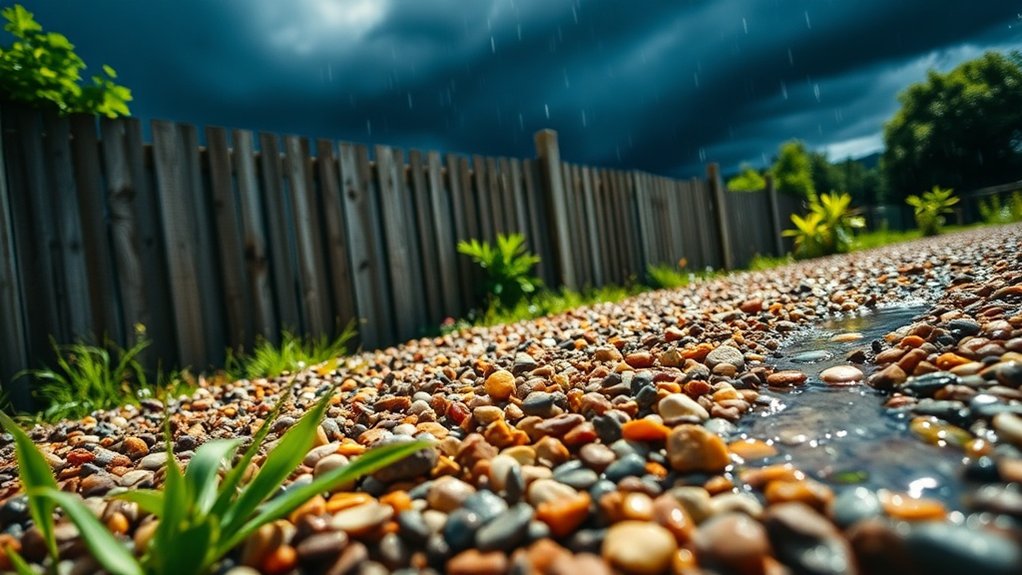
When considering the lifespan of resin-bound gravel, it’s important to take into account environmental factors such as UV radiation, freeze-thaw cycles, and humidity.
These elements significantly affect how well the surface lasts over time. For example, areas with high UV exposure can lead to quicker degradation, while frequent freeze-thaw cycles can cause cracking.
UV Radiation Effects
UV Radiation Effects
While often overlooked, UV radiation significantly impacts resin-bound gravel and deserves attention.
Here are key points to consider for extending the lifespan of your gravel surface:
- Prolonged UV exposure leads to resin degradation, causing brittleness over time.
- Discolouration and fading can diminish the aesthetic appeal, particularly with non-UV resistant resins.
- UV rays mainly affect the resin binder, not the gravel itself.
- Increased brittleness from UV exposure raises the risk of cracking under stress.
- Areas with more sunlight experience faster degradation, even if the weather seems mild.
Investing in UV-resistant materials and maintaining your surface regularly can help mitigate these issues, ensuring your resin-bound gravel remains attractive and durable for longer.
Freeze-Thaw Cycles
UV radiation isn’t the only environmental factor that affects the durability of resin-bound gravel; freeze-thaw cycles also play a significant role.
These cycles can stress your surface, particularly if it’s poorly installed or has existing microcracks. When water seeps in and freezes, it expands, which can worsen any cracks and speed up deterioration.
Unlike concrete, resin-bound gravel is flexible and can absorb minor movements, but repeated freeze-thaw effects can still lead to visible issues like surface cracking and crumbling.
To minimise these problems, ensure a well-compacted base and efficient drainage to reduce water build-up.
Using high-quality materials and seeking professional installation are crucial for longevity, helping your resin-bound gravel withstand even the harshest weather conditions.
Moisture and Humidity
Moisture and humidity significantly affect the lifespan of resin-bound gravel, impacting its structural integrity and appearance. Here are some essential points to consider:
- Heavy rainfall can weaken the resin bond, leading to erosion.
- High humidity keeps surfaces damp, which can degrade the resin over time.
- Prolonged wet conditions may result in unwanted organic growth, such as moss or algae.
- Ensuring proper drainage prevents water pooling, which protects resin bonds.
- Increased humidity can cause micro-cracking and make surfaces brittle.
Maintenance Practices for Longevity
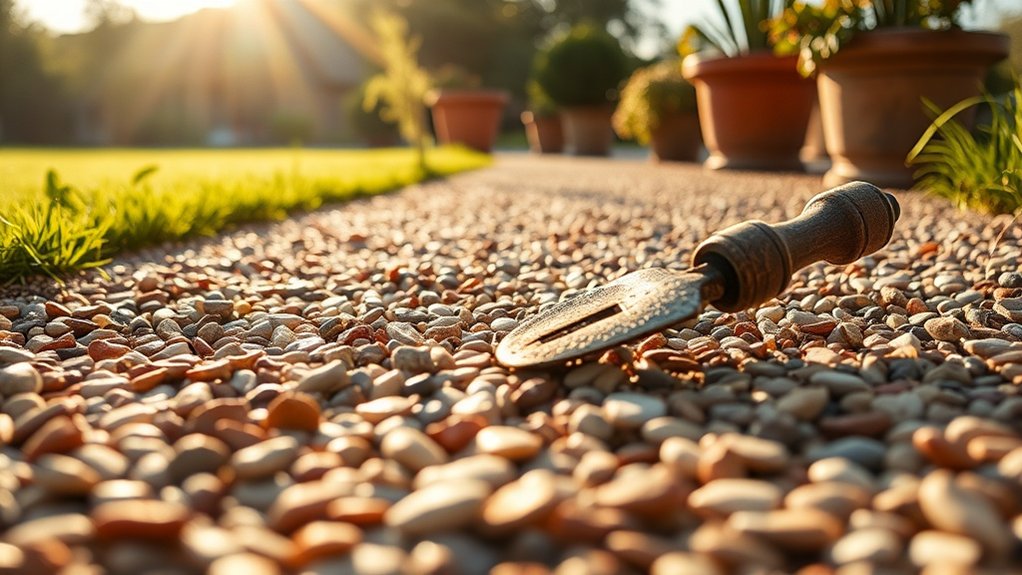
To ensure your resin-bound gravel surfaces last, effective maintenance is crucial.
Regular cleaning, such as sweeping weekly and hosing down monthly, prevents debris from clogging the surface. For larger areas, use non-metallic blowers to protect the aggregate layer.
Act quickly to tackle stains from oil and tyre marks; cornstarch can absorb oil before you scrub with pH-neutral detergents.
Seasonal tasks, like clearing leaves in autumn and checking drainage, keep surfaces safe. Hand-pull weeds and use environmentally friendly herbicides to stop vegetation from invading your gravel.
Following these practices will help maintain both the appearance and durability of your resin-bound gravel for years.
Expected Lifespan and Performance Insights
The expected lifespan of resin-bound gravel surfaces is typically between 15 and 30 years, but various factors can impact their durability and performance.
To ensure longevity, keep the following in mind:
- Resin formulation: Choose UV-stable, non-yellowing resins to prevent deterioration.
- Aggregate quality: Select high-grade aggregates that are resistant to wear.
- Installation precision: Ensure a professional application for a smooth and secure surface.
- Environmental exposure: Consider local weather patterns that could affect the surface.
- Usage patterns: Avoid excessive heavy traffic to maintain the integrity of the surface.
Frequently Asked Questions
How Does Foot Traffic Affect Resin-Bound Gravel Lifespan?
Foot traffic significantly affects the lifespan of resin-bound gravel. Increased use can wear down the surface, leading to reduced durability. For example, areas with heavy footfall, like pathways or entrances, may show signs of abrasion more quickly. However, proper installation and regular maintenance can help minimise damage, ensuring the gravel remains resilient against daily pedestrian use.
Can Tree Roots Damage Resin-Bound Surfaces?
Yes, tree roots can indeed damage resin-bound surfaces. As the roots grow, they can disrupt the surface, leading to cracks and uneven areas. Regular checks can help you spot early signs of damage, keeping your paths safe and looking good. For instance, if you notice lifting or cracking, it’s best to address it promptly to avoid further issues.
What Is the Cost of Replacing Resin-Bound Gravel?
Replacing resin-bound gravel generally costs between £11 and £17 per square foot. To keep expenses down and maximise the lifespan of your driveway, it’s essential to follow maintenance tips and ensure proper installation. This way, you can protect your investment and avoid costly replacements in the future.
How to Identify Potential Installation Mistakes?
Installation errors can be disastrous! To spot them, look for unstable bases, incorrect resin mixing, and inadequate curing. For ongoing maintenance, regularly check surface conditions and ensure proper drainage to extend the life of your gravel.
Are There Warranties for Resin-Bound Gravel Installations?
Yes, most resin-bound gravel installations come with a warranty or installation guarantee. These typically last between 5 to 10 years, depending on the quality of the resin, the standards of installation, and your maintenance practices. For instance, if you regularly clean the surface and avoid heavy loads, you’re more likely to enjoy the full warranty period.
Conclusion
To ensure your resin-bound gravel lasts, focus on quality installation, choose the right materials, and evaluate the sub-base conditions. Be aware of how environmental factors can affect durability and commit to regular maintenance. By paying attention to these aspects, you can enhance both the lifespan and performance of your surface, creating a robust solution for your property. Remember, with the right approach, you’re not just laying gravel; you’re making a worthwhile investment. Stay proactive and enjoy the benefits for years to come.