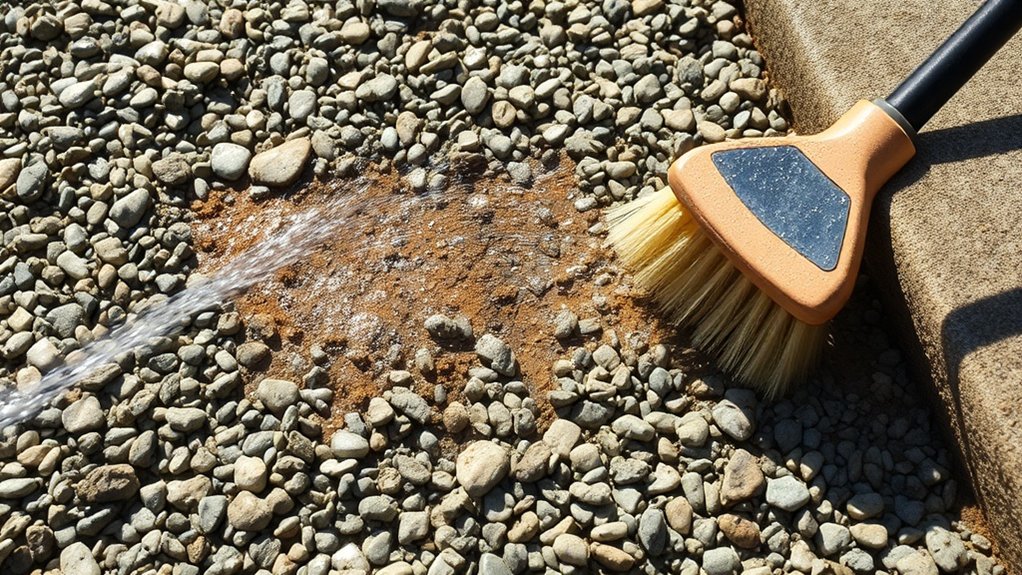
Resin-bound gravel can become dirty quickly due to poor substrate preparation, surface porosity, and the accumulation of organic debris. Leaves, oil, and UV exposure lead to dirt and stains if not maintained regularly. To clean it, sweep often, use a garden hose for a gentle wash, and apply mild detergents for stubborn stains. Address spills promptly to keep the surface looking good. With consistent care, you can keep your gravel in top condition and minimise dirt build-up.
Key Takeaways
- Poor substrate preparation and cracking can create gaps that trap dirt and debris in resin-bound gravel.
- Organic matter, such as leaves and pollen, adds to dirt build-up, particularly in autumn.
- The surface’s porosity allows dirt and stains to settle, especially after rain or damp conditions.
- Regular upkeep, like monthly sweeping and gentle washing, is key to preventing dirt accumulation.
- Timely stain removal using suitable cleaners and methods is crucial for keeping your gravel looking good.
Reasons Why Resin-Bound Gravel Accumulates Dirt
While resin-bound gravel looks great and serves its purpose well, it can collect dirt for a few reasons.
Firstly, if the substrate isn’t prepared properly, it can create uneven surfaces with low spots where debris and moisture can accumulate. When substrate materials shift or crack, they can leave gaps that allow dirt and organic matter to gather. Ensuring compatibility between substrates is vital to prevent these issues, as a solid, crack-free base is essential for proper adhesion and durability.
Surface porosity is another factor; tiny gaps can trap dirt particles, especially after it rains.
During autumn, organic matter like leaves and pollen tends to build up, particularly if there’s nearby vegetation that sheds debris.
Additionally, physical wear such as cracks or chips creates rough edges that can hold onto dirt.
Lastly, if maintenance isn’t done regularly, dirt layers can harden, making it increasingly difficult to clean over time. Regular inspections are also necessary to catch early signs of wear, as neglecting them can exacerbate dirt accumulation.
Common Types of Dirt and Stains Found on Resin-Bound Gravel
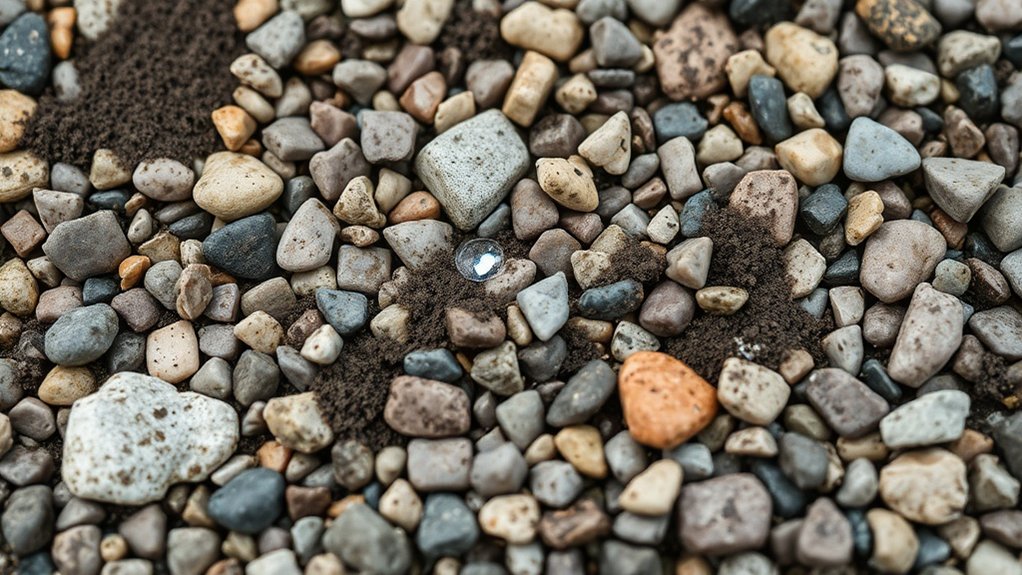
Resin-bound gravel surfaces can collect various types of dirt and stains that affect their look and durability.
Common offenders include organic matter like leaves, moss, and tree sap, which can leave dark marks and encourage algae growth in damp spots. Oily stains, often from vehicle leaks such as engine oil and transmission fluid, are another frequent problem. These can leave lasting marks if not cleaned promptly. Additionally, exposure to UV light can cause fading and discoloration, making it essential to address stains quickly. Regular maintenance practices such as sweeping and resealing can significantly reduce the accumulation of these unsightly blemishes.
Other stains may come from rust, food spills, or paint, each needing specific cleaning methods. Recognising these common stains will help you tackle them effectively and keep your resin-bound gravel looking good for longer.
Routine Cleaning Methods for Maintaining Resin-Bound Gravel
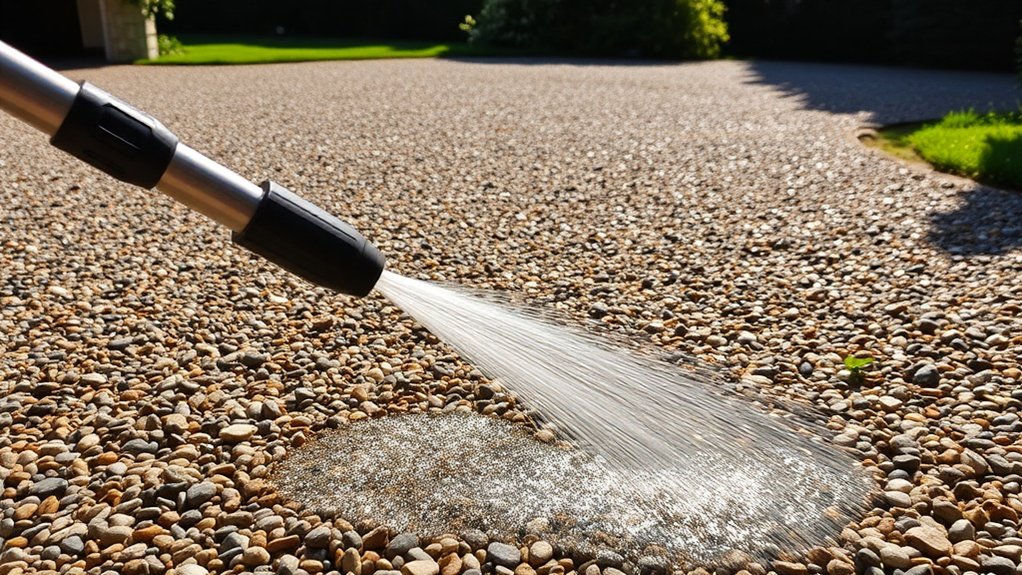
To keep your resin-bound gravel surface looking good and in good shape, it’s important to clean it regularly. Aim to do this at least once a month.
Start by sweeping with a stiff broom to clear away leaves and debris that could clog the surface. For larger areas, you might find a non-metal leaf blower or a suction cleaner more effective. When sweeping, follow the direction of the aggregate pattern to avoid damaging the surface. Regular sweeping techniques play a vital role in preventing moss growth and maintaining drainage functionality.
If you encounter stubborn dirt, a gentle wash with a garden hose or a low-pressure jet (under 150 bar) will do the trick; just make sure to keep at least 20 cm away from the surface. Regular washing helps maintain a fresh appearance while also preventing the accumulation of debris.
For tougher stains, you can use mild, pH-neutral detergents along with synthetic brushes. Regular maintenance not only improves the appearance but also provides essential protection against potential damage, thereby prolonging your driveway’s lifespan and enhancing its overall aesthetics.
Effective Techniques for Stain Removal
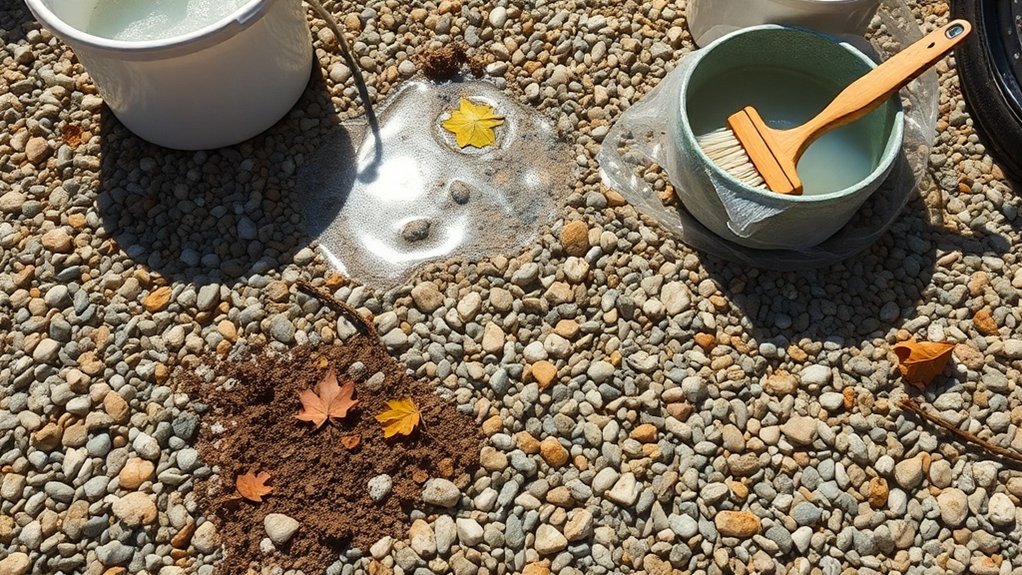
How can you effectively remove stains from your resin-bound gravel surface? The first step is to identify the type of stain, as this will dictate the cleaning products you should use. Here’s a straightforward guide for successful stain removal:
- Blot Promptly: As soon as a spill occurs, blot it with paper towels to absorb excess oil or grease.
- Use a Cleaning Solution: Apply a suitable degreaser or a diluted detergent for organic stains, ensuring it’s mild to protect the resin.
- Scrub and Rinse: Use a stiff-bristled brush with warm, soapy water to agitate the stain, then rinse thoroughly to remove any residue.
If stains persist, you may need to repeat the process or consult a professional for tougher cases.
Acting quickly to identify and tackle stains will help keep your gravel looking its best.
Preventive Maintenance to Reduce Dirt Accumulation
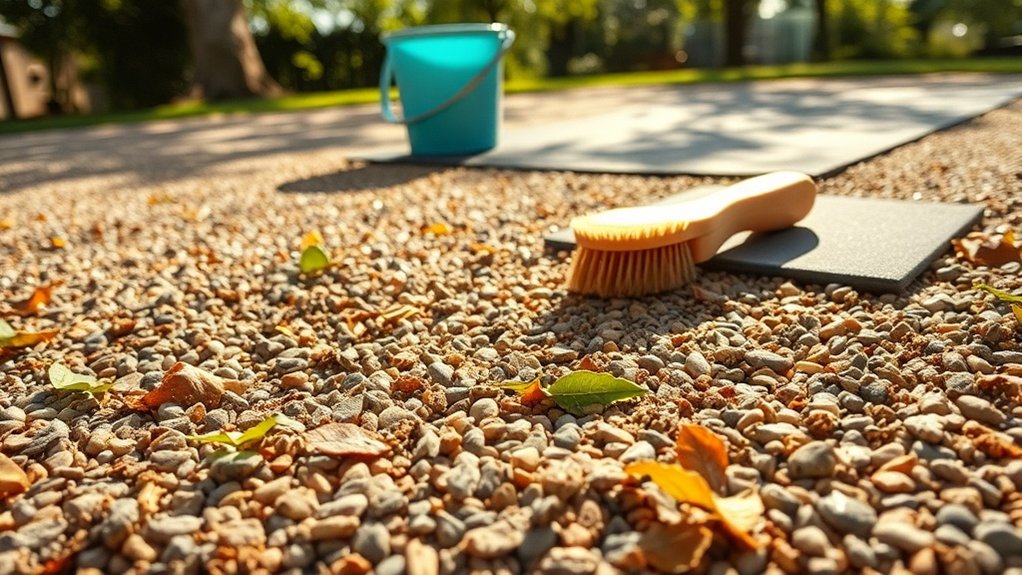
To keep your resin-bound gravel surface clean and appealing, regular preventive maintenance is key to reducing dirt build-up.
Start by sweeping the area with a stiff broom to clear away surface debris, particularly under overhanging trees. For larger areas, a non-metallic leaf blower works well.
A gentle wash with a garden hose each month helps to disrupt any algae or moss growth—just avoid high-pressure water to protect the resin.
In autumn, be diligent about removing leaves, and during wet conditions, keep an eye on drainage.
Every 5 to 8 years, apply UV-stable sealants to prevent degradation.
Frequently Asked Questions
How Long Does Resin-Bound Gravel Last Before Needing Replacement?
Resin-bound gravel generally lasts between 15 to 25 years, depending on the quality of the resin and how well you maintain the surface. With proper care, such as regular cleaning and resealing, you can extend its lifespan beyond these averages. For instance, keeping the surface free of weeds and debris can help it last longer.
Can I Install Resin-Bound Gravel Myself?
Yes, you can install resin-bound gravel yourself. To achieve the best results, pay attention to surface preparation and mixing techniques. For example, make sure the base is clean and level before you start. Follow the manufacturer’s instructions closely to ensure durability and a uniform finish. Keep in mind that while DIY can save you money, it’s essential to approach the project with care for a long-lasting surface.
Is Resin-Bound Gravel Environmentally Friendly?
Yes, resin-bound gravel is environmentally friendly. It uses sustainable materials and is designed to be permeable, allowing rainwater to seep through and replenish groundwater. Additionally, its durability means it requires less maintenance over time, further reducing its environmental impact.
What Colors Are Available for Resin-Bound Gravel?
Resin-bound gravel offers over 40 colour options, providing excellent design versatility. Whether you prefer classic shades like Pevensey or modern tones such as Baltic Bay, you can easily find a colour to complement or contrast your outdoor areas.
How Does the Weather Affect Resin-Bound Gravel Durability?
Weather plays a significant role in the durability of resin-bound gravel, particularly due to freeze-thaw cycles and moisture-related issues. For instance, in winter, repeated freezing and thawing can cause the surface to crack or become unstable. To combat these problems, it’s essential to ensure proper installation and regular maintenance. Taking these steps can enhance the lifespan and performance of resin-bound gravel, even in challenging weather conditions.
Conclusion
In summary, keeping your resin-bound gravel clean requires ongoing effort. Remember, “a stitch in time saves nine.” By recognising why dirt builds up, knowing how to clean it properly, and taking preventive steps, you can preserve the look and durability of your surface. Regular maintenance not only improves its appearance but also reduces long-term damage, ensuring your investment stays in excellent condition for years.